


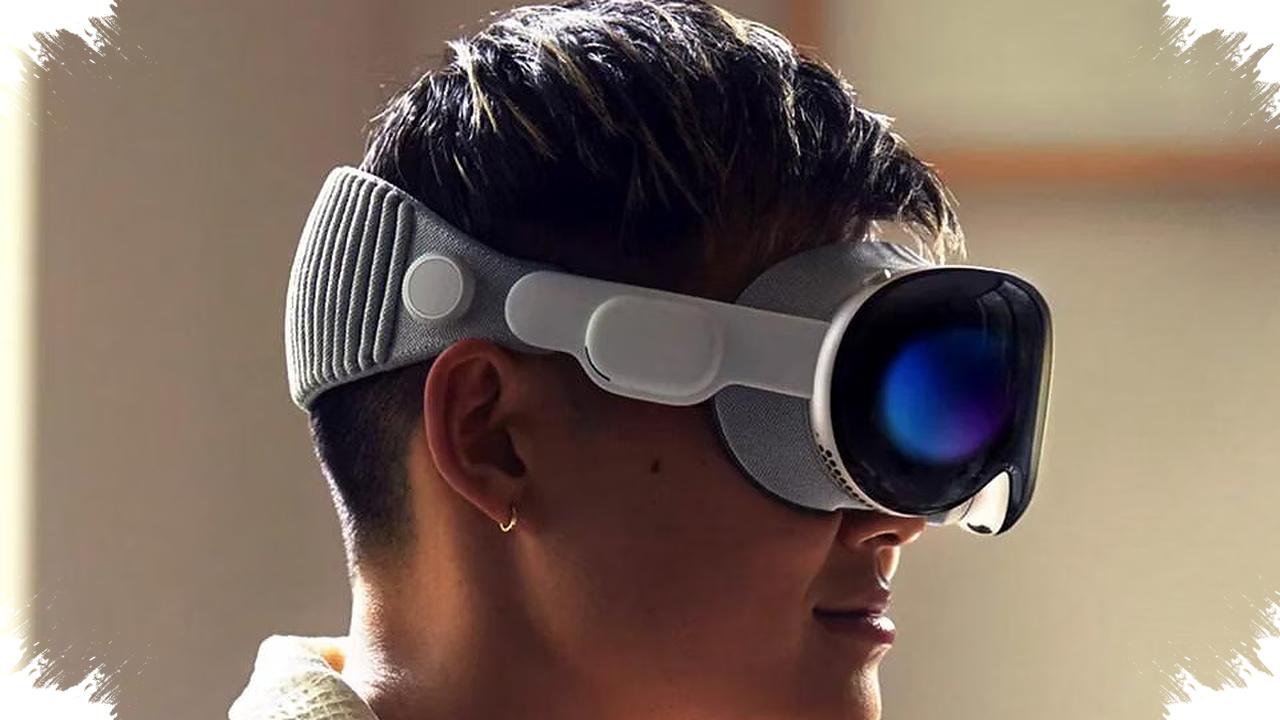
Apple Vision Pro stands out because it does more than display digital content in front of the eyes. It is built to make virtual interaction feel close to real-life experience while still allowing users to stay aware of their surroundings.
That approach is driven by spatial computing, which combines VR and AR into a single system. Apple also gives users control over how immersive the headset feels, whether it is used for light work, watching movies, or playing games.
Eye tracking as the main input
One of the most important elements in Vision Pro is its eye-based control system. Users can select items simply by looking at them, and the headset reads that gaze as input.
Apple uses infrared cameras and invisible light projection to capture subtle eye movements. The system is also supported by AI that predicts small pupil movements and interprets physiological responses to make the interaction feel more natural.
Hand gestures without a physical controller
Hand movement serves as another major control method. Users can click, scroll, zoom, move windows, and resize apps through simple gestures.
The headset uses cameras placed on the front, sides, and bottom to detect hand position even when the hands are not directly visible. Apple also adds infrared sensors, LiDAR, and TrueDepth to improve depth detection, including in low light.
A crown that changes the level of immersion
Apple also gives users direct control over how deep they want to enter the virtual environment. A crown, similar to the one on Apple Watch, lets users adjust the level of immersion with a turn.
That control works together with a 3D interface that appears more lifelike thanks to the high-resolution micro-OLED display on each eye. Visual effects such as shadows interacting with the real world help virtual objects feel present in the user’s space.
EyeSight keeps the outside world in view
Vision Pro is not designed to cut users off completely from people around them. For that reason, Apple includes EyeSight, a feature that shows the user’s digital eyes on the outer display when someone comes near.
The inner cameras track eye movement in real time, while external cameras let the user still see the surrounding environment. The outer display can also change depending on the mode, shifting from clearly visible eyes to a blur in augmented reality mode, or to animation when the user is fully in virtual reality.
FaceTime feels more present in spatial computing
Communication also changes on Vision Pro through FaceTime. During a call, other participants appear as virtual tiles that can be placed and resized in the surrounding space.
Their sound comes from the direction of each tile through spatial audio, making the call feel more anchored in the room. Apple also creates a digital version of the user that can mirror facial expressions, eye movement, and hand gestures in real time through sensors and neural networks.
Together, these five features show the direction Apple is taking with Vision Pro. The headset focuses not only on strong visuals, but also on making digital interaction more intuitive, more personal, and more closely tied to the physical space around the user.