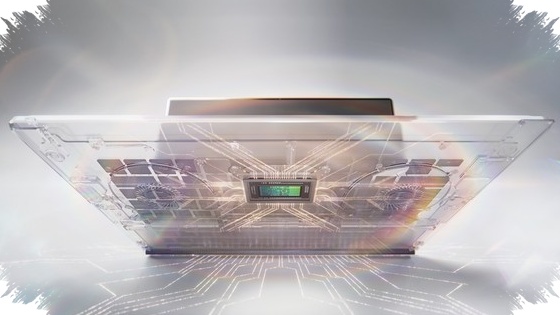
Nvidia is pushing Windows PCs toward a new model centered on local AI, and RTX Spark is the clearest sign yet of that shift. Instead of positioning the chip only as a graphics part for thin laptops and mini-PCs, Nvidia is presenting it as the foundation for a different kind of personal computer experience.
The company has gone as far as calling RTX Spark the most efficient PC chip it has ever made. That claim has drawn attention, although Nvidia has not yet shown performance charts or statistical comparisons to back it up.
A high-end Arm design built for slim Windows devices
RTX Spark is based on the Grace Blackwell architecture and uses 70 billion transistors on TSMC’s 3nm process. For consumer PCs, those specifications place it in unusually aggressive territory for hardware aimed at thin and light machines.
At the top end, the chip uses a 20-core Arm CPU developed with MediaTek. Nvidia also pairs it with a custom Blackwell GPU carrying 6,144 cores, which the company says matches the graphics performance of an RTX 5070 mobile GPU.
Memory is another major part of the pitch. Nvidia equips the chip with unified LPDDR5X memory of up to 128GB, giving the CPU, GPU, and AI workloads access to a shared pool rather than forcing them to compete with limited discrete VRAM.
That unified design is central to Nvidia’s strategy for compact PCs. The company says a laptop as thin as 14 mm could run a local AI agent with 120 billion parameters and a context window of 1 million tokens.
Local AI is the main story, not just raw speed
RTX Spark is not being positioned as a conventional Windows chip with a small AI add-on. Nvidia and Microsoft are instead framing it as part of a broader push to make AI the primary interface for computing.
The idea is that users should be able to interact with their PC more directly, rather than moving through complex app layers. Nvidia points to its OpenShell integration and Microsoft’s new security system as pieces of that direction.
The company also describes several local-use scenarios. A creator could ask a PC to turn a rough sketch in Adobe into a finished image, render it into a 3D model, and then generate AI video from it.
For streamers, Nvidia says voice commands could automate a full setup routine. A computer could turn off room lights, mute the microphone, and switch broadcast modes when the user leaves the desk.
Developers are another target group. Nvidia says local AI agents could take over mouse and keyboard control to monitor GitHub projects and handle repetitive QA work, all without relying on internet tokens.
Software support will decide how far the platform goes
Because RTX Spark is built on Arm, compatibility remains one of the biggest questions around the platform. Older x86 applications from Intel and AMD ecosystems will run through Microsoft Prism emulation.
Nvidia says its software stack is ready from day one. Blender, DaVinci Resolve, Cinema4D, CapCut, and Affinity are already said to run natively on Windows on Arm.
Adobe is also reportedly rebuilding Premiere and Photoshop from the ground up to take advantage of Spark’s unified memory and TensorRT support. Nvidia says that setup can deliver up to twice the performance for AI and editing workloads.
Game support is also part of the push. Nvidia says anti-cheat barriers that often blocked games on Windows on Arm have now been addressed.
Riot Games has brought League of Legends and Valorant to Windows on Arm, while Krafton has brought PUBG and Epic Games has already made Fortnite available. Nvidia also says Easy Anti-Cheat, BattlEye, and Denuvo are now fully compatible.
Questions remain around battery life, pricing, and expansion
Even with strong claims, several important details are still open. Nvidia has not disclosed official pricing, and the first wave of systems is expected to target the super-premium segment.
Battery life is another unresolved point. Nvidia says the chip can drop into single-digit watt consumption under light loads, but it can rise to 80 watts under full load.
That means sustained heavy use could drain a large laptop battery in roughly an hour if the system is pushed continuously. Nvidia has said the device can last all day, but it has not provided a more precise definition of that claim.
There are also limits on the desktop side. Nvidia says RTX Spark cannot be paired with a discrete GPU, which restricts expansion in larger PC systems.
The company has not clarified whether mass production with MediaTek will take place at TSMC’s Arizona plant or elsewhere. It also has not confirmed Linux driver support.
Broad hardware backing, but the market test is still ahead
Even with those uncertainties, RTX Spark has already secured support from eight major manufacturers. Among the announced devices are the Dell XPS 16 Creator Edition and the Microsoft Surface Laptop Ultra, which Nvidia describes as the most powerful Surface device it has ever made.
That level of backing puts Nvidia into direct competition with Intel, AMD, Apple, and Qualcomm in personal computing. The real test will come when RTX Spark-based devices begin reaching the market in the fall.