Nvidia’s RTX Spark is shaping up as a premium Windows machine from the start, with leaked pricing pointing to a clear ambition to compete in the same tier long dominated by the MacBook Pro. The reported starting price is around $1,799 for the N1 variant, while the N1x-based model is said to reach about $2,899.
That pricing places RTX Spark far above the typical mainstream Windows laptop and makes it clear that Nvidia is targeting buyers who care more about capability than entry-level affordability. The company appears to be selling a high-end work platform, not a budget experiment.
A premium pitch aimed at demanding users
RTX Spark is positioned for creators, developers, and heavy users who need one device for AI computing, graphics work, and professional workloads. That focus is reinforced by the pricing structure, which suggests Nvidia wants to compete on value and performance rather than volume.
The lineup also shows that Nvidia is entering this space through established premium brands. Names such as Microsoft Surface Laptop Ultra, Dell XPS 16 Creator Edition, Asus ProArt P16 and P14, HP OmniBook X 14 and OmniBook Ultra 16, Lenovo Yoga Pro 9n, and MSI Prestige N16 Flip AI+ all point to a product family built for productivity and creator workflows.
Grace and Blackwell at the core
At the center of RTX Spark is a combination of Nvidia’s ARM-based Grace CPU and RTX Blackwell GPU. The platform is designed to push AI computing while still delivering strong performance for graphics-intensive and modern professional tasks.
The specifications described so far are aggressive for a thin but powerful laptop. Nvidia is said to be targeting up to 20 CPU cores, 6,144 CUDA cores, and unified memory of up to 128GB.
That memory ceiling is one of the most striking parts of the leaked information. It could matter most to users working with AI models, rendering jobs, and creative workflows that benefit from large memory pools.
Nvidia has also claimed up to 1 petaflop of AI performance on the platform. That figure makes it clear that AI is not being treated as a side feature, but as the main selling point of RTX Spark.
A direct challenge to MacBook Pro
The price band and performance focus make RTX Spark look like Nvidia’s clearest attempt yet to challenge the MacBook Pro on premium ground. The company seems to want to offer an alternative that stands out in AI, computing, and graphics for the same type of high-end user.
Still, the road ahead is not simple. Windows on Arm continues to face software compatibility concerns, and real-world efficiency will matter just as much as headline specifications.
Battery life will also be a critical test. If Nvidia wants RTX Spark to be seen as a true MacBook Pro alternative, it will need to prove more than strong numbers on paper.
Gaming is part of the message too
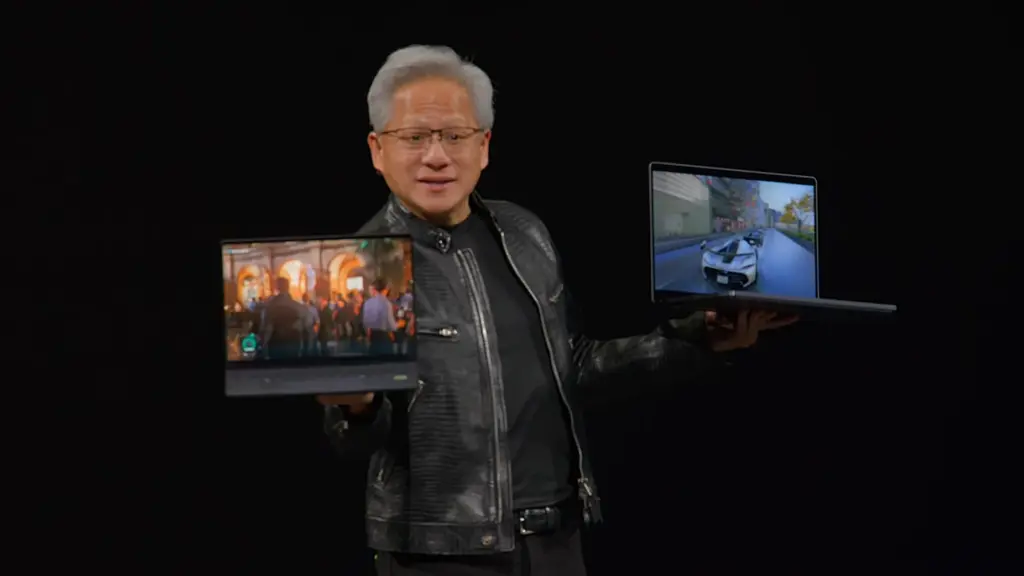
Even though RTX Spark is built around AI and professional workloads, Nvidia has also highlighted gaming performance. At Computex, the company showed Forza Horizon 6 running above 100 FPS at 1440p on the platform.
That demo broadens the device’s appeal. It suggests RTX Spark is not being framed only as a compact workstation or AI machine, but also as a laptop capable of delivering strong gaming performance without a bulky design.
If that level of performance carries over to retail products, the device could attract buyers who want one laptop for creative work, AI tasks, and gaming. Even so, gaming performance alone is unlikely to fully justify a starting price that high.
A growing ecosystem around the platform
Nvidia says the RTX Spark ecosystem could expand to around 30 laptop models and 10 desktop systems in the fall. The company has also hinted at additional devices from Acer and Gigabyte.
That scale shows Nvidia is not treating RTX Spark as a niche test. The broader plan appears to be the creation of a new category that can spread quickly across multiple brands.
For now, the market response will depend on how well the final devices balance performance, compatibility, and endurance. Nvidia has already laid out an ambitious hardware story, but the premium laptop segment will ultimately judge the platform by real-world results.
Source: www.gizmochina.com