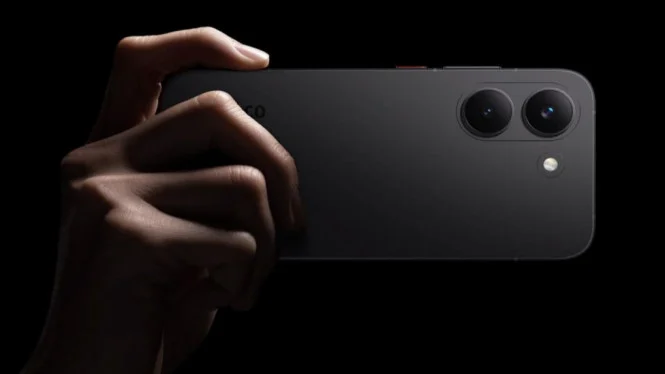
Poco X8 Pro Max stands out not because of one headline feature, but because several premium elements arrive in the same package. In the Rp6 jutaan class, that combination is unusual enough to put real pressure on rivals.
The device pairs an AnTuTu score in the 2.7 to 2.8 million range with eSIM support and an ultrasonic fingerprint sensor. On paper alone, that makes it look more aggressive than many phones in its segment.
Performance that pushes the class forward
The 12/512 GB unit tested shows a flagship-like attitude in day-to-day use and heavy gaming. It is described as very fast and cooler than the regular Poco X8 Pro, and even cooler than the Poco F7.
In this price range, it effectively sits on the path to becoming the second fastest phone in Indonesia after the iQOO 15R. That position comes with a much larger RAM capacity, which strengthens its appeal for demanding users.
Gaming results also support that impression. Genshin Impact can run at the highest settings very smoothly at 58-60 FPS.
Heat becomes more noticeable when Wuthering Waves is pushed to High 60 FPS. During that test, the device temperature reached 49 degrees Celsius, so an extra fan cooler or lowering the graphics to Medium remains the safer option for long ranked sessions.
Large battery, long endurance
Battery life is one of the main reasons this phone draws attention. Poco equips the X8 Pro Max with an 8,500 mAh battery, which is far above what many users expect in this class.
Under normal use, the battery is claimed to last around 8-9 hours of screen-on time and up to 1.5 days. With more optimized settings, it can even approach 10 hours of SOT with about 50 percent battery left at night.
That better result comes from turning off RAM Extension, limiting background apps, and using Dark Mode. The trade-off is charging time, which takes a little over one hour.
Software, connectivity, and the caveat users should know
The phone runs HyperOS based on Android 16, and Poco promises 4 years of Android updates plus 6 years of security patches. That long support window gives the device a more durable software profile than many peers.
HyperOS also brings better interconnection features, including smoother file sharing with Apple devices such as the iPhone 17. The interface feels fresher too, thanks to Hyper Island.
There is still one point that may bother some buyers. Ads and recommendations remain present in built-in apps, so users need to manually turn off the “Show Ads” and “Recommendation” options in settings.
Design and premium extras
Physically, the Poco X8 Pro Max is large, with a 6.83-inch 120Hz AMOLED display and a weight of 220 grams. The frame uses solid metal, while the back is made from fiberglass.
The camera module also carries an aesthetic RGB light that works as a notification indicator. On the Max model, Poco adds features not found on the regular variant, including Game Turbo with Smart Frame Rate and Super Resolution.
Security and connectivity are also part of the premium pitch. The ultrasonic fingerprint sensor is fast and accurate, and eSIM support adds another useful convenience.
At the same time, some omissions remain. Wireless charging is not available, and the USB-C port is still version 2.0.
Camera remains secondary, but still usable
The camera setup is simple, with a main camera and an ultra-wide camera. Even so, the results are described as sharp for a phone that prioritizes performance.
Video tools are fairly complete. They include Lock Video, Pro Video mode, and portrait shooting with three focal length options.
Users can also switch to the front camera while recording video. The weak point is stabilization, which can make footage feel slightly shaky or jittery when walking fast or running.
For buyers focused on raw speed, battery life, and premium extras in the Rp6 jutaan segment, Poco X8 Pro Max has a strong case. Its blend of high performance, eSIM, ultrasonic fingerprint, and very large battery makes it one of the more serious threats to competing phones in the same class.