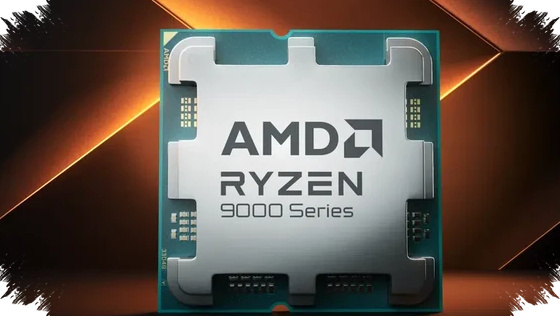
AMD used Computex 2026 to make a message that stood out from the rest of the PC industry: longevity can matter as much as raw performance. At a time when memory shortages and rising component prices are pushing desktop builds higher, the company leaned on older chips and a longer platform roadmap to win over cost-conscious gamers.
The clearest example is AM5. AMD says the socket will be supported through 2029, giving current AM5 motherboard owners a path to upgrade into new Ryzen processors later in the decade without replacing the board.
That promise matters because desktop buyers are becoming more cautious. Rather than pushing only premium systems, AMD is highlighting the value of keeping a platform alive for longer and spreading upgrade costs over time.

Old chips, repositioned for a new market
AMD also chose to bring back familiar hardware in fresh packaging. One of the headline products is the Ryzen 7 5800X3D “10th Anniversary,” a special edition built to mark a decade of AM4.
The chip will sell for USD 349 and is scheduled to arrive on 25 June. Its return shows that AMD still sees value in the large AM4 user base, especially among gamers who are not ready to move to a newer platform.
For users who want to enter AM5, AMD is also introducing the Ryzen 7 7700X3D at USD 330. The chip is positioned as a lower-cost gaming option for the platform, even though it is built on an architecture that is not new.
The 7700X3D is widely understood to be derived from the popular 7800X3D. On paper, it is only slightly slower, while still keeping the efficiency benefits associated with 3D V-Cache.
Why older architecture still makes sense
AMD is not using this launch cycle to showcase its newest designs. The 7800X3D first appeared in 2023, while the main successor in the Ryzen 9000 series, the 9800X3D, arrived at the end of 2024.
Even so, the age of the architecture is not the central issue in today’s market. For many gamers, the combination of strong price-to-performance value and efficient power use keeps 3D V-Cache-based chips attractive.
The pricing of the 7700X3D also appears intentionally aggressive. The 7800X3D is usually sold in the USD 380 to USD 450 range, although it can occasionally fall to around USD 320 during discounts.
At USD 330, the 7700X3D fills a gap between newer, more expensive parts and older models that remain in demand. AMD appears to be using that middle ground to make AM5 more approachable.
Graphics cards follow a similar strategy
The same approach is visible in AMD’s graphics-card plans. The Radeon RX 9070 GRE, which was previously limited to China, is now being expanded to global markets.
It carries a starting price of USD 549 and became available on 1 June. The rollout includes the United States and gives AMD a broader set of options in the upper midrange.
That move is not without complications. The USD 549 price point was previously associated with the standard RX 9070, while the GRE version has reduced specifications and trails the Nvidia RTX 5070 in direct comparison.
Still, real-world availability changes the picture. The standard RX 9070 has reportedly been difficult to find at its MSRP, with actual prices climbing from brief moments near launch pricing to around USD 599 to USD 620.
Against that backdrop, the RX 9070 GRE may be the more practical purchase. It is not the strongest card in its class, but it can be easier to obtain at the listed price when the standard model is scarce.
Taken together, AMD’s Computex 2026 message is less about chasing the newest badge and more about making existing platforms more appealing. In a market where building or upgrading a PC is getting more expensive, that strategy gives desktop gamers a reason to look at compatibility, efficiency, and long-term support first.
Source: inet.detik.com