A free Motorola Razr (2026) from T-Mobile sounds unusually compelling, but the deal only works for a narrow group of buyers. It is tied to adding a new line, and it is restricted to customers on Experience or Better Value plans.
That makes the promotion less of a broad holiday for everyone and more of a targeted offer for people already planning to expand their T-Mobile account. For the right customer, though, it places one of Motorola’s newest foldables within reach at a very low upfront cost.
A low-cost entry into foldables

Motorola is positioning the Razr (2026) as the most accessible model in its latest Razr family. That matters in a category where foldable phones still tend to carry premium pricing, often making them harder to justify for first-time buyers.
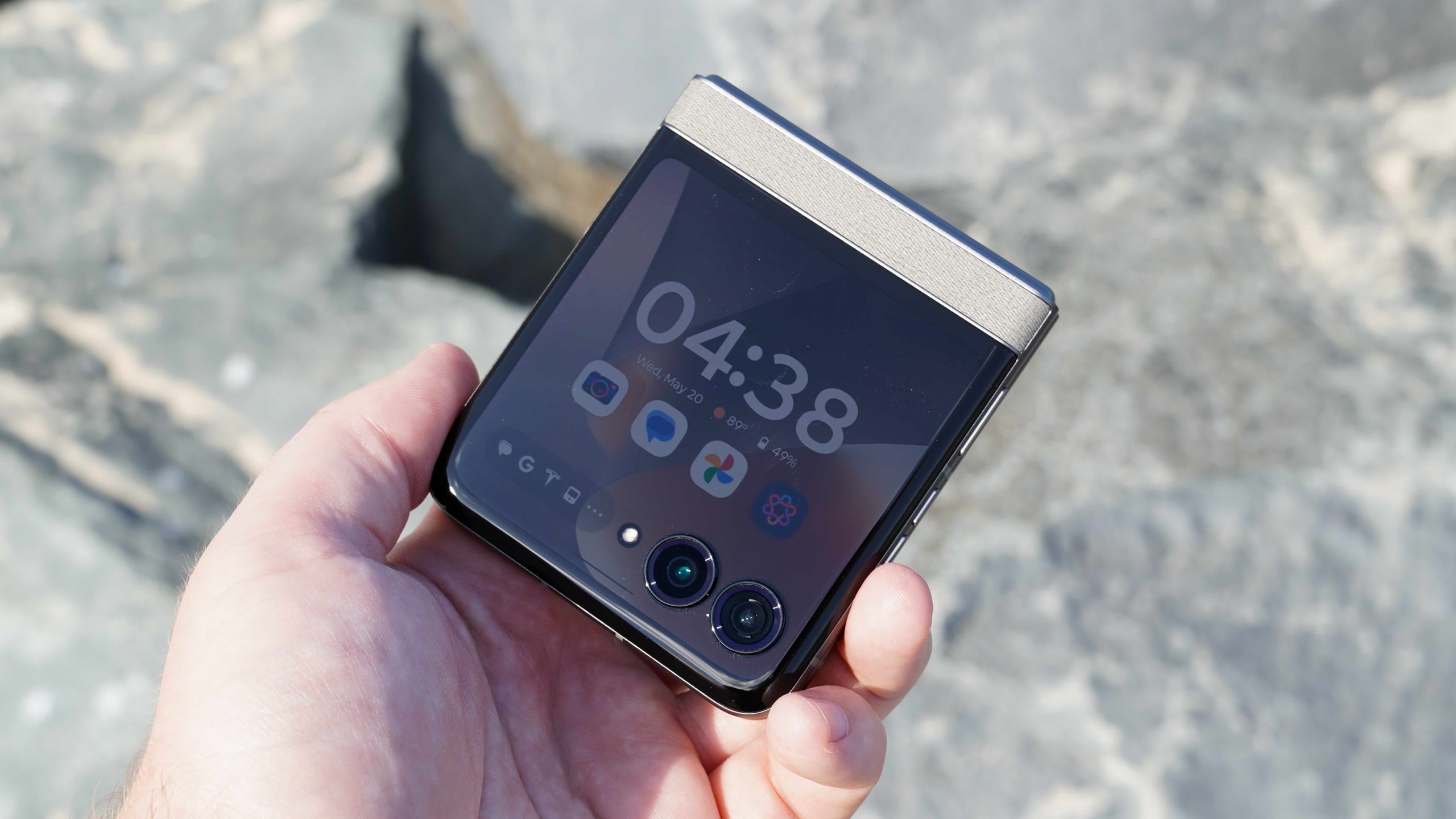
The Razr (2026) keeps the core flip-phone formula that defines the lineup. It uses a clamshell design with two AMOLED displays and a hinge that Motorola says is built for durability.
What the standard Razr still brings
Even as the entry model, the Razr (2026) is not stripped down to the basics. Motorola equips it with the MediaTek Dimensity 7450X chipset, and the company says it includes improvements over the previous generation.
Battery capacity is also larger than on the 2025 model, which gives the phone another practical upgrade beyond its lower starting position. Motorola has also added a 50MP ultrawide camera, along with new Android 16 features that are available from the start.
Those additions help the phone feel more complete than a typical budget-tier device. It still remains the base model in the 2026 Razr lineup, but it does not read like a barebones version.
Where it sits in Motorola’s lineup
The Razr (2026) is not meant to compete with the top Razr models on every metric. Motorola describes it as a little thicker than the other phones in the family, and its capabilities sit below the Razr Plus and Razr Ultra (2026).
That distinction is important because the phone’s purpose is different. It is aimed at buyers who want the foldable experience without paying for the most advanced hardware in the series.
Why the T-Mobile deal is selective
The free-phone offer only becomes especially attractive when the buyer genuinely needs another line. Without that requirement, the monthly service cost can soften the appeal of a phone that otherwise looks free at the point of sale.
It is also a poor fit for anyone not already on T-Mobile or not planning to switch. In those cases, an unlocked phone may offer more flexibility than a carrier-linked promotion.
As a result, the offer is best viewed as a specific carrier deal rather than a universal discount. It can be excellent for the right household, but it is not automatically the smartest route for every shopper.
A practical choice for first-time foldable buyers
The strongest case for the Razr (2026) is for users who want to try a modern foldable with less financial risk. The lower entry point may make the format easier to test, especially for buyers who are curious about Motorola’s flip-phone approach but do not want to commit to a more expensive device.
That is where the phone’s compromises make sense. It is not the fastest, thinnest, or most premium option in Motorola’s foldable range, but it is designed to make the category feel more reachable.
There is still a more expensive alternative to consider. Motorola Razr Ultra (2025) is described as better than the standard Razr (2026) in almost every respect, and it often receives substantial discounts of its own.
With Prime Day approaching, some buyers may decide to wait for another offer instead of acting on the T-Mobile deal. That choice makes the most sense for anyone who does not need a new line and is willing to watch for a stronger discount elsewhere.
Source: www.androidcentral.com