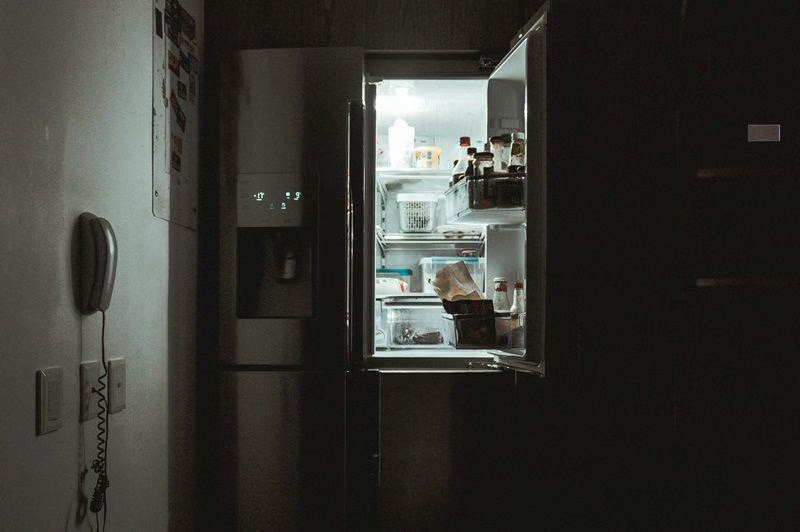
A refrigerator light that stays on can give a false sense that everything is working as it should. In reality, the cooling system may already be failing, and the problem often shows up first when food starts losing its safe storage temperature.
That kind of issue usually does not come from a single fault. Air circulation, cooling components, the defrost system, and the door seal can all affect whether the refrigerator still feels cold inside.
When cold air cannot move properly
One of the most overlooked causes is a refrigerator that is packed too tightly. When food fills the compartment too densely, cold air cannot spread evenly and some areas stop getting enough cooling.
A blocked airflow path can make the whole cabinet feel less effective even though the unit still has power. In that situation, the simplest step is to sort through the contents and remove items that are no longer needed.
Fan problems can create a similar result. The evaporator fan helps move air from the freezer to the rest of the refrigerator, while the condenser fan cools the compressor and condenser coils.
If either fan fails, the cooling process becomes unbalanced. Warm air can remain trapped in the system, and the refrigerator may no longer maintain the temperature it needs.
Cooling parts that fail quietly
A refrigerant leak is another serious reason a refrigerator stops cooling well. When refrigerant escapes, the appliance can no longer work at full capacity and heat absorption in the freezer and refrigerator compartment is disrupted.
In many cases, this type of leak is linked to damage in the evaporator. Once that happens, the air inside the refrigerator becomes much less cold than normal, and technician service is needed to prevent further damage.
The thermistor also deserves attention. This component helps regulate temperature inside the refrigerator, and when it fails, the unit may run too warm or become colder than expected until food freezes.
Temperature instability often starts from that kind of sensor problem. Because of its role in controlling the cooling cycle, the thermistor is worth checking when the refrigerator begins to lose its chill.
Simple physical issues that often go unnoticed
A door that does not close tightly can undo the work of the entire cooling system. Worn door gaskets may leave a gap that allows outside air to enter and disturb the temperature inside.
This problem is easy to miss because the refrigerator may still appear normal from the outside. Even so, air leakage forces the appliance to work harder while delivering weaker cooling.
Placement also matters more than many people realize. A refrigerator installed too close to an oven or stove can be affected by the heat around it.
That surrounding heat raises the temperature near the appliance and makes the cold air inside feel less effective. Keeping the refrigerator away from heat sources helps preserve stable cooling performance.
When the lower compartment stops cooling
In two-door refrigerators, a stronger problem can appear when the freezer remains very cold but the lower compartment is no longer cool. That pattern often points to a failure in the automatic defrost system.
A faulty Defrost Timer, Defrost Thermostat, or Heater can allow frost to build up on the hidden evaporator. When ice accumulates too heavily, the cold-air path to the lower section can be blocked completely.
Modern refrigerators can also lose cooling because of a damaged PCB module. In that case, the compressor and fans may not receive the command to run, even though the interior lamp still works because it uses a separate circuit.
Repeated clicking sounds from the back lower area can point to another type of failure. A weak PTC Relay, a problem with the Overload Protector, or a stuck compressor can stop refrigerant from circulating and leave the refrigerator without proper cooling.
Source: www.idntimes.com-
-

-

-