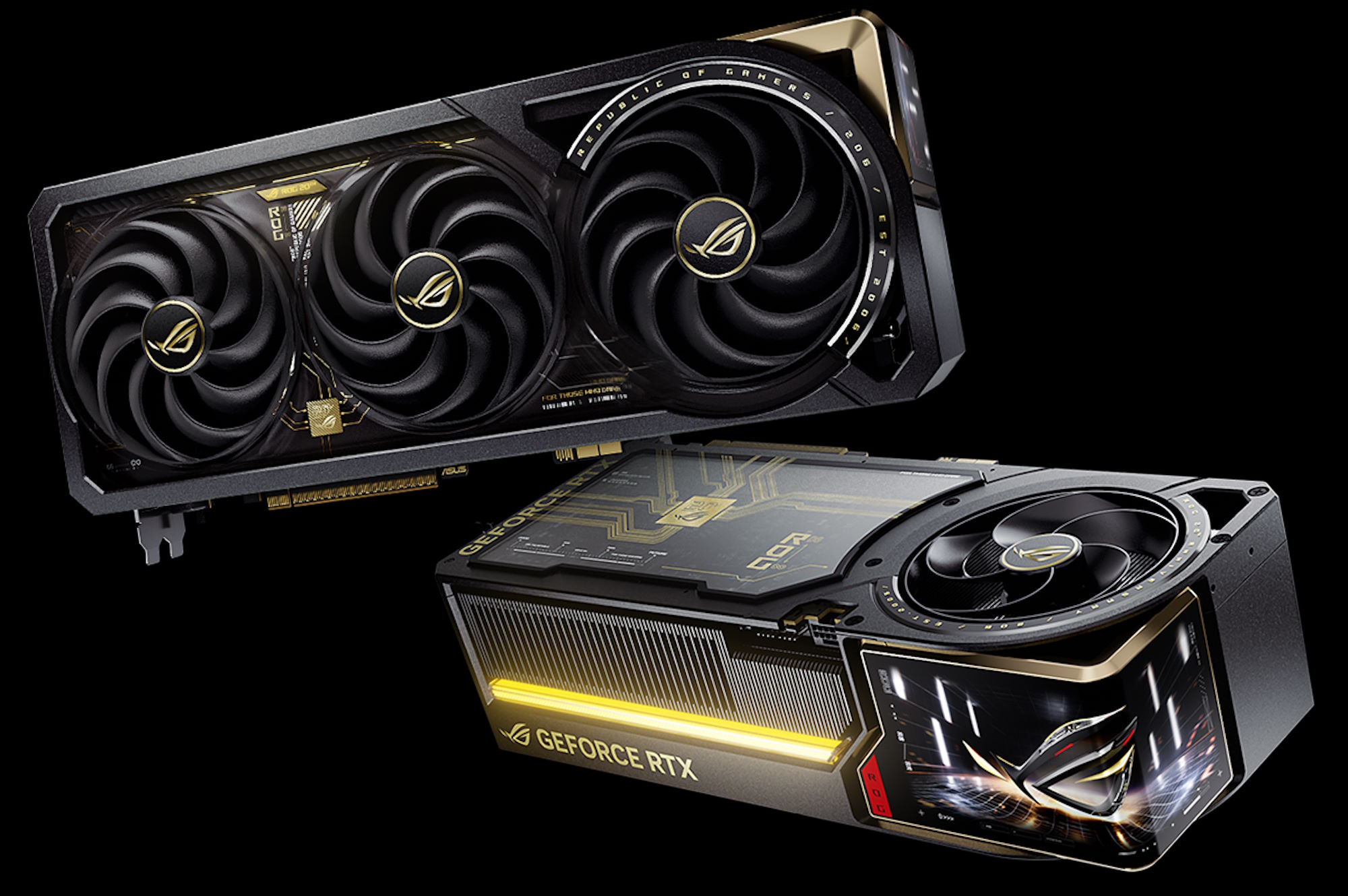
ASUS is using its ROG Edition 20 lineup to show that its gaming ecosystem is no longer built around one type of player or one type of device. From high-end desktops to handheld gaming, the range is designed to carry the same ROG identity across performance hardware, networking, peripherals, and portable play.
That approach is visible in the visual treatment as much as in the specifications. The Edition 20 family shares a distinct ROG Black and Red theme, Radiant Gold accents, and Crystal Lens elements, giving the entire lineup a unified look across very different product categories.
High-performance systems lead the lineup


At the center of the DIY and desktop segment sits the ROG G1000 Edition 20, an ultra-tower built for demanding workloads and top-tier gaming. It combines an AMD Ryzen 9 9950X3D2 processor with an RTX 5090, while a 420mm AIO liquid cooling system is included to keep temperatures under control.
ASUS also adds the AniMe Holo display to the system. The company describes it as the world’s first holographic fan system for a DIY PC, making the tower stand out not only for power but also for its visual presentation.
For users who want similar performance in a much smaller footprint, the ROG NUC 16 Edition 20 offers a different route. This 3-liter mini PC uses a Laptop RTX 5090 with DLSS 4.5 support and includes QuietFlow to help maintain stable thermal output.
ASUS says the compact system can handle up to 300 watts of heat. That makes it a notable option for heavy gaming or demanding work in a chassis that remains far smaller than a conventional desktop.
OLED monitors cover both speed and resolution
The Edition 20 ecosystem also extends to displays, with three OLED monitors aimed at different kinds of competitive and premium users. The ROG Swift OLED PG27AQWP-G is a 26.5-inch model with Tandem WOLED and dual-mode support, allowing QHD at 540Hz or HD at 720Hz.
Its 0.02 ms response time places it firmly in the category of displays built for very fast motion and minimal delay. ASUS is clearly targeting players who prioritize speed above all else.
For esports-focused users, the ROG Strix OLED XG259QWPG ACE brings a 24.5-inch FHD OLED panel with a 540Hz refresh rate. ASUS calls it the world’s first FHD esports OLED monitor, which positions it as the most specialized speed-oriented display in the group.
Those who want higher resolution without giving up flexibility get the ROG Swift OLED PG32UCWM. This 32-inch 4K Tandem RGB OLED monitor supports two modes: 4K at 240Hz or FHD at 480Hz.
Networking and mobile play broaden the ecosystem
The hardware ecosystem is not limited to PCs and monitors. ASUS also introduces the ROG Rapture GT-BE98 Pro Edition 20 as a flagship WiFi 7 router with quad-band support, MLO, and a black-and-gold finish.
Its rated bandwidth reaches up to 30Gbps, which makes it an important part of a setup built around low latency and large data transfers. In a multi-device gaming environment, that kind of network backbone helps tie the rest of the lineup together.
Mobile gaming receives its own attention through the ROG XBOX Ally X20 bundle. The handheld comes with a 7.4-inch Nebula HDR OLED display and an AMD Ryzen AI Z2 Extreme processor, giving it a place in the Edition 20 family alongside the larger gaming systems.
ASUS also includes the ROG XREAL R1 Edition 20 AR smart glasses in the bundle. Together, the devices are intended to let players experience game visuals wirelessly as if they were using a large monitor anywhere they go.
Peripherals and control software complete the package
The lineup does not stop at core hardware. ASUS also brings in the ROG Azoth Extreme mechanical keyboard, the ROG Harpe II Extreme esports mouse with a 65K sensor, and the ROG Destrier gaming chair with a futuristic exoskeleton design.
All of those products are tied together through the updated ROG Armoury Crate Edition 20. That software layer helps ASUS present the Edition 20 range as a single connected platform rather than a set of separate launches.