


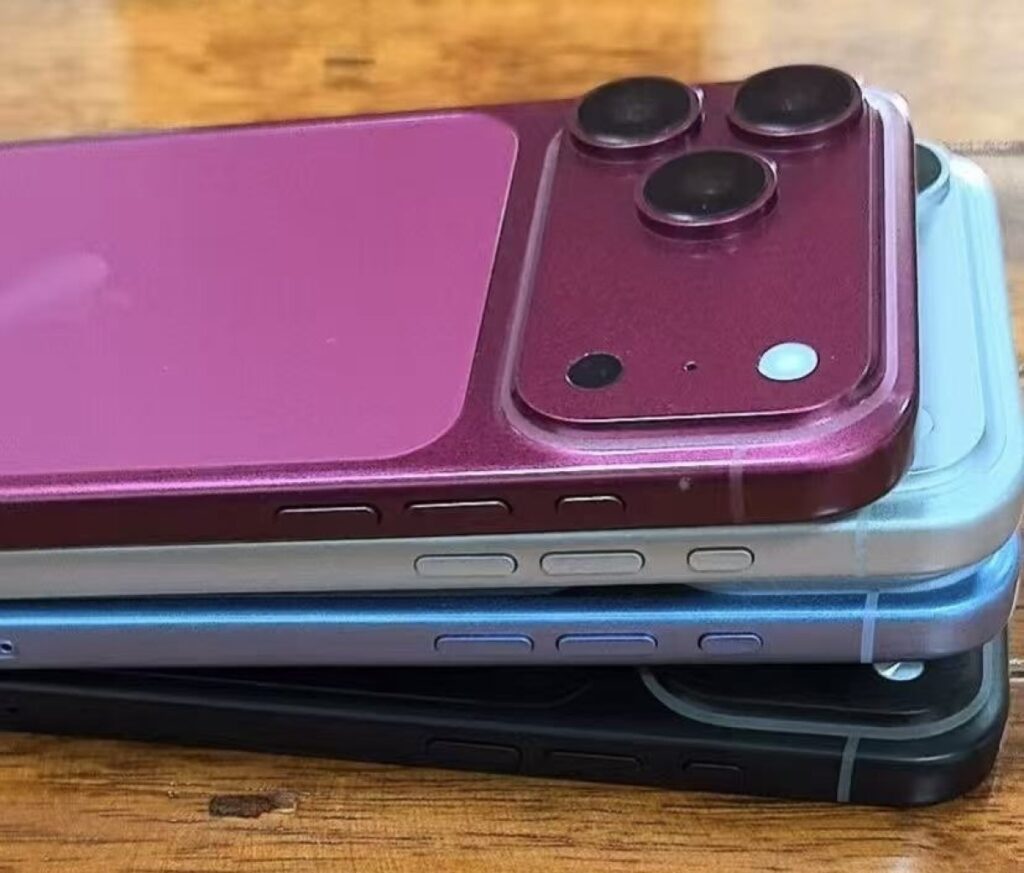
Apple’s next Pro model may not deliver the battery jump many buyers were hoping for. Early leaks around the iPhone 18 Pro point to only a very small increase in capacity, making the upgrade look modest rather than dramatic.
That has quickly become the main talking point, since battery life remains one of the biggest reasons people wait for a new iPhone generation. For the iPhone 18 Pro, however, the latest numbers suggest Apple is still leaning more on efficiency than on a bigger physical battery.
Small gains, not a major leap
Digital Chat Station on Weibo says Apple is testing two battery configurations for the iPhone 18 Pro. The difference appears tied to Apple’s continued practice of separating battery capacity by market and by SIM setup.
For eSIM-only markets such as the United States, the iPhone 18 Pro is said to carry a 4,288mAh battery. Versions that still include a physical SIM tray are reportedly set at 4,056mAh.
Those figures do show progress, but only slightly. The eSIM version of the iPhone 17 Pro is said to use a 4,252mAh battery, which means the iPhone 18 Pro would gain just 36mAh in that version. For the physical SIM variant, the iPhone 17 Pro is said to have a 3,988mAh battery, putting the reported increase at 68mAh.
Why the numbers differ by market
The split between eSIM and SIM tray models suggests Apple may keep the same internal layout strategy it has used before. An eSIM-only design leaves more room inside the phone, while a physical SIM tray takes up additional space that could otherwise be used for battery capacity.
That means battery life on the iPhone 18 Pro may not be identical across regions. Users in some markets could get a slightly larger battery, although the gap still does not look large enough to change the overall story in a major way.
This also makes the iPhone 18 Pro harder to judge from a single number. One model name may still hide different battery capacities depending on where the phone is sold.
Efficiency may matter more than size
A modest battery increase does not automatically mean weaker endurance. Apple still has room to improve actual battery life through hardware efficiency, and that is where the rumored A20 Pro chip becomes important.
The A20 Pro is expected to be used in the iPhone 18 Pro, and it is rumored to be one of the first chips built on TSMC’s 2nm process. If that turns out to be accurate, lower power consumption could become the main advantage.
In that case, the iPhone 18 Pro could still offer better battery performance even with only a small rise in mAh. Apple often relies on a combination of hardware and software optimization, so the experience on paper does not always tell the full story.
The Pro Max may attract more attention
While the standard Pro model is said to receive only a mild battery increase, the iPhone 18 Pro Max is being described as much more ambitious. That may shift more interest toward the larger model among users who care most about endurance.
For versions with a physical SIM tray, the iPhone 18 Pro Max is rumored to carry a 5,000mAh battery. The eSIM-only version is said to reach 5,100mAh to 5,200mAh.
If those figures are correct, the Pro Max would set a new record for battery capacity on an iPhone. That would widen the gap between the regular Pro and Pro Max even further, especially for buyers who prioritize battery life above all else.
The broader iPhone lineup is expected to include the iPhone 18, iPhone 18 Pro, and iPhone 18 Pro Max. For now, the strongest battery-related story seems to belong to the Pro Max, while the iPhone 18 Pro itself looks set for only a very small step forward.
Source: www.techlusive.in