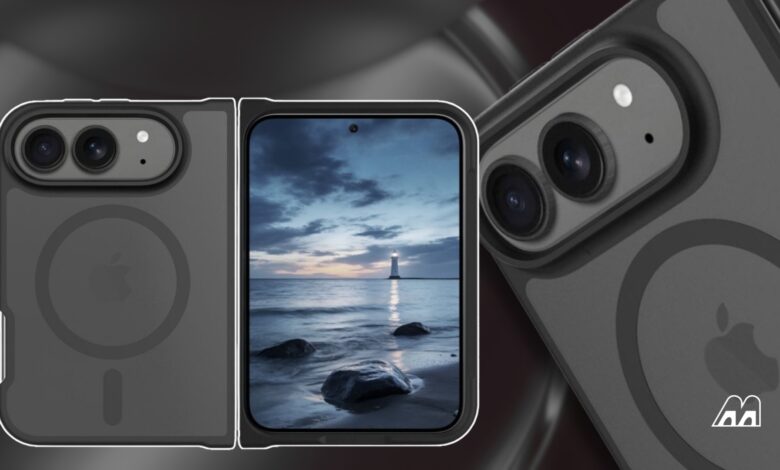
A new dummy of the iPhone Fold is drawing attention because it points to a very different design direction from current iPhones. The model appears to abandon Face ID in favor of Touch ID, while also placing the rear cameras horizontally instead of in the familiar vertical or square layouts seen on many recent Apple phones.
The leak comes from gadget leaker Sonny Dickson, who shared the dummy on X. From the images, Apple’s first foldable iPhone seems to follow a book-style form factor, similar to many Android foldables, but with a body that looks shorter and wider when closed.
A thinner look when opened
One of the most notable details is the emphasis on a slimmer profile when the device is unfolded. The dummy suggests that Apple is aiming for a foldable that feels compact in the hand without losing the larger-screen experience expected from this category.
The main display is reportedly around 7.8 inches, while the outer cover screen is said to measure about 5.5 inches. That combination points to a device designed for both quick use when folded and more expansive work or media viewing when opened.
When closed, the device is described as resembling a passport, which reinforces the idea that Apple is targeting a compact shape for portability. That approach would set the iPhone Fold apart from standard iPhone models and help define a new identity for Apple’s foldable line.
Horizontal cameras change the look
The rear design of the dummy is one of the clearest visual departures from existing iPhones. Instead of a traditional camera arrangement, the back shows an elongated capsule-shaped module on the left side with two rear cameras placed horizontally alongside a flash.
That layout makes the foldable stand out immediately, even from a distance. It also suggests that Apple is not simply adapting a regular iPhone body into a foldable shell, but is experimenting with a different visual language for the device.
Inside, the front camera is positioned in the upper-left corner of the main display. This placement supports use when the phone is opened and fits the overall layout shown in the dummy.
Touch ID returns for security
The leak also points to a major change in Apple’s security approach. Rather than using Face ID, the iPhone Fold is expected to rely on Touch ID built into the power button.
That sensor would be used for unlocking the device and confirming Apple Pay payments. The choice would also make sense for a foldable that is designed to stay thin when opened, since it lets Apple preserve the form factor without adding extra bulk.
Touch ID has not been a headline feature on most modern iPhones for some time. Its possible return on the foldable would mark a practical shift that matches the device’s new design requirements.
Hinge quality remains a major focus
Beyond the visible hardware, the hinge is said to be one of the most important parts of the iPhone Fold. Reports suggest the crease on the main display could be almost unnoticeable, which remains one of the hardest challenges in the foldable market.
If that claim holds up, Apple would have a major selling point for its first foldable phone. A nearly invisible crease would matter most in daily use, especially on the larger internal screen.
The device is also expected to benefit from Apple’s mature iPad app ecosystem, which could help give the foldable a more complete software experience from the start. That would allow the product to rely not only on new hardware, but also on software support that is already well established.
Color options are still uncertain
There is still disagreement over the launch color choices. Sonny Dickson believes Apple may offer only white at release, while Bloomberg’s Mark Gurman says black and white are still possible.
That difference leaves some of the final details unresolved, and the current unit remains only a dummy. For now, the leaked model offers a clearer look at Apple’s direction, but not a finished picture of the iPhone Fold’s final design.