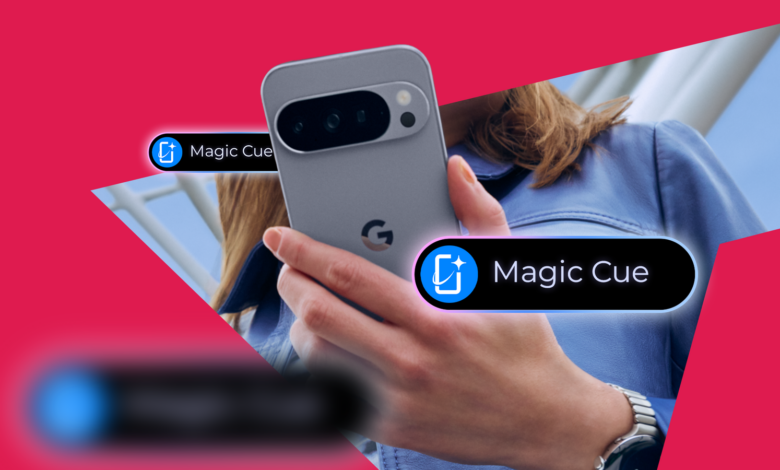
Google’s Magic Cue for Pixel 10 may soon become far more useful than it first appeared. The feature, which has so far felt limited inside Google’s own apps, is now expected to move beyond that narrow boundary.
That shift matters because Magic Cue was one of the most promising AI additions in the Pixel 10 lineup. If broader app support arrives, the feature could finally fit into the way people actually use their phones every day.
Support for third-party apps is starting to emerge
The clearest signal so far comes from Google’s own developer conference discussions, as reported by Android Authority. During those talks, Google said it planned to extend Magic Cue’s contextual suggestions to third-party applications.
Google also showed a demo of Magic Cue working inside a Snapchat conversation. That example strongly suggests the company is preparing the feature for use across more apps, instead of keeping it confined to Google’s ecosystem.
The possibility is notable because Magic Cue drew attention when the Pixel 10 series was unveiled with a wave of new AI tools. Interest cooled after users learned that the feature worked only in Google apps.
How Magic Cue works on Pixel 10
Magic Cue runs on-device through Gemini Nano. It is designed to read what is on screen and surface context-aware suggestions without sending the task off the phone.
The goal is to reduce the need to hunt through menus or remember details manually. Google has used examples such as helping users find flight ticket information while on a call, alongside similar everyday scenarios.
The prompt appears above the navigation bar and scans the current screen before offering a smart shortcut that fits the context. In practice, that makes the feature feel less like a separate tool and more like a fast layer of assistance.
Firefox testing shows both promise and limits
Evidence that Magic Cue can work outside Google’s apps is not limited to the official demo. Kieron Quinn reportedly modified the Firefox package so the feature would activate in the browser.
That test, shared with Android Authority, showed Magic Cue appearing above the navigation bar and functioning as intended. It read the screen context and suggested actions based on what the user was viewing.
In that demonstration, the Gemini Nano-powered feature recognized the browsing context and suggested continuing a session that had previously been left open on a desktop computer. That is the kind of cross-device convenience Google seems to be aiming for.
Firefox also exposed the main obstacle. Quinn noted that the browser immediately stopped the Magic Cue overlay because of its privacy guidelines.
That limitation shows the expansion is not just a software question. App privacy rules, screen protection policies, and each developer’s decisions will likely shape how widely Magic Cue can spread.
A gradual rollout appears more likely
There is still no clear public timeline for broad availability. Google has not shared full details on when third-party app support will reach Pixel devices at scale.
Because app makers will need to coordinate with Google, the rollout is likely to happen in stages. Support may arrive app by app over the coming months or even years on Google phones.
That means Pixel 10 owners should not expect every major app to support Magic Cue at once. Adoption may be slow, especially where technical access and privacy requirements differ from one app to another.
Even so, the direction is becoming easier to read. After debuting with a strong promise but a limited footprint, Magic Cue now looks closer to the kind of AI feature that could matter in everyday use, especially if integrations like the Snapchat example keep expanding.