Huawei is preparing to push HarmonyOS deeper into the computing market with a commercial desktop PC launch scheduled for September. The move signals that the company is no longer treating its operating system as a mobile-only platform.
The new desktop effort is aimed squarely at enterprise users, where security, control, and data protection often matter as much as performance. By extending HarmonyOS into office computing, Huawei is positioning itself as a serious alternative to traditional Western platforms.
Enterprise-first rollout
The launch timeline was confirmed at the Huawei Developer Conference 2026 during the “HarmonyOS Office” sub-forum. Zhu Dongdong, President of Huawei Terminal Tablet and PC Product Line, said the commercial desktop version would arrive in September.
Before the full release, Huawei plans to begin testing and trial use for business customers in July or August. That early access window should give companies time to evaluate the system ahead of broader adoption.
Built for business use
This desktop push is not being framed as a consumer PC release. Huawei is developing a commercial version designed specifically for business environments, with stronger security controls and data compliance in mind.
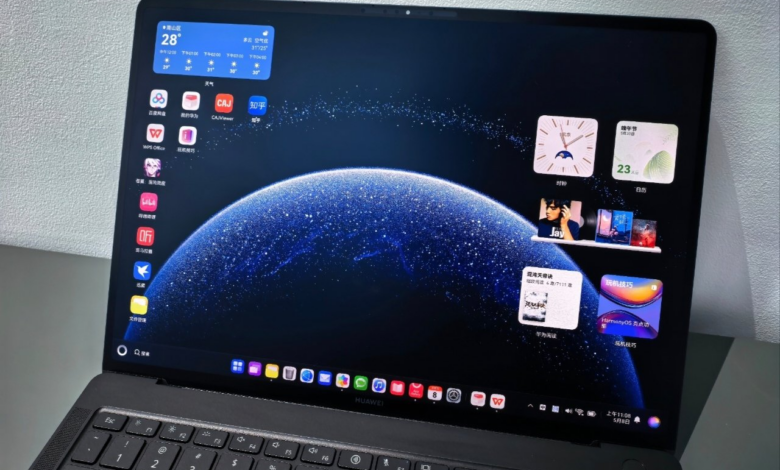
The company has already introduced two models for the initiative, the HM740 and HM940. Both are positioned as modified HarmonyOS PCs tailored for enterprise deployment rather than standard consumer devices.
A key part of the strategy is hardware-level protection. Huawei has added a dedicated security chip to help the devices meet enterprise expectations for data safeguarding and compliance.
HM740 shows the direction
The HM740 offers a clear look at the design approach behind the new line. It measures 14.5 mm thick and weighs 1.32 kg, keeping the device relatively slim and portable for office use.
Huawei says the model can deliver up to 21 hours of battery life. It also includes a 14.2-inch OLED display with a 120Hz refresh rate.
For office workflows, the company has added a dual digital space feature intended to separate work and personal activity. That kind of division can be useful for enterprises that want clearer boundaries on shared or managed devices.
A broader HarmonyOS strategy
The move into desktop and business PCs expands HarmonyOS beyond phones and tablets. It also turns the platform into a productivity system rather than only a consumption-focused operating environment.
That wider reach fits Huawei’s ambition to build a full-stack computing ecosystem with stronger security and tighter integration. It also reduces reliance on traditional platforms that have dominated the market for years.
Huawei is also expected to see growth in HarmonyOS PC shipments in 2026 as the product line expands. The company’s push suggests it wants HarmonyOS to become a more complete foundation for work computing.
Why the launch matters
For companies in China, a commercial HarmonyOS desktop could become a more mature alternative, especially where security and customization are priorities. The enterprise focus may also help Huawei differentiate its offering from mainstream PC ecosystems.
Broader international expansion remains a possibility later on, but the immediate message is clear. Huawei is building HarmonyOS into a platform that reaches well beyond mobile devices and into the center of business computing.