


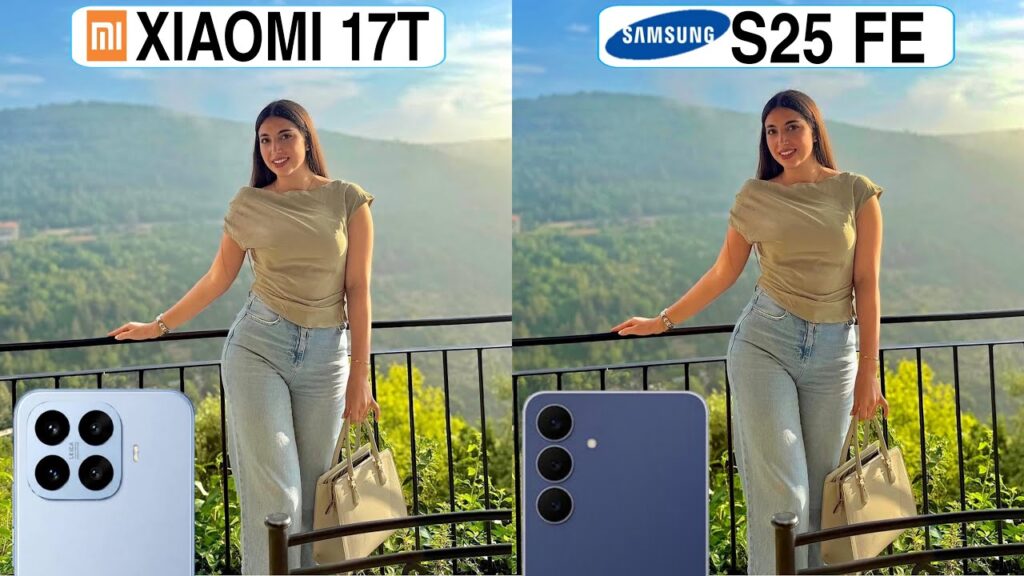
The battle between Xiaomi 17T and Samsung Galaxy S25 FE is not only about speed. It is also a clear clash between a phone built to maximize hardware value and one designed to prioritize software polish, premium feel, and ecosystem comfort.
For buyers, that difference matters more than a spec sheet. Xiaomi 17T pushes harder on performance, battery life, and camera reach, while Galaxy S25 FE leans on One UI 8, Android 16, wireless charging, and Samsung’s familiar premium experience.
Battery and charging tilt the balance
Xiaomi 17T makes its strongest case with a 6,500 mAh battery and 67W fast charging. It also adds 22.5W reverse wired charging, which gives it an advantage for long days away from a charger.
Galaxy S25 FE comes with a smaller 4,900 mAh battery and 45W fast charging. Samsung counters with 15W wireless charging and reverse wireless charging, features that Xiaomi does not offer in this comparison.
That contrast says a lot about the two products. Xiaomi focuses on endurance and quick refills, while Samsung emphasizes convenience and a more flexible charging setup.
Performance follows two different philosophies
On paper, Xiaomi 17T appears better suited to heavy use. It uses the Dimensity 8500 Ultra, pairs it with 12 GB of RAM, and is reported to score about 2,407,614 in AnTuTu.
Galaxy S25 FE uses Exynos 2400 with 8 GB of RAM and lands around 2,066,828 in AnTuTu. In Geekbench, however, Samsung posts the stronger single-core result at about 2,069, while Xiaomi 17T records around 1,704.
The multi-core results are nearly even, with Xiaomi at about 6,686 and Samsung at about 6,633. That suggests Samsung remains very competitive in day-to-day responsiveness, but Xiaomi has the stronger overall headroom for demanding workloads.
Cameras are another major split
Xiaomi 17T carries a 50 MP main camera, a 50 MP periscope telephoto camera with 5x optical zoom, a 12 MP ultrawide camera, and a 32 MP front camera. It also benefits from Leica tuning, which adds appeal for portrait shooting and zoom photography.
Galaxy S25 FE offers a 50 MP main camera, a 12 MP ultrawide camera, an 8 MP telephoto camera with 3x optical zoom, and a 12 MP front camera. The setup remains capable, but it clearly trails Xiaomi in telephoto reach and flexibility.
Samsung still holds an edge in image processing and video. The phone is described as delivering reliable dynamic range and higher-resolution video recording support, which may matter more to users who shoot videos often.
Display and design keep both phones in premium territory
Xiaomi 17T uses a 6.59-inch AMOLED display with a 1268 x 2756 resolution and a peak brightness of 3,500 nits. Galaxy S25 FE features a larger 6.7-inch LTPO AMOLED 2X panel with a 1080 x 2340 resolution and a peak brightness of 1,900 nits.
Both panels refresh at 120Hz and both phones carry an IP68 rating. Xiaomi stands out for higher brightness and a sharper-looking front, while Samsung keeps its reputation for balanced color handling and strong outdoor visibility.
Samsung also benefits from its aluminum frame and generally more established premium build feel. Xiaomi, meanwhile, leans into a more modern hardware-first presentation that matches the rest of its spec sheet.
Who each phone is really for
Xiaomi 17T is the more aggressive package for users who want the most visible hardware advantages for their money. It is especially compelling for gamers, heavy multitaskers, and people who need battery life that can last through demanding use.
Galaxy S25 FE makes more sense for buyers who value Samsung’s software support philosophy, ecosystem integration, and familiar daily experience. Its strengths are less about raw numbers and more about the way the phone fits into the broader Galaxy approach.
In the end, the choice comes down to what feels more important: Xiaomi’s larger battery, faster charging, stronger benchmark performance, and more ambitious camera hardware, or Samsung’s polished software, wireless charging, and premium ecosystem appeal.