


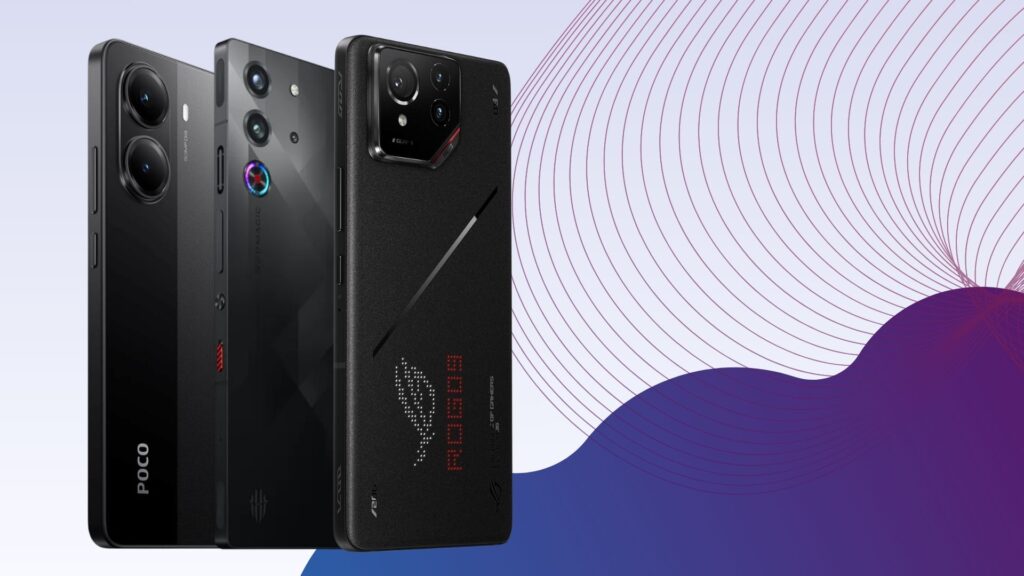
The 5 million to 7 million rupiah smartphone segment is becoming one of the most competitive parts of the market in 2026. Devices in this range are no longer defined by basic midrange hardware alone, because many now bring stronger chipsets, high-refresh displays, large batteries, and more capable camera systems.
That shift matters for buyers who want one phone for heavy gaming, content creation, and everyday use without constantly worrying about battery life. In that context, the most interesting models are the ones that balance raw performance with camera quality, screen experience, and endurance.
Gaming-first options stand out
Poco X7 Pro is one of the strongest choices for gaming performance in this class. It uses the MediaTek Dimensity 8400 Ultra, comes with 12GB of RAM and 512GB of storage, and pairs that with a 6.67-inch AMOLED 120Hz display, a 6,000 mAh battery, and a 50MP main camera.
iQOO Neo 10 also lands near the top for gaming-focused users. The phone is powered by the Snapdragon 8s Gen 4, offers 8GB of RAM and 256GB of storage, uses an AMOLED 144Hz panel, and carries a 7,000 mAh battery with 120W fast charging.
Poco X8 Pro is another model that pushes performance aggressively in this price bracket. It is equipped with the Dimensity 8500 Ultra, 12GB of RAM, 512GB of storage, a 6,500 mAh battery with 100W fast charging, and an AMOLED 120Hz display.
Motorola Edge 60 Pro takes a more balanced approach. It relies on the Dimensity 8350, includes a 6.7-inch OLED 120Hz screen, a 50MP main camera with telephoto, and a 6,000 mAh battery.
Camera-focused picks bring more serious imaging tools
Xiaomi 14T remains notable for its camera setup and Leica collaboration. The phone uses the Dimensity 8300 Ultra, adds a 50MP main camera with telephoto and ultrawide lenses, and includes an AMOLED 144Hz display alongside a 5,000 mAh battery.
Redmi Note 15 Pro Plus is aimed at users who want a high-resolution main camera without moving far up the price ladder. It is listed with the Snapdragon 7s Gen 4, a 200MP main camera, a 6,500 mAh battery, and an AMOLED 120Hz display.
Tecno Camon 50 Pro offers a more economical but still complete package. It comes with the Dimensity 7400 Ultimate, a 50MP main camera with telephoto and ultrawide support, an AMOLED 144Hz display, 8GB of RAM, and 256GB of storage.
Everyday balance still has a place
Samsung Galaxy A56 is highlighted for stable day-to-day use and strong software optimization. Its specification list includes the Exynos 1580, a 6.7-inch Super AMOLED display, a 50MP main camera, and a 5,000 mAh battery.
Infinix Note 60 Pro tries to combine value and usable performance with the Snapdragon 7s Gen 4, 12GB of RAM, 256GB of storage, a 6,500 mAh battery, and a 50MP main camera. It is positioned for productive users working within a limited budget.
iQOO Z11 stands out mainly because of its massive 9,000 mAh battery. The phone also uses the Snapdragon 7s Gen 4, an AMOLED 144Hz display, and a 50MP main camera.
Quick comparison of the key differences
| Smartphone | Chipset | Main Camera | Display | Battery |
|---|---|---|---|---|
| Poco X7 Pro | Dimensity 8400 Ultra | 50MP | AMOLED 6.67-inch 120Hz | 6,000 mAh |
| Xiaomi 14T | Dimensity 8300 Ultra | 50MP | AMOLED 144Hz | 5,000 mAh |
| iQOO Neo 10 | Snapdragon 8s Gen 4 | – | AMOLED 144Hz | 7,000 mAh |
| Samsung Galaxy A56 | Exynos 1580 | 50MP | Super AMOLED 6.7-inch | 5,000 mAh |
| iQOO Z11 | Snapdragon 7s Gen 4 | 50MP | AMOLED 144Hz | 9,000 mAh |
| Infinix Note 60 Pro | Snapdragon 7s Gen 4 | 50MP | – | 6,500 mAh |
| Motorola Edge 60 Pro | Dimensity 8350 | 50MP with telephoto | OLED 6.7-inch 120Hz | 6,000 mAh |
| Poco X8 Pro | Dimensity 8500 Ultra | – | AMOLED 120Hz | 6,500 mAh |
| Redmi Note 15 Pro Plus | Snapdragon 7s Gen 4 | 200MP | AMOLED 120Hz | 6,500 mAh |
| Tecno Camon 50 Pro | Dimensity 7400 Ultimate | 50MP with telephoto and ultrawide | AMOLED 144Hz | – |
With this kind of lineup, buyers in the 5 million to 7 million rupiah range have more distinct priorities to choose from than before. Poco X7 Pro, iQOO Neo 10, and Poco X8 Pro look the most aggressive for gaming, while Xiaomi 14T and Redmi Note 15 Pro Plus are more compelling for users who care most about camera performance.