


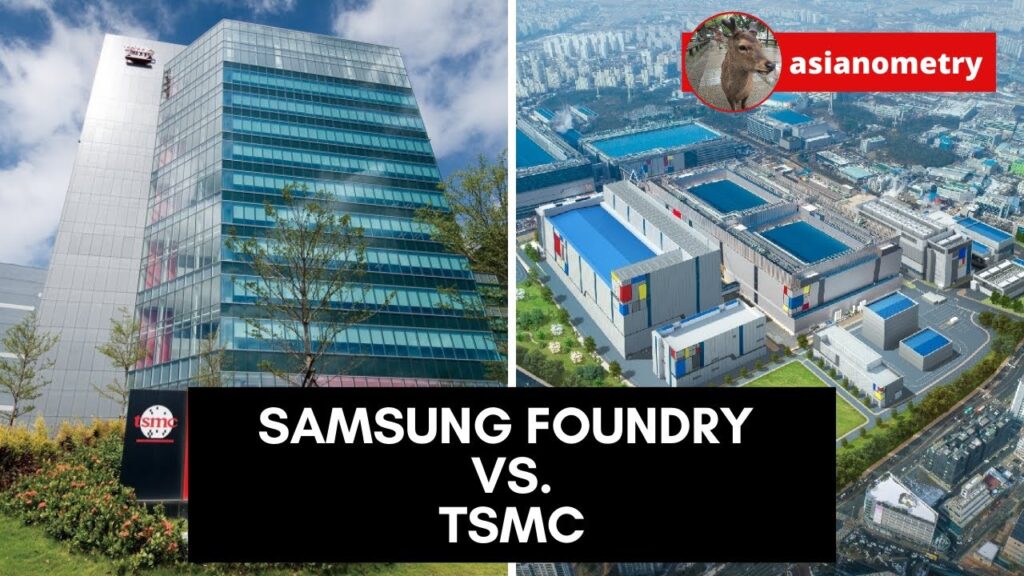
The pressure on TSMC’s production capacity is reshaping the global chip foundry landscape, and Samsung is emerging as one of the biggest beneficiaries. As demand for AI and high-performance computing chips continues to surge, more technology companies are looking beyond the market leader to secure supply and reduce risk.
This shift matters because advanced chip manufacturing is controlled by only a small number of players. In that environment, Samsung is becoming a practical second source for companies that no longer want to depend on a single foundry.
Major customers are spreading their bets
According to Nikkei Asia, Samsung Electronics has seen a sharp rise in manufacturing demand from both long-time clients and new prospects. The increase comes as TSMC’s available capacity struggles to keep pace with global demand.
The effect is already visible in Samsung’s business results. Its chip division posted a record operating profit in the first quarter of 2026, and momentum could continue as more customers place orders for future chip generations.
Several major companies are now said to be exploring or expanding ties with Samsung. The list includes AMD, Google, Groq backed by NVIDIA, Tesla, and BYD.
AMD is reportedly in talks with Samsung to produce its next-generation CPU starting in 2028. That move suggests major chip designers are taking dual-production strategies more seriously for critical product lines.
Google is also said to be deepening its relationship with Samsung. The company reportedly wants to produce its next-generation Axion processor around 2028 and have Samsung make part of its key TPU lineup for AI workloads starting in 2028.
In the automotive sector, BYD is said to be discussing next-generation autonomous driving chips with Samsung. Tesla has already confirmed that its next-generation AI6 chip will be manufactured at Samsung’s Texas facility.
Groq has also been using Samsung’s foundry for chip production. The language processing unit developer is even said to have the option of returning to Samsung for a future version of its custom AI chip.
Why Samsung is gaining leverage
The surge in demand for AI chips and high-performance chips has left TSMC under heavy strain. As customers compete for limited capacity, buying strategies are changing fast.
Instead of relying on one foundry, many companies are now adopting dual-sourcing. They are splitting orders between TSMC and Samsung to reduce supply-chain risk and preserve production certainty.
That approach is creating a direct advantage for Samsung. The South Korean company has long trailed TSMC in advanced chip manufacturing, but the market is now rewarding flexibility as much as it rewards raw dominance.
The capacity pressure at TSMC is also affecting smaller companies. As giants such as Google, Tesla, BYD, and AMD move aggressively to secure what remains of TSMC’s capacity, many other players are pushed toward alternatives.
In that setting, Samsung becomes the most logical destination. It belongs to the very small group of companies able to manufacture advanced chips at scale.
The foundry race is shifting
Globally, only three companies can produce advanced chips: TSMC, Samsung, and Intel. But their positions are far from equal in external foundry services.
TSMC still leads because it manufactures the most advanced chips. Samsung follows as the main challenger, while Intel, despite its size, is still early in building contract manufacturing at scale for outside customers.
Samsung has often struggled to win large external clients consistently. That is starting to change because TSMC’s limited capacity is forcing the market to become more open to a second supplier.
The shift is not only about landing new customers. It also reflects a new way technology companies are organizing chip supply chains as AI demand continues to expand without signs of slowing.
For Samsung, the timing is especially favorable. If more CPU, TPU, AI chip, and automotive chip projects move into its production pipeline, its position in the foundry industry could strengthen much faster than previously expected.
At the same time, TSMC’s pressure shows that technological leadership is not always enough when capacity becomes the main bottleneck. In a market shaped by production scarcity, the ability to offer manufacturing space on time has become as important as having the most advanced process technology.