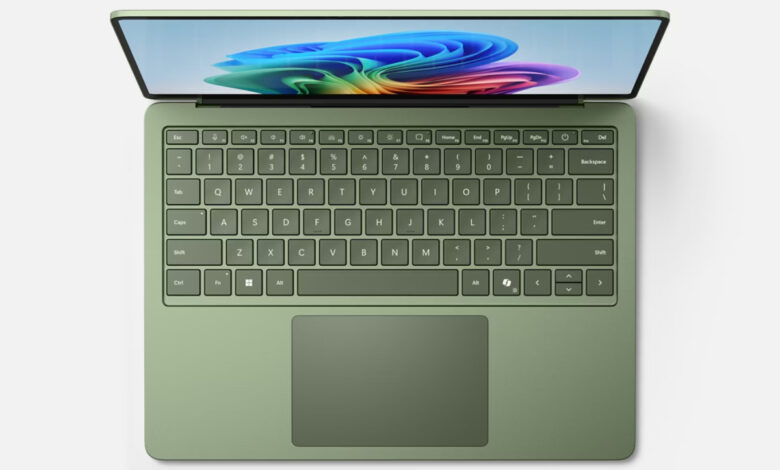
Microsoft is steering its Surface lineup in a sharper ARM direction with the Surface Pro 12 and Surface Laptop 8. Both devices now center on Qualcomm’s Snapdragon X2, a move aimed at improving on-device AI performance while keeping power use in check.
The shift matters because Microsoft is no longer positioning these machines only as thin-and-light Windows devices. It is also presenting them as AI-ready PCs that can handle more work locally, without leaning too heavily on cloud processing.
Snapdragon X2 sits at the core
Both the Surface Pro 12 and Surface Laptop 8 are offered with either the Snapdragon X2 Plus 10-core or the Snapdragon X2 Elite 12-core. Qualcomm pairs the chip with a Hexagon NPU rated at up to 80 TOPS, giving the devices dedicated hardware for AI tasks on the device itself.
That setup is important for users who want faster responses and less dependence on internet access for AI features. It also reflects Microsoft’s broader push toward Windows hardware that balances performance with energy efficiency.
Memory and storage scale up for heavier workloads
Microsoft is offering RAM from 16GB to 64GB, while storage ranges from 256GB to 1TB. On the 15-inch laptop model, the base storage option starts at 512GB.
The wider configuration range makes the two Surface models more flexible for everyday productivity, work-focused use, and more demanding multitasking. It also gives Microsoft room to target users who need premium Windows hardware without moving into workstation territory.
Surface Laptop 8 comes in two sizes
Surface Laptop 8 is available in 13.8-inch and 15-inch versions. The 13.8-inch model starts at Rp25.9 million and uses an LCD panel with a 120Hz refresh rate and 201 PPI.
The 15-inch version starts at Rp27.6 million and raises the display density to 262 PPI. It also adds a MicroSDXC card reader, which may appeal to users who regularly move media or files between devices.
Surface Pro 12 adds an OLED option
Surface Pro 12 starts at Rp24.3 million for buyers who want a more flexible tablet-style design. Its biggest display update is the OLED option, which still supports a 120Hz refresh rate.
Microsoft also equips the tablet with two USB-C/USB4 ports and Wi-Fi 7 support. Those additions make the device better suited to fast data transfer and modern wireless use in a premium mobile setup.
Battery claims point to long unplugged use
Microsoft says the Surface Laptop can last up to 20 hours for local video playback, while the Surface Pro 12 is rated for up to 15.5 hours. Those figures put battery endurance near the center of the new pitch, especially for users who spend much of the day away from a charger.
The ARM-based design is also intended to support that efficiency story. Combined with the Snapdragon X2 platform, Microsoft is clearly betting that battery life and local AI performance can be just as important as raw speed.
Key specifications at a glance
| Model | Starting Price | Display Option | Processor | Battery |
|---|---|---|---|---|
| Surface Pro 12 | Rp24.3 million | OLED, 120Hz | Snapdragon X2 Plus 10-core / X2 Elite 12-core | Up to 15.5 hours |
| Surface Laptop 8 13.8-inch | Rp25.9 million | LCD 120Hz, 201 PPI | Snapdragon X2 Plus 10-core / X2 Elite 12-core | Up to 20 hours |
| Surface Laptop 8 15-inch | Rp27.6 million | 262 PPI | Snapdragon X2 Plus 10-core / X2 Elite 12-core | Up to 20 hours |
With Snapdragon X2, an 80 TOPS NPU, high-refresh displays, and extended battery claims, Microsoft is making the Surface Pro 12 and Surface Laptop 8 a clear statement about where its Windows hardware is heading. The two models now sit squarely in the company’s AI-first, mobility-focused strategy.