


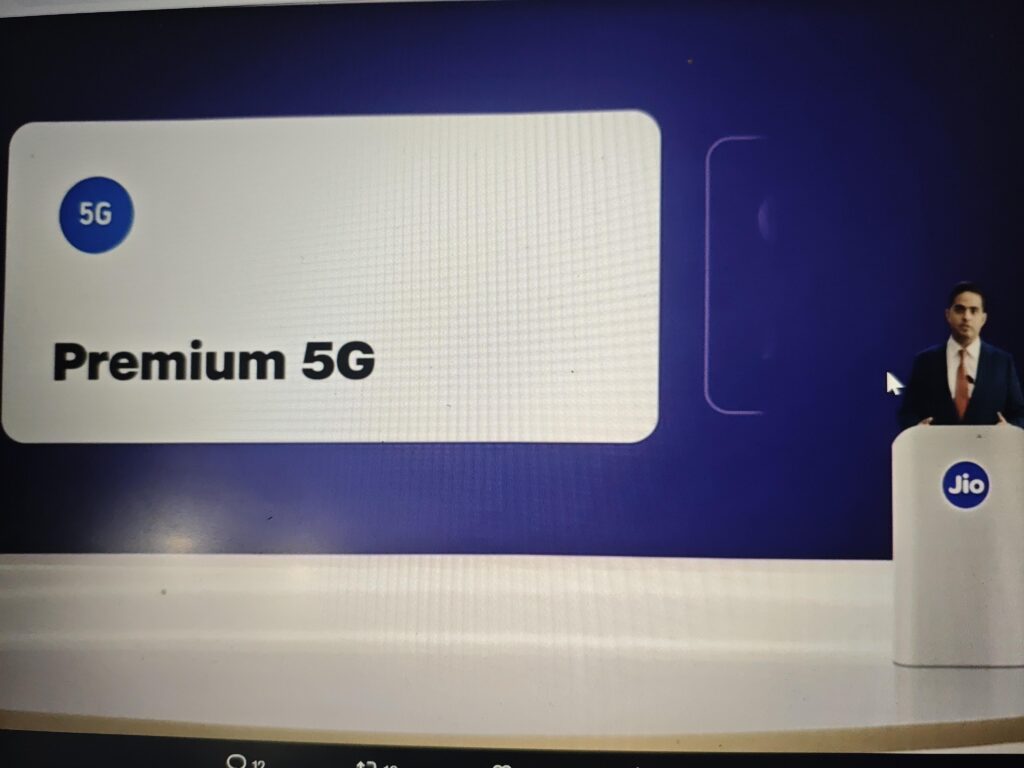
Jio’s plan for Premium 5G is less about replacing cheap internet and more about splitting the market into layers. The move suggests that affordable data may stay in place, while users who want a steadier connection in crowded areas are given a paid upgrade.
That distinction matters because the new service is built around network priority, not just raw speed. In a market where mobile access is often judged by congestion at peak hours, Jio appears to be aiming at reliability when networks are under pressure.
What Premium 5G is meant to do
Jio introduced Premium 5G during its 49th annual meeting, positioning it as a service tier for customers who need stronger network performance. The company’s focus is on giving selected users priority access rather than removing mainstream plans.
The service uses network slicing, a technology that allows operators to create dedicated network lanes for different categories of users. In practice, this can help regular consumers and enterprise customers receive more tailored connectivity when demand is high.
Where the benefit will be felt most
The biggest difference is expected during periods of heavy traffic, when many people are connected at the same time. Premium users would be placed ahead in traffic priority, which should make the experience more consistent in crowded conditions.
Jio also says its cycling beam form cell design is intended to improve capacity while maintaining dependable coverage in dense locations. That is especially relevant in places such as stadiums and shopping malls, where network quality often drops.
Cheap internet is not going away yet
Based on the information currently available, Jio does not appear ready to remove affordable data plans. The new tier looks like an additional option rather than a replacement for standard packages.
Users who are comfortable with lower-cost plans can continue using them normally. Premium 5G is aimed at people who need a more stable connection during busy periods, not at forcing everyone into a higher-priced tier.
A move that mirrors Airtel’s approach
Jio’s direction is similar to Airtel Priority, where platinum customers receive network preference when towers are busy. The broader industry shift suggests that operators now see service quality as a separate product from basic data access.
For telecom companies, that creates a new way to earn revenue without abandoning mass-market pricing. For consumers, it means the gap between standard service and priority service is likely to become more visible.
AI features are part of the wider plan
Jio is also preparing AI-based services for all users, including an assistant that can transcribe phone conversations and provide summaries after calls. The same assistant is expected to handle practical tasks such as ordering food, booking taxis, reserving tables, and scheduling meetings.
MyJio is also set to evolve into a personal AI adviser that can help users choose international roaming plans or guide them through JioFiber installation and network changes. These additions show that Jio is pairing network upgrades with software tools meant to make the service feel more personal.
The long-term direction
Jio is targeting a full migration of its customers to 5G by 2030, while also pushing for India to play a larger role in global 6G standards. That long-term roadmap suggests Premium 5G is only one part of a larger transition.
For now, the clearest takeaway is that cheap internet is not being declared obsolete. Instead, Jio is helping define a model where affordable plans remain available, while priority connectivity becomes an extra layer for users who are willing to pay for it.