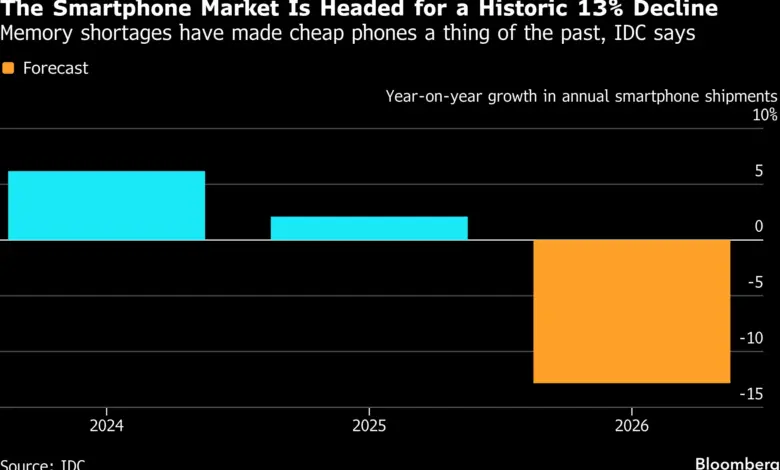
The smartphone market is heading into a difficult 2026 as a global memory chip shortage puts pressure on new device demand. FDM CCS Insight projects that sales of new smartphones could fall by 14.8% as manufacturers lift prices to absorb rising component costs.
For consumers, the impact is likely to be felt most sharply in the lower-priced segment. As entry-level models become more expensive, more buyers are expected to keep older devices for longer or look for cheaper alternatives in the second-hand market.
Entry-level phones face the steepest price shock
The sharpest strain is expected at the start of the quarter, when the market contraction is projected to reach 4.4%, even after some inventory had already been stockpiled. FDM CCS Insight also says entry-level handset prices could rise by as much as 50%.
Ben Hatton of FDM CCS Insight said the effect will be most noticeable for consumers buying phones below US$500, or around Rp8,9 juta. He added that many users will simply continue using their old phones because new devices are becoming harder to afford.
Why memory has become the bottleneck
The core problem is not demand for smartphones alone, but the scramble for memory chips across the technology sector. DRAM and NAND flash are increasingly being absorbed by data centers that need large-scale capacity for expanding AI infrastructure.
That competition is squeezing supply for consumer devices. In some smartphone models, memory accounts for more than 30% of the bill of materials, making it one of the most sensitive cost drivers in the entire product stack.
As manufacturers deal with both higher component prices and tighter availability, pricing strategy becomes more difficult across the board. The pressure is expected to be strongest in the lower and mid-range categories, where even modest cost increases can affect purchasing decisions.
Used phones gain from the squeeze
TechRadar reports that this kind of market condition typically boosts demand for used smartphones as shoppers search for more affordable replacements. That shift is already visible in early data from FDM CCS Insight.
Used smartphone sales rose 4% year on year in the first quarter of 2026, and the segment is projected to grow 15.4% over the full year as demand moves away from new handsets. Even customers who still need a smartphone are increasingly likely to choose the second-hand market when the latest models move beyond their budget.
The result is a clear split in the market: new phones are being pushed into a tougher pricing environment, while the used-device segment is becoming a stronger refuge for cost-conscious buyers.