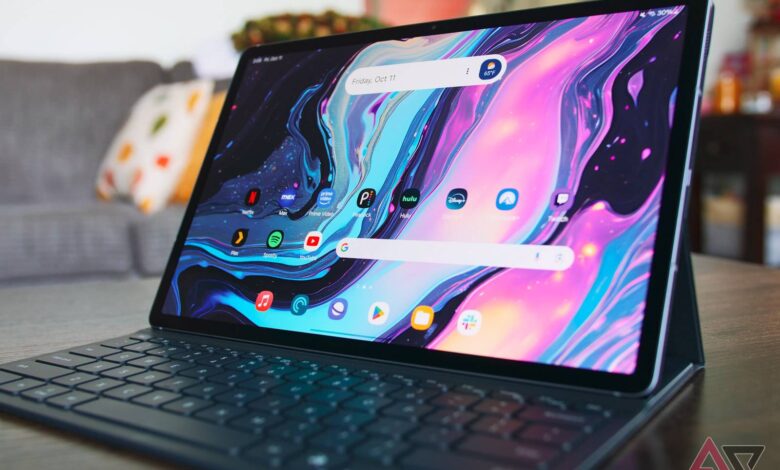
The Rp5 million to Rp6 million tablet segment is no longer defined by large screens alone. In 2026, several models in this price band bring fast chipsets, high refresh rates, big batteries, and even AI features that make them feel closer to a primary work device than a basic tablet.
That shift matters for users who need a single device for work, study, multitasking, and entertainment. For many buyers, these tablets now look like a more practical alternative to a thin laptop, especially when performance and portability both matter.
Performance is the main draw
Among the more aggressive options in the Rp5 million range are Xiaomi Pad 7 and Poco Pad. Both use the Snapdragon 7 Plus Gen 3, a feature that places them among the fastest choices in this segment.
Each model also carries an 11.2-inch 3.2K display with a 144 Hz refresh rate, which helps animations and navigation feel smooth. Xiaomi Pad 7 comes with 8 GB of RAM, an 8,850 mAh battery, and 45W Turbo Charge, while Poco Pad pairs 8 GB of RAM with 512 GB of internal storage and the same 8,850 mAh battery with 45W charging.
Larger screens for longer work sessions
Honor Pad 10 is positioned as a comfort-focused option for users who want a bigger display and long battery life. It features a 12.1-inch 2.5K panel with a 120 Hz refresh rate and Eye Comfort Display technology.
The tablet is backed by a 10,100 mAh battery and 35W charging, which should help it stay relevant through extended use. For users who prefer even more screen space, Motopad 60 Pro offers a 12.7-inch IPS 3K display with a 144 Hz refresh rate.
Higher-end hardware appears in the same price band
Motopad 60 Pro stands out as the highest-positioned device in this lineup. It runs on the MediaTek Dimensity 8300, includes 8 GB of RAM, and is powered by a 10,200 mAh battery with 45W charging.
That combination makes it a strong candidate for buyers who want one of the most powerful tablets available in this price range. Its larger panel and fast hardware also make it suitable for heavy multitasking and media use.
Samsung leans on flexibility and AI features
Samsung Galaxy Tab S10 Lite enters the list at Rp5.2 million. It offers a 10.9-inch TFT LCD WUXGA display with a 90 Hz refresh rate, the Exynos 1380 chipset, up to 8 GB of RAM, and storage of up to 512 GB.
The device also supports MicroSD expansion up to 2 TB and includes an 8,000 mAh battery with 45W fast charging. Samsung adds Galaxy AI key and Circle to Search support, while WiFi-only and 5G variants give users more flexibility.
Mobility remains important for daily use
Samsung Galaxy Tab A11 Plus 5G is aimed at users who often work away from a desk. It uses an 11-inch WUXGA display, the Dimensity 7300 4nm chipset, 6 GB of RAM, 128 GB of internal storage, and a 7,040 mAh battery with 25W charging.
The more compact Motopad 60 Neo is another practical choice at around Rp5.3 million. It uses the Dimensity 6300 6nm chipset, an 11-inch 2.5K IPS display with a 90 Hz refresh rate, Android 15, 4 GB of RAM, 128 GB of UFS 2.2 storage, a 7,040 mAh battery, and four speakers with Dolby Atmos.
Portable design still has a place
Huawei MatePad 11.5 is designed for users who want a slim body without giving up screen quality. Its 6.1 mm profile makes it one of the more portable options in the group.
The tablet also includes a 2.5K display with a 120 Hz refresh rate and up to 600 nits of brightness. It is powered by the Kirin T82B, comes with 8 GB of RAM and 256 GB of storage, and uses a 10,000 mAh battery with 40W charging.
Not just for streaming and sports
These tablets are also starting to move into note-taking and creative work. Huawei MatePad 11.5 is compatible with the third-generation M-Pencil, while Honor Pad 10 and Samsung Galaxy Tab S10 Lite both combine large screens and big batteries for longer sessions.
The Rp5 million to Rp6 million class in 2026 shows how far tablets have advanced in a short time. Buyers now have a wide spread of choices, from raw performance and large displays to portability and 5G connectivity, without needing to move into a much higher price bracket.