


Nokia’s collapse was not caused by a single product failure. It was the result of a wider shift in the smartphone industry, combined with internal habits that made warning signs harder to see.
The company once dominated the global mobile phone market so thoroughly that its model numbers, such as 3210, carried more recognition than the brand itself. Today, the market works in the opposite way, with consumers naming the brand first and the model second.
The iPhone forced the industry to change direction
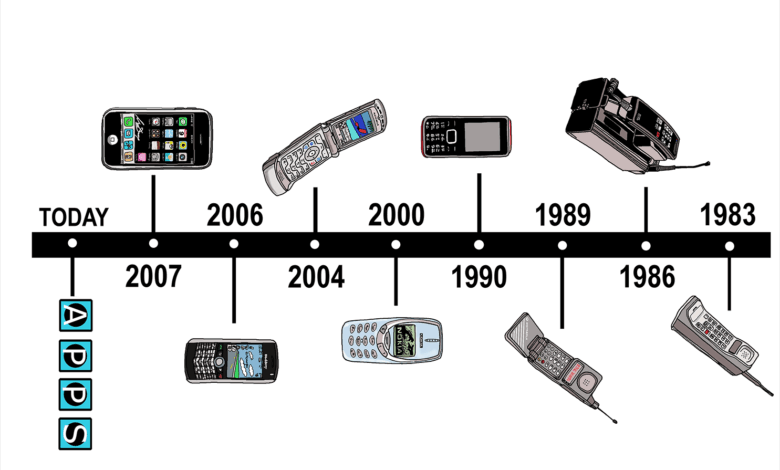
Apple’s launch of the iPhone in January 2007 marked the clearest turning point. At that time, Nokia still appeared secure in a market position that had made it almost untouchable.
Ben Wood of CCS Insight said Nokia’s confidence was so deep that management seemed to believe failure was nearly impossible. That confidence held even as Apple began redefining what users expected from a mobile device.
The key difference was software. Nokia had built strong hardware and spent years refining mobile devices, but Apple made the software experience the center of the product.
Wood described Nokia as a company that made excellent phones and had gone through a long era of hardware innovation. Apple, by contrast, understood that the basic shape of a smartphone could remain simple, while the real battle would be decided by the software inside it.
Symbian could not keep pace with iOS
Nokia’s Symbian platform became the company’s weak point as the smartphone market matured. Analysts increasingly argued that Nokia had underestimated how much software would matter in the new ecosystem.
Gartner data shows how quickly that weakness translated into market loss. Nokia held 49.4 percent of the global smartphone market in 2007, then slipped to 43.7 percent, 41.1 percent, and 34.2 percent before falling to just 3 percent in the first half of 2011.
The numbers reflected more than declining sales. They showed a company that was still relying on its old strengths while the market demanded a different kind of business model and a different kind of technology leadership.
Inside Nokia, problems were harder to report
Research by Tim O. Vuori of Aalto University and Qui Huy of INSEAD Singapore found that Nokia’s innovation process was affected by a tense internal atmosphere.
The study, titled Distributed Attention and Shared Emotions in the Innovation Process: How Nokia Lost the Smartphone Battle, drew on interviews with 76 senior managers, middle managers, engineers, and external experts. It found that middle managers were afraid to report reality, especially when sales targets were missed.
Executives were also hesitant to acknowledge Symbian’s weaknesses because they feared investors, suppliers, and loyal customers would lose confidence. As a result, the information reaching top leadership did not always reflect conditions on the ground.
Vuori and Huy also noted that some leaders lacked a sufficiently deep technical understanding. That mattered because strategic decisions were being made in a period when Apple was led heavily by engineers.
Short-term priorities crowded out long-term reinvention
The same research points to another major problem: Nokia’s resource allocation. Management focused heavily on building new phone variants that could deliver short-term market gains.
That choice came at the expense of investing in a new operating system that could compete over the long term. The researchers described this as temporal myopia, or the failure to consider long-term consequences when making tactical decisions.
Economic pressure, organizational barriers, and psychological factors made the company less agile at a time when it needed speed. Nokia still had corporate values such as Respect, Challenge, Achievement, and Renewal, but employees said those values were not applied consistently.
Microsoft stepped in after the decline deepened
As Nokia’s mobile business kept weakening, Microsoft moved in to buy the handset division. Wood said Microsoft was facing its own major challenges in mobile and needed a strategic partner to strengthen the Windows Phone ecosystem in Nokia’s flagship devices.
Then-Microsoft CEO Steve Ballmer said the acquisition was intended to accelerate innovation in the mobile market. Gartner also argued that Microsoft needed to become more than a software provider if it wanted to compete with Apple and Google.
In 2014, Microsoft officially completed the purchase of Nokia’s hardware division for about US$7.2 billion. Nokia did not disappear after that, but shifted toward network infrastructure through Nokia Solutions and Networks and digital mapping through its Here division.
Here was eventually used in around 80 percent of in-dash navigation systems worldwide. Nokia’s mobile patent portfolio was also estimated by Forbes to be worth about US$4 billion, while its phone brand rights were later acquired by HMD Global in 2016.