


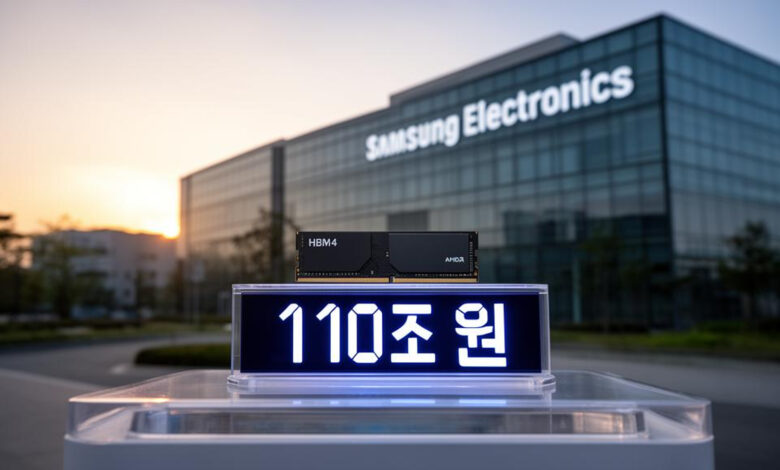
Samsung Electronics is preparing a massive $650 billion investment plan as the company seeks to capitalize on the surge in artificial intelligence demand. The scale of the proposal suggests Samsung sees AI not as a short-term boom, but as a long-term shift that could define the semiconductor industry for the next decade.
The timing is notable. Samsung is already benefiting from stronger demand for memory chips, while its foundry business and other AI-related technologies are also seeing momentum as data centers and computing infrastructure expand.
A national project with industrial weight
According to reports from South Korea, the domestic investment plan is expected to be unveiled next week alongside the government. The announcement is expected to align with President Lee Jae Myung’s broader push to expand development beyond traditional economic centers.
President Lee is scheduled to host a “National Mega Project” briefing on Monday next week, where several companies, including Samsung, are expected to outline their long-term investment plans. If the proposed package moves ahead as expected, it would become the largest investment commitment ever made by a South Korean company.
That scale reflects how central AI has become to both Samsung’s corporate strategy and South Korea’s wider industrial agenda. It also shows how closely business expansion and public policy are now linked in the country’s semiconductor push.
Where the money is likely to go
The biggest focus of the investment is expected to be a new semiconductor complex in southwestern South Korea. Samsung is also said to be increasing spending on AI infrastructure, including data centers.
That direction matters because the AI boom is no longer limited to chips alone. The industry now depends on a wider ecosystem that includes storage, processing, and the facilities needed to support heavy computational workloads.
| Planned Focus | Expected Area |
|---|---|
| Semiconductor expansion | New complex in southwestern South Korea |
| AI infrastructure | Data centers and related systems |
| Core business strength | Memory chips and foundry capacity |
Samsung’s memory chip products are among the clearest beneficiaries of AI demand, since the technology requires very large amounts of data processing and storage. Its foundry capacity is also being lifted by the same trend, giving the company multiple growth engines at once.
That broad exposure to AI is one reason a capital commitment of this size appears plausible. Rather than betting on a single product cycle, Samsung seems to be building for the entire infrastructure layer that AI will continue to require.
Competition inside Korea is also intensifying
The announcement would also arrive in a period of sharper competition with local rival SK Hynix, which is also expected to unveil a significant domestic investment plan at the same forum. The parallel moves underline how strategically important semiconductors have become in the country.
For Samsung, the current environment is unusually favorable. The company is said to be on track for a record profit this month, and current projections suggest its performance will remain very strong in the years ahead.
That financial backdrop helps explain why the company may be willing to commit such a large sum. With AI demand still expanding, Samsung appears determined to secure production capacity, strengthen infrastructure, and protect its position in a market where leadership can shift quickly.
The proposed 10-year package also fits the government’s goal of spreading growth into other regions of the country. In that sense, the project is not only a corporate expansion plan, but also part of a broader national effort to shape the next phase of industrial development.
If Samsung proceeds as expected, the company’s $650 billion bet will do more than add capacity. It will signal how aggressively the world’s major chip makers are preparing for an AI-driven decade in which semiconductors, foundries, and data centers are likely to remain tightly connected.