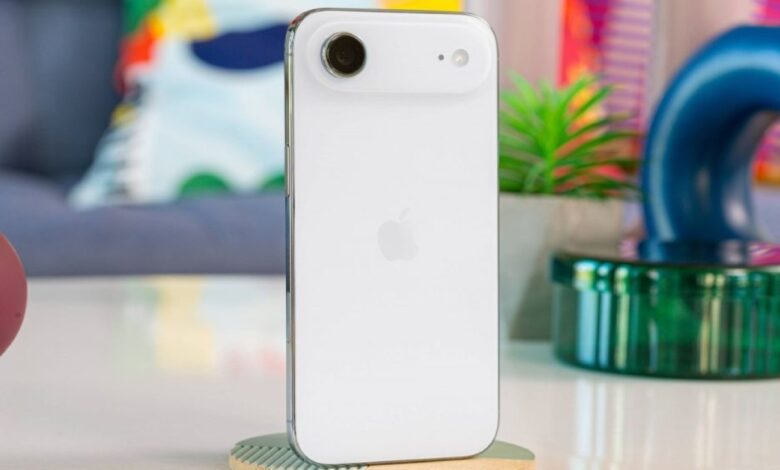
Apple is reportedly preparing a more ambitious second-generation iPhone Air, with the model expected to arrive in spring 2027. The new version is said to keep the ultra-thin identity of the lineup, while addressing the two areas most likely to matter to buyers: camera flexibility and battery life.
The device is being tested internally under the codename V62. If the current reports prove accurate, Apple is no longer treating the iPhone Air as only a slim design statement, but as a product that needs to compete more directly on everyday usability.
A second rear camera could change the appeal
The biggest rumored change is the addition of a second rear camera, which would bring ultra-wide-angle shooting to the iPhone Air for the first time. That would close a major gap in the current model, which relies on a single rear camera.
Such a move would also give Apple a clearer way to position the Air line. Instead of being known mainly for thinness, the model could offer a more practical camera setup for users who want extra flexibility without moving up to the Pro series.
Battery life remains a key concern
Battery endurance is also being treated as a priority. A very thin body naturally limits battery capacity, and that trade-off has long been part of the iPhone Air’s identity.
To improve the situation, Apple is reportedly working on better hardware and software efficiency. There is also a possibility that the company could adopt a new battery technology to support power savings more effectively.
A split release window may reshape the iPhone calendar
Another notable change under consideration is Apple’s launch schedule. Several reports suggest the company may divide future iPhone launches into smaller phases, rather than unveiling the entire lineup at once in September.
In the version currently circulating, the iPhone 18 Pro, iPhone 18 Pro Max, and Apple’s foldable iPhone would arrive in autumn 2026. The standard iPhone 18 and the new iPhone Air would then follow about six months later.
That approach could help Apple stretch attention across more of the year and give each product tier a longer runway. It would also make the Air line feel like a more deliberate part of the company’s release strategy.
A stronger chip narrows the gap with Pro models
Performance upgrades are also expected to be substantial. The second-generation iPhone Air is said to use the A20 Pro chip, a processor associated with Apple’s higher-end phones.
If that happens, the Air would move closer to Pro-level performance while keeping its slim design. For Apple, that balance could make the line more attractive to users who want a lighter device without giving up too much capability.
Although Apple has not confirmed any of these details, the direction of the leaks suggests the iPhone Air is becoming a more important part of the company’s long-term plan. A thinner body, improved cameras, better efficiency, and stronger performance would give the model a clearer identity in the next iPhone cycle.