


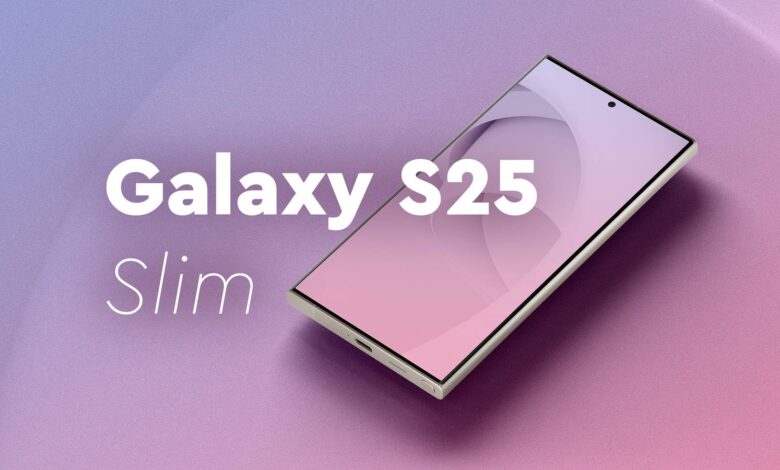
The race to make phones thinner has not produced the kind of payoff many brands expected. In 2025, ultra-thin flagships such as iPhone Air and Galaxy S25 Edge drew attention, but the market response was far weaker than the industry hype.
That gap matters because it suggests buyers are not rewarding thinness on its own. Instead, they seem more willing to pay for a device that offers a stronger balance of comfort, practicality, and value.
Thinness has become an expensive compromise
In the current premium segment, thin phones often ask users to accept less while paying more. The iPhone Air costs $1,000, while the Galaxy S25 Edge is priced at $1,099, yet both are positioned with specifications that do not clearly surpass their standard siblings.
That is the core problem with the category. Consumers are being asked to spend premium money for a handset that delivers fewer advantages, and in many cases the slimmer body can even feel less durable in daily use.
Pricing pressure has also made the strategy harder to justify. As component costs continue to rise, manufacturers are looking for a visible way to stand out without pushing prices even higher, and design often becomes the easiest lever to pull.
But a visible difference is not always a useful one. Motorola Edge 70 is one example that shows how a thinner profile does not automatically translate into better value than a wider device.
Samsung appears to be taking a different route
Apple seems ready to keep testing the concept, with signs pointing to an iPhone Air 2. Samsung, however, has already shown that thin design can be more useful when it is applied with restraint instead of made into a headline feature.
The company highlighted the Galaxy S26 Ultra at 7.9mm, making it 0.3mm thinner than the S25 Ultra. A similar move appears in the Galaxy A57, which measures 6.9mm and is 0.5mm slimmer than the Galaxy A56.
That approach is more practical because it lets Samsung borrow the benefits of a thinner chassis without turning one Edge model into the entire message. In other words, refinement is being spread across the lineup rather than concentrated in a single experiment.
What many users actually want is smaller, not merely thinner
The bigger issue is that the industry may be solving the wrong problem. For many people, a phone that feels easier to carry and hold matters more than a body that is a fraction of a millimeter slimmer.
Hand comfort and pocketability are shaped more by height and width than by side thickness alone. When a phone feels awkward in the hand, the complaint usually has more to do with overall dimensions and display size than with the thinness of the frame.
Samsung seems to understand that preference better than most. The Galaxy S26 uses a 6.3-inch display, which puts it below the market average and makes it a closer fit for users who still want a compact device.
In a market crowded with large, expensive phones, that may be the more sensible answer. Compact phones are still a shrinking category, but Samsung already has one of the strongest options for users who want smaller dimensions without being pushed into a thin-phone trade-off they never asked for.