
POCO Pad C1 arrives as a budget tablet that tries to look and feel more premium than its price suggests. With a metal body, a 2K 120Hz screen, and a compact size, it enters a crowded low-cost market with a clear advantage.
Its timing also works in its favor, coming close to the school holiday period and the new academic intake. That makes it especially relevant for parents looking for a practical device for children entering elementary or middle school.
Metal construction is the first major surprise
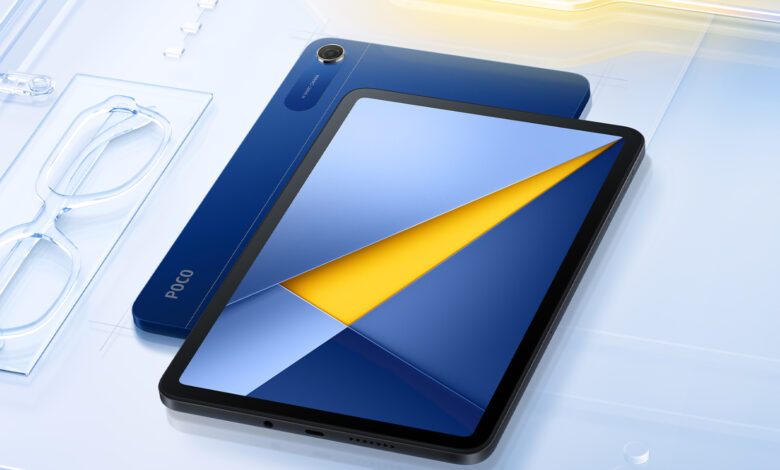
One of the strongest selling points of POCO Pad C1 is its full aluminum body. In a class where many tablets still rely on plastic, this choice gives it a noticeably more premium feel.
The back panel also uses vertical accent lines that create a dual-tone look. At 7.4 mm thick and 406 grams, the tablet remains relatively easy to carry and hold for everyday use.
POCO also includes splash resistance, offering a basic layer of protection against light water exposure. It is a small but useful detail for a device that is likely to be used in many different settings.
Compact display, but with a premium refresh rate
The tablet uses a 9.7-inch screen, which keeps the device compact and practical. That size can be appealing for younger users as well as people who want a tablet that is easy to move around with.
More importantly, the panel comes with 2K resolution and a 120Hz refresh rate. The combination should make scrolling and menu navigation feel smoother for both study and entertainment.
There are still some compromises, including a peak brightness of 600 nits and no HDR support on YouTube. Even so, those limits are easier to accept in a device built to stay close to the 2 million rupiah price range.
Snapdragon performance and HyperOS 3 features
POCO equips the tablet with the Snapdragon 6s 4G Gen 2, a chipset positioned similarly to the Snapdragon 685. The configuration includes 4 GB of RAM and 64 GB of internal storage, with microSD expansion up to 2 TB.
In AnTuTu Benchmark testing, the device scored around 470,000 points. That figure suggests the tablet is suited for daily use and light workloads rather than heavy productivity or gaming.
The software side is handled by Xiaomi HyperOS 3 based on Android 16. One of its more useful features is multitasking support, allowing users to open 2 to 3 apps at once through split-screen or pop-up windows.
A note that matters for performance comes down to setup. When the tablet is first turned on, the battery mode is recommended to be changed from Battery Saver to Balanced Mode so the chipset can run more freely.
Battery life and multimedia extras complete the package
Battery capacity is another area where POCO Pad C1 looks well prepared. Its 7,600 mAh battery is claimed to last more than 10 hours of nonstop video streaming, or around 1.5 to 2 days for casual daily use.
Charging support reaches 18W, while reverse charging up to 10W is also available through USB Type-C. That means the tablet can even serve as a backup power source in an emergency.
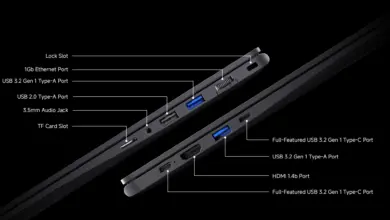
For entertainment, POCO adds stereo speakers positioned on the right and left sides, or top and bottom when used in portrait mode. A 3.5mm audio jack is also included, which remains useful for users who still prefer wired headphones.
With its metal body, compact 2K 120Hz display, large battery, and latest software, POCO Pad C1 positions itself as an entry-level tablet that feels more upscale than its segment usually allows. It is also closely related to the Redmi Pad 2, which makes its position in the budget tablet market even more interesting.