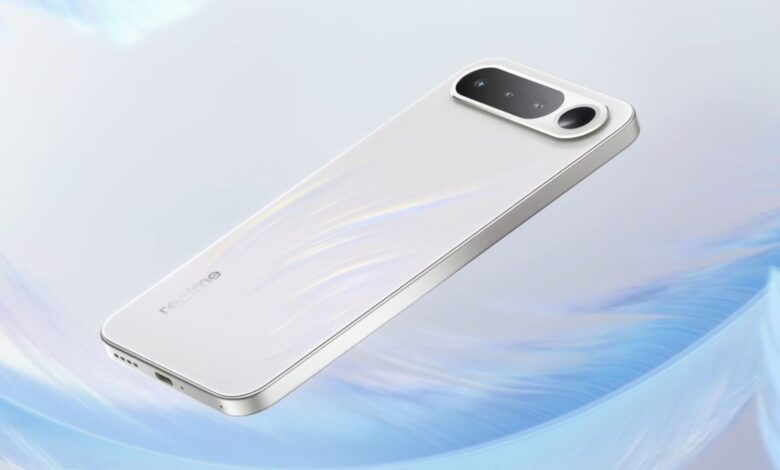
Redmi Turbo 5 and Realme 16 arrive in the same crowded midrange lane, but they are not chasing buyers in exactly the same way. One leans heavily on performance and premium hardware, while the other tries to win attention with a lower starting price and a much higher-resolution front camera.
That contrast makes the comparison more interesting than a simple spec sheet fight. On paper, Redmi Turbo 5 starts at 37,999 Rupees, while Realme 16 begins at 33,999 Rupees, giving Realme the clearer price advantage for buyers who are counting every step up in budget.
Performance is where Redmi Turbo 5 pulls ahead
The biggest gap appears in the chipset choice. Redmi Turbo 5 uses the MediaTek Dimensity 8500-Ultra, while Realme 16 runs on the MediaTek Dimensity 6400 Turbo.
That difference gives Redmi Turbo 5 a stronger position for gaming, multitasking, and heavier app use. It is also paired with UFS 4.1 storage, which is faster than the UFS 2.2 storage used by Realme 16.
Redmi Turbo 5 is offered with 8GB and 12GB RAM, plus 256GB storage. Realme 16 also comes in 8GB and 12GB LPDDR4X RAM variants, but its storage options are split between 128GB and 256GB.
For everyday use such as social media, streaming, and casual games, Realme 16 remains a capable option. Still, buyers looking for stronger hardware and better long-term performance headroom will find Redmi Turbo 5 more convincing.
Display quality stays close, with a slight Redmi advantage
Both phones use AMOLED panels with a 120Hz refresh rate, so the basics are already well covered for smooth scrolling and lively colors. The difference comes down to size and resolution.
Redmi Turbo 5 uses a 6.59-inch display with 1.5K resolution, while Realme 16 offers a 6.57-inch FHD+ panel. That gives Redmi Turbo 5 a modest edge in sharpness and a little more screen space.
The practical effect should be most noticeable when watching video, reading text, or spending long sessions on mobile games. Even so, Realme 16 still delivers the kind of AMOLED experience many midrange buyers will find perfectly comfortable.
Realme 16 saves its strongest card for selfies
At the back, both devices use a 50MP main camera, but the supporting sensors are not the same. Redmi Turbo 5 is equipped with an 8MP secondary camera, while Realme 16 uses a 2MP companion sensor.
The more striking difference appears on the front. Realme 16 comes with a 50MP selfie camera, which is well above the 20MP front camera on Redmi Turbo 5.
That makes Realme 16 the more appealing choice for users who care most about selfies and video calls. For rear camera flexibility and overall video capability, however, Redmi Turbo 5 offers the stronger package.
Video capture pushes Redmi even further ahead
Redmi Turbo 5 supports video recording up to 4K at 60fps, along with 1080p at 60fps. Realme 16 is limited to 1080p at 60fps.
For users who want more room for content creation or sharper footage, that gap matters. It is one of the clearest advantages Redmi Turbo 5 has beyond raw performance.
Battery capacity is generous on both sides
Battery size is another area where both phones aim for all-day practicality. Redmi Turbo 5 packs a 7540 mAh battery, while Realme 16 comes with a 7000 mAh unit.
The numbers are large by midrange standards, and both devices should satisfy users who need strong endurance for daily use. Redmi Turbo 5 still holds the lead on paper, but Realme 16 is far from weak in this department.
| Feature | Redmi Turbo 5 | Realme 16 |
|---|---|---|
| Chipset | MediaTek Dimensity 8500-Ultra | MediaTek Dimensity 6400 Turbo |
| Display | 6.59-inch, 1.5K AMOLED, 120Hz | 6.57-inch, FHD+ AMOLED, 120Hz |
| Rear Camera | 50MP + 8MP | 50MP + 2MP |
| Front Camera | 20MP | 50MP |
| Video | 4K/60fps, 1080p/60fps | 1080p/60fps |
| RAM | 8GB, 12GB | 8GB, 12GB LPDDR4X |
| Storage | 256GB UFS 4.1 | 128GB, 256GB UFS 2.2 |
| Battery | 7540 mAh | 7000 mAh |
| Starting Price | 37,999 Rupees | 33,999 Rupees |
In the end, Redmi Turbo 5 looks like the more complete device for users who want stronger performance, faster storage, and better video recording. Realme 16 still has a clear opening for buyers who want the lower starting price and a 50MP selfie camera, which may matter more than raw hardware power for many everyday users.