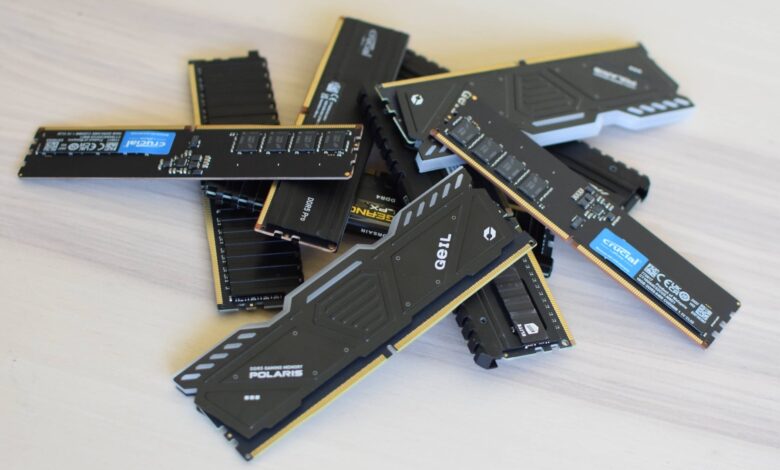
Samsung Electronics, SK Hynix, and Micron Technology are now facing a class action in federal court in Northern California over allegations that they helped create an artificial shortage of standard DRAM chips. The lawsuit says that shortage pushed RAM prices sharply higher even as demand remained strong.
The impact is no longer limited to the semiconductor business. Higher memory costs are said to be filtering into everyday devices, affecting the price of Macs, iPads, smartphones, and PCs.
What the lawsuit alleges
The plaintiffs, made up of individuals and small businesses, claim the three companies deliberately held back production of mainstream DRAM while smartphone and PC demand stayed high. Filed around June 25, 2026, the case says the conduct violated Section 1 of the Sherman Act, which covers restraints of trade.
At the center of the complaint is a shift in manufacturing capacity toward high-bandwidth memory, or HBM, for AI servers. According to the plaintiffs, standard DRAM output was restrained at the same time, creating an environment that pushed prices upward.
| Company | Role in Market | Alleged Issue |
|---|---|---|
| Samsung Electronics | Global DRAM leader | Accused of limiting standard DRAM production |
| SK Hynix | Global DRAM leader | Accused of shifting capacity toward HBM |
| Micron Technology | Global DRAM leader | Accused of contributing to a supply squeeze |
Together, the three companies control nearly 95 percent of the global DRAM market. That level of dominance means even a modest change in production plans can ripple through the technology supply chain.
Why consumers are already feeling it
Apple has recently raised prices on Mac, iPad, and other products while openly pointing to higher memory and storage costs tied to the AI boom. Other PC and smartphone makers are also said to be adjusting pricing or delaying launches as component costs keep worsening.
The result is a market where DRAM has become one of the most expensive parts inside many electronics. When RAM costs jump, manufacturers often have little room to absorb the burden and are pushed to pass it on to buyers.
| Downstream Effect | Observed Impact | Who Is Affected |
|---|---|---|
| Higher device prices | Memory costs are being passed along | Consumers and OEMs |
| Delayed launches | Some makers are waiting for supply to stabilize | PC and smartphone brands |
| Narrower product options | New devices may arrive later | Shoppers |
AI demand has changed the balance
The surge in AI infrastructure has become the main force behind the memory market shift. HBM used in AI servers offers higher margins, so production capacity has been moving in that direction.
The plaintiffs argue that this was not just a normal business adjustment. They say the companies moved capacity toward HBM while keeping standard DRAM supply tight, producing a price spike that hurt other buyers.
Lenovo has estimated that memory supply will remain tight through 2027–2028 because data centers continue to absorb chips in large volumes and new factories take time to build. That suggests the market is already under structural pressure, even before the court case is resolved.
Why the case carries extra weight
This is not the first time the DRAM industry has faced this kind of scrutiny. In the 2000s, the same companies paid billions of dollars in fines after investigations into similar allegations.
That history gives the new lawsuit additional significance. Samsung, SK Hynix, and Micron have not yet offered detailed public responses, although in previous cases they denied wrongdoing and said production and pricing decisions were driven by market conditions and AI-related demand.
If DRAM stays scarce and expensive, the pressure could continue to spread across the wider technology industry. The case now sits at the intersection of antitrust concerns, AI-driven demand, and the rising cost of everyday devices.