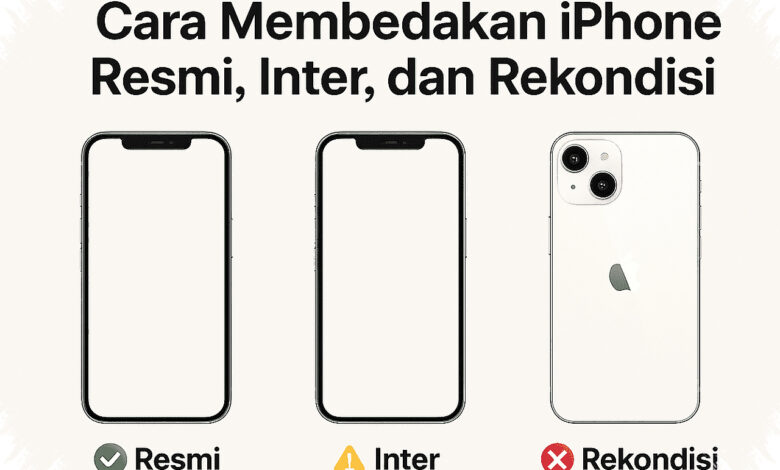
Cheap iPhone inter units often attract buyers because the price looks far better than the official Indonesian version. The real issue, however, is not the discount but whether the device IMEI has been registered so local mobile networks can still be used.
That detail is easy to overlook until a SIM card suddenly stops working. In many cases, ex-inter iPhones have not yet been recorded in the official database managed by the Ministry of Industry and Customs when they first enter or are sold in Indonesia.
IMEI status is not always the same
An iPhone inter is not always blocked the moment it is used in Indonesia. Some units can still connect to a network for a while because IMEI registration is handled in stages, which can make the device seem safe at first.
The problem usually appears later, when a notification shows that the device is not registered. After that, the carrier signal can disappear and a local SIM may no longer function, even though the phone still works over Wi‑Fi.
This is why buyers are often confused. Sellers also use the phrase “safe for signal” for devices that are not actually officially registered.
IMEI can be registered legally
Even if it is not registered at first, an iPhone inter IMEI can still be registered through legal procedures. The process is usually handled through Customs, with taxes paid according to the applicable rules, especially for devices brought from abroad for personal use.
If the registration is approved, the device enters the national database. After that, the iPhone can use local carrier signal normally.
Still, the registration cost can feel high, depending on the device price. For that reason, some buyers eventually choose the official Indonesian iPhone as a more practical option with less risk.
Unlock methods in the market are not always stable
Some iPhone inter units in the market also rely on unlock methods to keep local SIM cards working. Common examples mentioned include interposers and unlock chips.
The problem is that these methods are often unstable. iOS updates or carrier system changes can make the signal disappear at any time, which makes the user experience less reliable.
That risk makes buyers need to be more cautious when they see an iPhone inter priced too cheaply. A low price can mean there is a compromise in IMEI status or in the way the device accesses the network.
Check the IMEI before buying
Before buying an iPhone inter, checking the IMEI status is an essential step. The IMEI number can be found in the settings menu or by dialing *#06# on the device.
After that, the status should be checked through the official Kemenperin website. If the IMEI is already registered, the chance of using the device safely is much higher.
On the other hand, if the number is not found in the database, the decision to buy should be reconsidered. That matters because an unregistered device risks losing access to local carrier signal later on.
In short, an iPhone inter is not always registered in the IMEI database at the time of purchase. Some units can be used normally after legal registration, but without checking from the start, buyers may face signal problems that appear only later.