


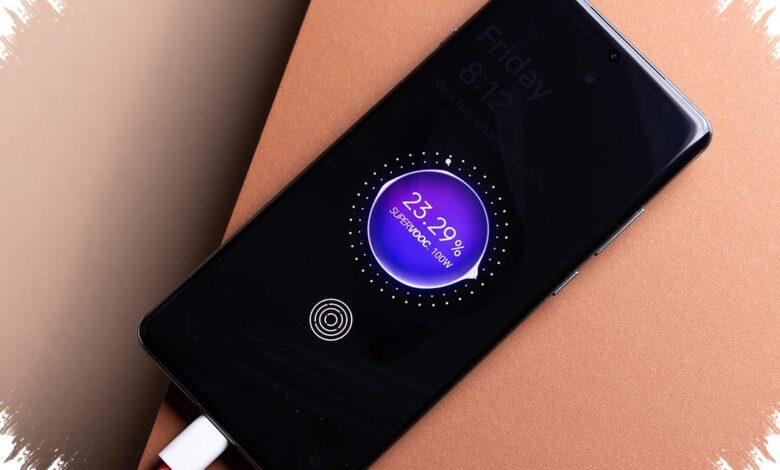
OnePlus continues to stand out in a crowded Android market because it offers features that feel genuinely useful in everyday use. From fast charging to a large battery and a balanced software experience, the brand still has several strengths that help explain its loyal user base.
One of the biggest reasons is SuperVOOC, which can push charging speeds without increasing voltage, helping the process stay fast while keeping heat under better control. The trade-off is that maximum speed only arrives with the special charger and cable, which are usually sold separately.
Fast charging with a clear advantage
When standard chargers or cables are used, the system limits charging to a safer level. The setup shifts the heat and high current burden to the dedicated charger and cable, while the dual-cell battery design helps maintain speed without putting excessive stress on the battery.
| Feature | What It Does | Notable Limit |
|---|---|---|
| SuperVOOC | Delivers very fast charging with better heat control | Needs the special charger and cable for full speed |
| Dual-cell battery design | Supports faster charging with less battery pressure | Works best within the dedicated charging setup |
A cleaner home screen with more room to organize
Another feature users appreciate is OnePlus Shelf, which gives the home screen a separate space for widgets, pinned apps, notes, and memos. That layout helps keep the main screen cleaner while still putting important tools within easy reach.
Shelf also supports quick search and a simple calculator, and each card can be moved or resized to fit different preferences. Built-in widgets such as Spotify media controls, OnePlus Health step tracking, weather, storage, and data usage can also be used there.
Battery capacity remains a major selling point
Battery life has become another reason OnePlus phones remain appealing. The momentum strengthened with the OnePlus 13, which uses silicon-carbon battery technology with higher energy density than regular lithium-ion batteries.
That approach shows up clearly in newer devices such as the OnePlus 15, which carries a 7,300mAh battery while keeping a slim body. For heavy users, especially mobile gamers and people running demanding apps, that kind of capacity is a practical advantage.
| Model | Battery Capacity | Key Detail |
|---|---|---|
| OnePlus 13 | Not specified | Uses silicon-carbon battery technology |
| OnePlus 15 | 7,300mAh | Large battery in a slim body |
| Google Pixel 10 Pro | 4,870mAh | Much smaller capacity than OnePlus 15 |
OnePlus 15 is also described as far ahead of the Google Pixel 10 Pro in battery size, though a 5,000mAh battery or slightly below is still considered enough for light use. The extra margin, however, is what makes OnePlus feel more reassuring for long days away from a charger.
OxygenOS stays between simple and feature-rich
The software side remains another major draw. OxygenOS is often seen as sitting between the minimalism of Pixel UI and the feature depth of OneUI, while still keeping smooth animations and broad customization options.
Some users feel that OxygenOS has moved closer to iOS, especially since OxygenOS 16. At the same time, there has been criticism that the latest version feels heavier than older releases that were closer to stock Android.
Even so, OnePlus appears to be answering user feedback with a more stable interface, a recognizable OnePlus feel, and longer OS update support. That combination keeps OxygenOS relevant for users who want simplicity without giving up useful extras.
Across charging, battery life, screen organization, and software, OnePlus continues to lean on features that matter in real-world use. That practical focus remains the core reason many users keep returning to the brand.