


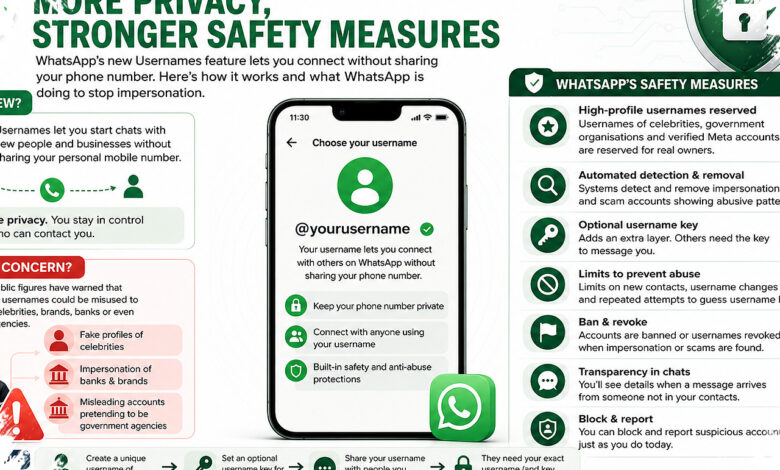
WhatsApp’s planned username feature is under fresh scrutiny after India asked the company to delay the rollout. The request reflects growing concern that a tool designed to improve privacy could also create new openings for impersonation and fraud.
The timing is notable because WhatsApp has already begun letting some users reserve usernames, even though the feature is not yet active for broad use. That partial rollout has put the company’s next move under closer attention from regulators.
Why the rollout is being challenged
India’s request was made under the IT Act, 2000, the IT Rules, 2021, and other applicable rules. The government wants to make sure the new system does not become a fresh route for fake accounts, scams, or identity misuse.
At the center of the debate is a simple trade-off. Usernames can help people chat without sharing phone numbers, but they also shift trust from the number itself to how well the platform can control identity and abuse.
What WhatsApp says about the feature
WhatsApp has said that username reservation is available, but the ability to actually use usernames has not been turned on yet. The company still plans a gradual launch later this year.
According to WhatsApp, the system is built with several safeguards. Other users would need the exact username to contact someone, which makes random guessing less effective.
The company also said it will limit how many new people one account can reach and will block repeated attempts to guess a username key. In addition, WhatsApp said it has systems in place to detect and remove activity that shows signs of impersonation or abuse.
Protections aimed at high-profile names
One of the strongest controls described by WhatsApp is the protection of high-profile names. The company says it has held back names with the highest profile so they can only be claimed by legitimate owners.
That includes public figures, government entities, celebrities, and verified Meta accounts. WhatsApp also said it has reserved lookalike variants of those names to reduce the risk of users posing as someone else.
| Protection Area | WhatsApp’s Measure |
|---|---|
| Username contact access | Requires the exact username |
| New outreach limits | Limits how many new people one account can contact |
| Guessing attempts | Blocks repeated attempts to guess a username key |
| High-profile names | Reserves names for legitimate owners |
| Impersonation signals | Detects and removes suspicious activity |
The company also plans to show more context when a user receives the first message from a username. That context includes whether the sender has a new account, whether the sender is already in the recipient’s contacts, whether they share a group, and whether the account is based in another country.
Those signals are meant to help people judge a message before they respond. In practice, the extra details could make it easier to spot suspicious contact attempts early.
What users can do now
Even though full use is not live, some users can already reserve a preferred username. The option is voluntary, and it is not required for everyone.
Users who want to check can go to Settings, then Account, then Username. If the option does not appear, WhatsApp advises updating the app to the latest version and trying again.
The feature remains in a staged rollout, but the government’s intervention suggests the pace of expansion may face tighter oversight. For now, the main question is whether the privacy benefits of usernames will outweigh the new risks that come with a less number-based identity system.