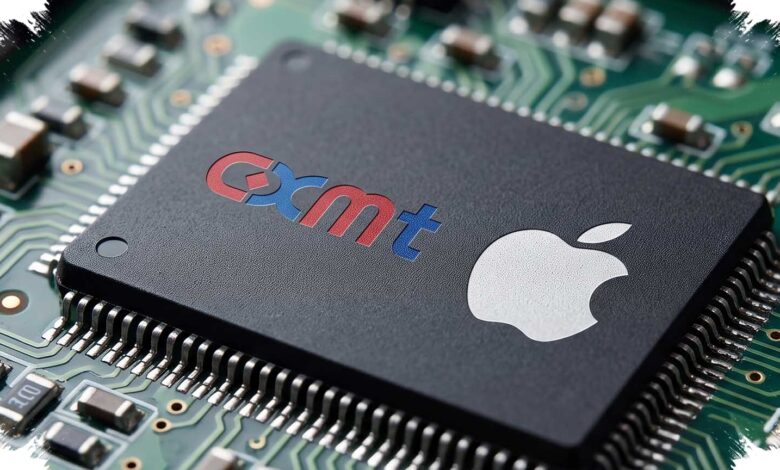
Apple is weighing an unusual response to the ongoing memory chip shortage: opening talks with two RAM suppliers from China that sit in one of the most politically sensitive categories in the U.S. supply chain.
According to Bloomberg News, the companies in question are ChangXin Memory Technologies, or CXMT, and Yangtze Memory Technologies, or YMTC. Both are listed in the U.S. Department of Defense’s Section 1260H list, which identifies entities as “Chinese military companies.”
That classification does not automatically make business with them illegal, but it does place any potential deal under a sharper political lens. For Apple, the decision is not only about securing memory volume; it is also about how Washington may react.
Why the talks matter
The memory shortage has pushed major technology companies to look for new supply options, and Apple appears to be following the same path. In a tight market, access to enough RAM can become as important as pricing or long-term supplier relationships.
Choosing CXMT or YMTC would, however, expose Apple to regulatory scrutiny and public criticism in the United States. The situation shows how a component shortage can quickly turn into a broader geopolitical issue for a company of Apple’s scale.
Political risk is part of the equation
Bloomberg News reported that outgoing CEO Tim Cook has been in ongoing discussions described as lobbying efforts. The aim is to raise objections with the Trump administration and the Department of Commerce so Apple can avoid possible fallout.
That lobbying angle suggests Apple is trying to get ahead of any political consequences before a supplier decision becomes a larger problem. Even if the talks do not lead to an immediate deal, the fact that they are happening at all underscores how limited the company’s options may be.
What CXMT and YMTC add to the picture
The presence of YMTC in the discussion is especially sensitive because the company has already been a familiar name in U.S.-China technology debates. Paired with CXMT, it turns a supply chain story into a matter of policy and oversight.
For Apple, the challenge is now twofold: secure enough RAM for production needs and avoid adding a political burden that could be more costly than the shortage itself. The talks remain ongoing, and no final supplier decision has been reported.
| Company | Section 1260H Status | Role in Apple Talks | Risk Factor |
|---|---|---|---|
| CXMT | Listed by the U.S. Department of Defense | Potential RAM supplier | Political and regulatory scrutiny |
| YMTC | Listed by the U.S. Department of Defense | Potential RAM supplier | Political and regulatory scrutiny |
The broader message is clear: the memory crunch is forcing even a company like Apple to consider suppliers that would normally remain far outside its comfort zone. What happens next will depend not just on manufacturing capacity, but also on how much political pressure the company is willing to absorb.