
OpenAI has pushed the competition in a new direction with GPT-5.6 Sol, a model built not only to chase stronger performance but also to reduce operating costs. According to gadget.viva.co.id, the model can cut token consumption by as much as 54% on certain agentic workloads.
That shift matters because compute cost remains one of the biggest barriers for companies running AI at scale. GPT-5.6 Sol is aimed at long-running tasks such as writing code, testing it, and fixing it repeatedly, where token usage can rise quickly.
Efficiency becomes the main selling point
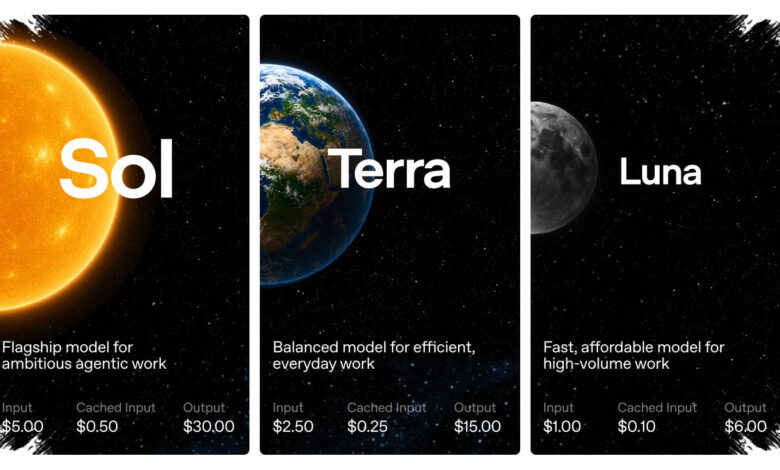
GPT-5.6 Sol sits at the top of the GPT-5.6 family, alongside Terra and Luna. OpenAI positions Sol as the flagship model designed for practical use in real-world workflows, not simply as a larger or more complex system.
In an interview with CNBC, Sam Altman said the model is intended to challenge the best models on the market while using far fewer tokens. He framed Sol as part of OpenAI’s effort to reduce waste in AI infrastructure.
| GPT-5.6 Variant | Position | Main Focus |
|---|---|---|
| Sol | Flagship model | Efficiency, performance, and real-world use |
| Terra | Family variant | Not detailed in the article |
| Luna | Family variant | Not detailed in the article |
Built to handle agentic tasks with fewer round trips
The efficiency gain is most visible in agentic programming, where an AI model works through many cycles to complete one task. In older setups, repeated server interactions often drive costs up fast.
GPT-5.6 Sol is designed to reduce those loops by writing lightweight code, managing intermediate data, and calling tools on its own. That allows the workflow to move faster while consuming fewer tokens.
More independent execution for complex workflows
OpenAI also built an architecture that lets Sol run complex workflows with less human intervention. The model can write lightweight scripts, call APIs or external tools based on context, and monitor execution progress while correcting errors in real time.
It can also manage temporary working memory, which reduces the need to keep asking the server again and again. That capability is especially relevant for companies using AI agents in DevOps, automated data analysis, or internal system management.
Security concerns delayed the launch
GPT-5.6 Sol eventually launched to the public in mid-2026, but the rollout was delayed for months over cybersecurity concerns. The model was considered too capable at identifying vulnerabilities in code.
To reduce that risk, OpenAI worked with federal cybersecurity agencies and added three layers of restrictions. Those layers include Self-Monitoring Real-Time, Safety Block Otomatis, and Whitelist Tool Calling.
| Restriction Layer | Function |
|---|---|
| Self-Monitoring Real-Time | Scans generated code for possible exploits |
| Safety Block Otomatis | Stops execution when hacking patterns are detected |
| Whitelist Tool Calling | Allows only verified tools and APIs |
During a limited testing period, GPT-5.6 Sol was available only to trusted government partners, including departments of energy, defense, and intelligence agencies. The controlled rollout shows that the model’s high efficiency is paired with strict security caution.
What the cost reduction means for businesses
For companies, a 54% drop in token consumption can translate into operating costs falling by more than half each month. The effect is strongest in agentic AI systems that run continuously and require many work cycles.
That is why GPT-5.6 Sol stands out not only as a technical release, but also as an economic one. It reflects a broader shift in an industry that has often focused on making models bigger rather than leaner.
“We are no longer building giant brains. We are building assistants that can work all day without bankrupting you,” Altman said.