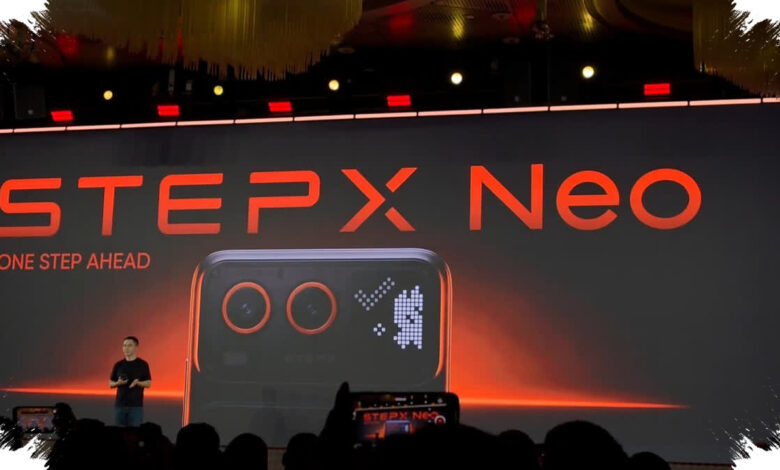
StepFun has introduced StepX Neo as what it calls the world’s first mass-market agentic smartphone, signaling a shift in how AI phones are expected to work. Instead of acting as a simple assistant that waits for repeated prompts, the device is built to carry out multi-step tasks from start to finish.
That promise matters because the phone is designed to operate across apps, web tools, and built-in system functions with a single natural-language command. In practice, that could reduce the need to open each app separately or keep asking the same thing again.
Built for tasks, not just commands
At the center of StepX Neo is StepX Agent, which is embedded in a custom operating system called Step AOS. StepFun says the system can handle core tasks fully offline, so it does not depend on a constant internet connection.
The company says the agent can learn user preferences over time. That includes choices such as selecting pet-friendly flights or a favorite restaurant for a future reservation.
| Key Feature | What It Does | Working Condition |
|---|---|---|
| StepX Agent | Runs multi-step tasks across apps and device tools | Integrated into Step AOS |
| 32-language translation | Conversation, text messages, calls, street signs, menus, and museum posters | Works offline |
| Travel functions | Transit schedules, nearby events, itinerary access, customs forms, visa reminders, check-in alerts | Useful even without mobile signal |
Offline translation and travel support
StepX Neo is also pitched as a practical travel companion. StepFun says it can translate live conversations, text messages, phone calls, and even text on street signs, restaurant menus, or museum posters in 32 supported languages, including regional dialects, without internet access.
The same system can pull up local transit schedules, search for nearby events, and open saved itineraries even in areas without cellular signal. It can also fill out customs forms automatically, warn about visa needs for a destination, and send check-in reminders based on flight details.
Rebuilt system architecture for agent use
Step AOS is not simply an extra layer on top of Android. StepFun says it was rebuilt from parts of Android, Linux, and RTOS, then organized with an atomic capability engine based on the MCP standard.
That design is meant to let communication, apps, files, and system tools work together more freely under the agent’s control. The company also says its visual and voice input layer, called NUI, is built to learn from user habits.
StepX describes this approach as a shift away from humans manually operating the device and toward a model where users simply state what they want done. To support trust, StepFun adds separate memory storage for user and agent data, plus a tiered decision layer that sends simple requests to smaller models and harder tasks to larger ones.
Security, on-device model, and partner ecosystem
On the security side, StepFun says it uses trusted execution, a full audit trail, permissions that activate only when needed and are revoked afterward, and one-tap undo if something goes wrong. The company also developed Step Edge, a foundation model built to run within the limits of a smartphone.
StepFun claims Step Edge outperforms comparable edge models across 29 benchmarks, although it did not provide the benchmark list in detail. The model is part of the company’s “1+N” line, which it has been developing since entering the foundation model race in April 2023.
To make the agentic functions more useful in daily life, StepFun has lined up integrations with Ctrip, Alipay, Didi, Meituan, WPS, and CapCut. Those links cover travel, payments, ride-hailing, local services, office work, and content creation, and they will likely be key to whether the phone can truly complete tasks end to end.
For now, StepFun has not said when StepX Neo will go on sale or how much it will cost.