


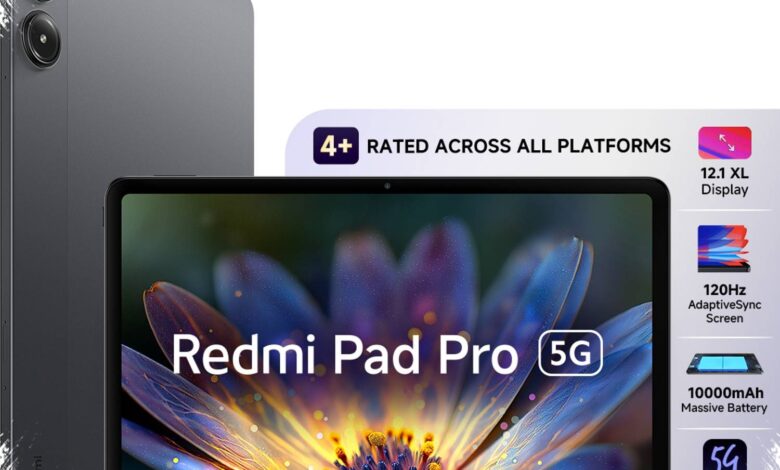
In the 5G tablet class around Rp3 million, heat management is becoming a key deciding factor alongside performance. That is what makes the comparison between Samsung Galaxy Tab A9+ 5G and Redmi Pad Pro 5G especially relevant for users who want a versatile tablet without dealing with an uncomfortably hot body.
Based on an official specification comparison reviewed for July 2026, the main difference comes down to chipset efficiency and the size of the device body. Techno.viva.co.id noted that a more efficient chip process and a wider heat-dissipation area make one of the two models look safer for heavy use.
Chipset efficiency sets the tone
Samsung Galaxy Tab A9+ 5G uses Qualcomm Snapdragon 695 built on a 6nm process. The architecture is still efficient for daily use, but it can work harder when 5G connectivity is used continuously.
Redmi Pad Pro 5G uses Qualcomm Snapdragon 7s Gen 2 with a 4nm process. Technically, the smaller process size helps improve power efficiency and reduces the amount of energy lost as heat.
| Model | Chipset | Process | Thermal Note |
|---|---|---|---|
| Samsung Galaxy Tab A9+ 5G | Snapdragon 695 | 6nm | Efficient, but may work harder when 5G stays active |
| Redmi Pad Pro 5G | Snapdragon 7s Gen 2 | 4nm | More efficient and tends to run cooler |
A larger body helps spread heat better
Samsung Galaxy Tab A9+ 5G comes with an 11-inch display, a 6.9 mm body, and a weight of 491 grams. The slim build is comfortable to hold, but the internal space is more limited when it comes to helping airflow.
Redmi Pad Pro 5G brings a 12.1-inch panel with a wider aluminum body. That larger surface area works as a passive heat sink, allowing heat from the core components to spread more evenly.
| Model | Display Size | Body Design | Heat Implication |
|---|---|---|---|
| Samsung Galaxy Tab A9+ 5G | 11-inch | 6.9 mm, 491 grams | More limited space for circulation |
| Redmi Pad Pro 5G | 12.1-inch | Wider aluminum body | Heat spreads more easily |
Which one runs cooler?
If the main priority is long-term durability and avoiding thermal throttling, Redmi Pad Pro 5G comes out ahead. The combination of a 4nm chipset and a roomier body makes it the more logical option for sustained workloads.
Samsung Galaxy Tab A9+ 5G still has value for users who prefer a compact body and Samsung’s mature ecosystem. It remains a solid choice for casual use, but in thermal management it trails the Redmi model.
For buyers choosing a 5G tablet in the Rp3 million range, the final decision depends on usage needs. If the goal is a tablet that stays cooler under pressure, Redmi Pad Pro 5G stands as the stronger candidate in this class.