


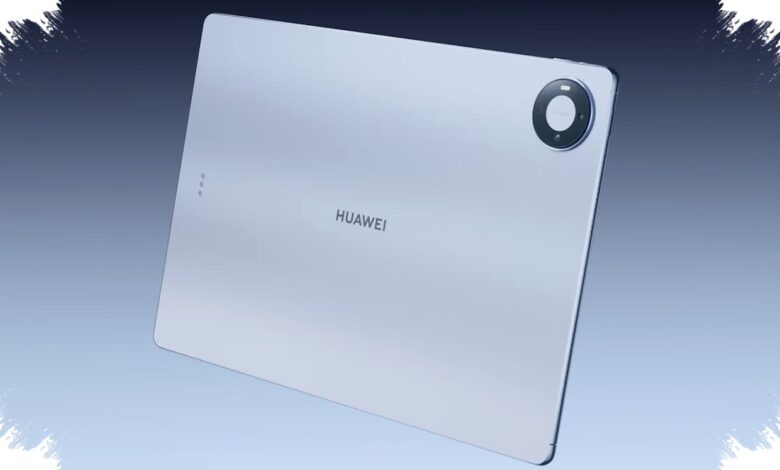
Huawei is preparing to bring the MatePad Pro Max to Indonesia with a proposition aimed at mobile professionals: a 13.2-inch workspace in a body measuring just 4.7mm thick. The tablet combines a large OLED display, AI-assisted office tools, and support for productivity accessories that can make it feel closer to a conventional laptop.
The key question is not whether the device can run multiple work tasks, but how much of a user’s workflow can move to a tablet. Huawei positions the MatePad Pro Max for document work, parallel apps, and creative production, while the practical fit will still depend on software needs and the type of work involved.
Designed for Three Tasks at Once
The MatePad Pro Max supports Live-Multitask, allowing up to three active applications in one view. That capability is intended to let users work on related tasks without repeatedly switching between full-screen apps.
Its productivity setup can be expanded with the HUAWEI Glide Keyboard, M-Pencil Pro, and an external mouse. These accessories are intended to provide an input experience closer to a laptop for users who work away from a desk.
Huawei also includes an AI-enabled version of WPS Office with an interface resembling a desktop computer. Users can create documents, work with spreadsheets, build presentations, and summarize PDFs on the tablet.
Smart Create, PDF Summarize, Generate Slides, and Grammar Polish are among the tools intended to reduce the time spent on administrative tasks. Huawei is directing these capabilities toward executives, consultants, and other professionals who need a flexible work device.
| Feature | Specification | Intended benefit |
|---|---|---|
| Display | 13.2-inch 3K Flexible OLED PaperMatte | More workspace for documents and creative materials |
| Thickness | 4.7mm | Greater portability for mobile work |
| Weight | About 509 grams, PaperMatte Edition | Reduced carrying burden |
| Multitasking | Up to three active apps | Supports parallel work on one screen |
A Large Screen in a Lightweight Form
The tablet uses a 13.2-inch Flexible OLED PaperMatte display with a 3K resolution of 3,000 x 2,000 pixels. Huawei says the screen-to-body ratio reaches 94 percent, while the surrounding bezels measure about 3.55mm.
The PaperMatte layer is designed to reduce glare, reflections, and sparkle. This is intended to improve viewing comfort under bright lighting and during extended work sessions.
The PaperMatte Edition weighs about 509 grams and has a full-metal unibody design. Huawei says its Cloud Falcon Architecture helps maintain the structure of the thin device, which it describes as the world’s thinnest and lightest professional 13-inch tablet.
Creative Work Beyond Documents
For artists and designers, Huawei includes the GoPaint application with Animation, Fluid Brush, Splatter Brush, and Intelligent Colour Card tools. The company presents these features as tools for developing visual ideas on the tablet.
With the M-Pencil Pro, users can create storyboards, moodboards, illustrations, and campaign concepts without moving to a computer. The MatePad Pro Max is also said to be compatible with AI-based creative applications such as CapCut and Filmora for mobile video editing.
The device arrives as AI becomes more embedded in daily professional work. Findings from the Garuda AI Impact Summit 2026, cited by Suara.com, state that 92 percent of knowledge workers in Indonesia have used generative AI, a figure described as above the global average.
Huawei’s “Powered by AI. Built for Every Spark of Inspiration” approach reflects that broader shift. The MatePad Pro Max offers a mobile alternative for document and creative work, but it does not remove the need to assess whether a tablet can accommodate a user’s required applications and workflow.