


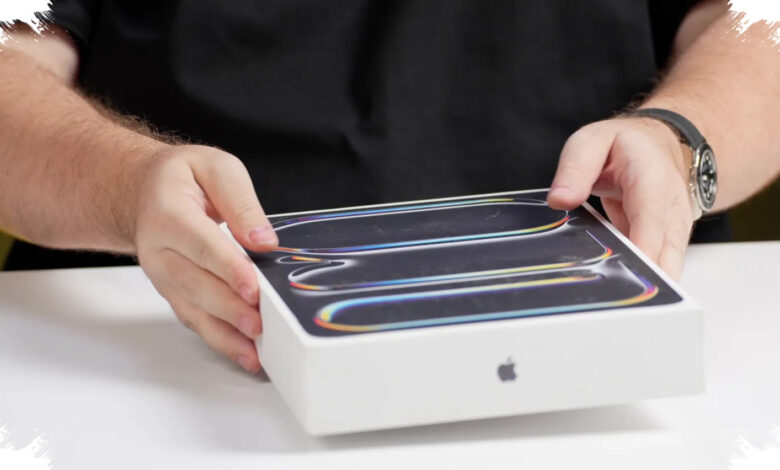
The iPad Pro M5 brings Apple’s M5 chip, a Tandem OLED display and a body measuring about 5.1 mm thin. That slim construction improves portability, but it also leaves less room for a larger battery.
For buyers considering the device as an all-day laptop replacement, battery life is a central question. Paul Thurrott’s analysis on Thurrott.com suggests real-world battery use may drain faster than on a MacBook Air.
The concern matters because the iPad Pro M5 sits firmly in the premium segment. Its entry-level version is priced in the Rp20 million to Rp25 million range, depending on the region and selected configuration.
That pricing makes the tablet most relevant to users with demanding creative or professional workloads. Casual users who mainly need a device for entertainment may find the M4-powered iPad Air a more affordable alternative.
Memory Configuration Shapes the Workload
Apple offers the M5 with up to a 10-core CPU and a 10-core GPU. The company has also raised Unified Memory capacity to support heavier professional tasks and on-device AI processing.
| Storage Version | Unified Memory | Primary Use |
|---|---|---|
| 256GB and 512GB | 12 GB | Local AI and professional applications |
| 1TB and 2TB | 16 GB | Advanced workloads |
The 256GB and 512GB models include 12 GB of Unified Memory. The 1TB and 2TB versions increase that capacity to 16 GB for users handling more advanced workloads.
Neural Accelerators in the M5 are part of the device’s support for on-device Apple Intelligence features. Fstoppers, as cited by techno.viva.co.id, reported that local processing of Large Language Models, or LLMs, can run instantly without lag.
Storage performance is also said to be up to twice as fast as the prior generation. That improvement is intended to make multi-stream ProRes video editing in professional applications run more smoothly.
A Display Built for Bright and Dark Environments
The iPad Pro M5’s key visual feature is its Tandem OLED Ultra Retina XDR display. It stacks two OLED panels to deliver peak HDR brightness of up to 1,600 nits.
Apple Indonesia specifications cited by techno.viva.co.id describe the panel as the visual foundation of the iPad Pro M5. It is designed for work that relies on high contrast and accurate colour reproduction.
The display is also designed for low-light use rather than brightness alone. Long-term use reviews indicate that the iPad Pro M5 can reduce brightness to as low as 1 nit.
This capability can make reading, editing and viewing content more comfortable in dark rooms. Adaptive ProMotion technology up to 120Hz also supports smoother interface movement and menu navigation.
Wi-Fi 7 Expands Connectivity, Not Operating System Flexibility
Apple has added its internal N1 networking chip, which supports Wi-Fi 7 and Bluetooth 6. The connection upgrade can help when transferring large video files or synchronising work with cloud computing services.
Apple positions the connectivity features for professional workflows that require a more stable and secure network connection. Their practical value, however, depends on access to compatible network infrastructure.
iPadOS 26 introduces more flexible window management, but the operating system is still seen as not fully exploiting the M5’s capabilities. This remains important for users expecting the tablet to function exactly like a laptop.
The iPad Pro M5 therefore offers strong portable productivity, high-end display quality and local AI capability. Buyers should still assess battery expectations, application flexibility and their daily work pattern before choosing a storage and memory configuration.