Premium tablets are increasingly being positioned as work tools rather than secondary devices. On-device AI and OLED displays are being associated with the potential to reduce professional operational time by up to two hours a day.
The expected gain comes primarily from repetitive administrative work, including meeting notes and document drafts. That could leave more time for decision-making and other strategic tasks.
Three Tablets at a Glance
| Device | Display | Productivity Focus |
|---|---|---|
| Samsung Galaxy Tab S11 Series | Dynamic AMOLED 2X | Galaxy AI, automatic transcription, photo editing |
| Huawei MatePad Air (2026) | OLED PaperMatte | PC-level WPS Office and integrated smart assistant |
| Apple iPad Pro (M5 chip) | Ultra Retina Tandem OLED | Desktop-class computing for professional creators |
According to techno.viva.co.id, internal testing within high-performance tablet ecosystems indicated that newer Neural Processing Units, or NPUs, paired with high-end display panels can affect daily work routines. The shift aligns with wider AI adoption across premium tablet lines from global vendors.
Why On-Device AI Matters
A key part of the productivity approach is an AI assistant that operates directly on the device. Advanced chipsets built on a 3nm substrate allow certain tasks to be processed without fully relying on an internet connection.
AI on 2026-generation tablets is described as being capable of real-time multilingual meeting transcription. It can also support business report drafts and visual editing through voice commands with faster responses.
Local processing can simplify movement between meetings, notes, and documents for professionals who work on the move. The practical benefit is strongest when AI is assigned repetitive tasks while users retain control over final output and work decisions.
1. Samsung Galaxy Tab S11 Series
The Samsung Galaxy Tab S11 Series combines a Dynamic AMOLED 2X panel with the Galaxy AI ecosystem for professional activity. Its highlighted capabilities include automatic transcription and instant photo editing.
This combination is relevant for users who regularly handle notes, documents, and visual materials while moving between locations. The tablet is positioned for people seeking to accelerate work without constantly opening a conventional laptop.
2. Huawei MatePad Air (2026)
Huawei introduced the MatePad Air (2026) globally with a body measuring 5.3 mm thick. It is available with an OLED PaperMatte display option, a notable consideration for users who look at a screen for extended periods.
The tablet includes WPS Office with a PC-level experience and an integrated smart assistant. Those elements position it as a thin-device option for everyday productivity tasks.
3. Apple iPad Pro With M5 Chip
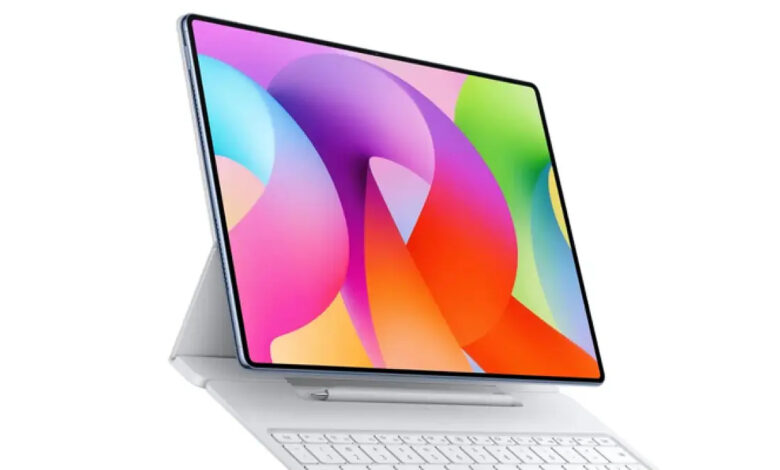
Apple’s iPad Pro with the M5 chip offers a computing architecture described as comparable to a desktop. It uses an Ultra Retina Tandem OLED display to support visual editors and professional creators.
The device is focused on work that requires substantial computing power alongside accurate visual output. Its Tandem OLED panel supports creative activity that depends on image quality and screen responsiveness.
OLED’s Role in Daily Work
OLED panels serve more than image presentation in this category of tablet. Technologies such as Tandem OLED and Dynamic AMOLED 2X are also linked to efforts to reduce visual fatigue during long work sessions.
High color accuracy supports image and document work, while immediate screen response can make app navigation and multitasking feel more fluid. These three devices illustrate how AI, computing power, and display quality are being combined for modern professional workflows.