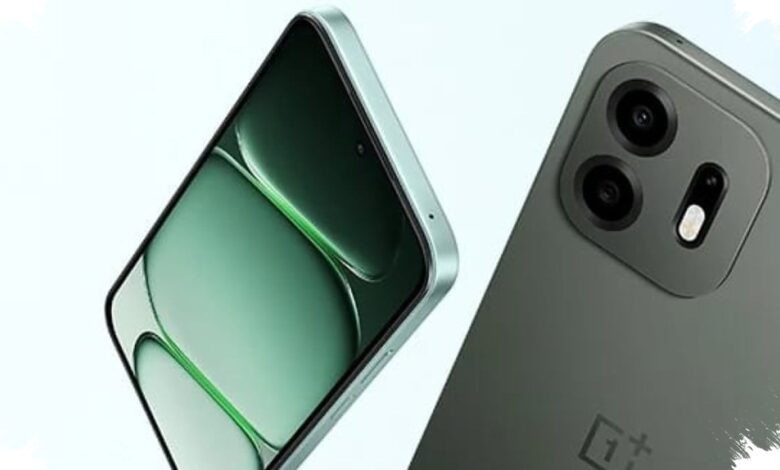
Consumers in Europe and North America will no longer be able to buy new OnePlus devices in the future. The company is ending new-device sales in both regions after operating in those major international markets for more than a decade.
Existing owners will continue to receive software updates and after-sales service, according to the company. That commitment separates support for current users from the decision to withdraw future OnePlus hardware from Western markets.
A New Regional Strategy
OnePlus is redirecting its business focus to China and India, where its operations are expected to continue as usual. The move reshapes the brand’s international footprint and removes a familiar Android competitor from Europe and North America.
Oppo is expected to take on a larger role in Western markets following the OnePlus withdrawal. The source does not indicate that current OnePlus users will lose access to post-sales support or software maintenance.
| Region or Market | OnePlus Position | Expected Development |
|---|---|---|
| Europe | New-device sales will end | Existing users retain support |
| North America | New-device sales will end | Existing users retain support |
| China and India | Operations continue | Become business focus |
| Western markets | OnePlus withdraws new sales | Oppo expected to play a larger role |
Rivals Push New Hardware
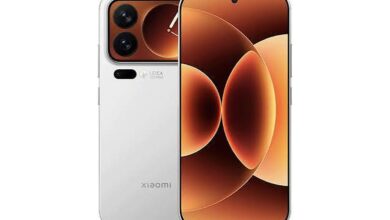
The shift comes during a busy period for major smartphone makers. Xiaomi has introduced the Redmi Note 17 and Redmi Note 17 Pro in China, both with unusually large battery capacities.
GSM Arena reports that the Redmi Note 17 has an 8,000 mAh battery, while the Redmi Note 17 Pro increases that figure to 9,000 mAh. Xiaomi says both batteries are designed to last for up to 1,600 charging cycles.
The Redmi Note 17 starts at CNY 1,199 in China and has a 7-inch OLED display with a 120Hz refresh rate. The Redmi Note 17 Pro starts at CNY 1,599, with a 6.83-inch OLED 120Hz display, a 200 MP main camera, and 67W charging.
Both Redmi models offer IP69 dust and water resistance, Android 16-based HyperOS, and Qualcomm chipsets. They are already on sale in China, while global availability has not been announced.
Samsung and Google Prepare Their Next Moves
Samsung is preparing for a Galaxy Unpacked event on July 22. Official-looking renders have shown the Galaxy Z Fold8, Galaxy Z Fold8 Ultra, Galaxy Z Flip8, Galaxy Watch9, and Galaxy Watch Ultra2 in several new colors.
The Galaxy Z Fold8 Ultra is expected to be the most premium foldable in the range, with a larger display, a 200 MP main camera, up to 16 GB of RAM, and a larger battery than the standard model. The regular Galaxy Z Fold8 is rumored to have a wider cover display, while both Fold8 models are expected to use Qualcomm’s latest flagship chipset.
Google is also approaching its Made by Google event on August 12, where the Pixel 11 family is expected to appear. The lineup is believed to include the Pixel 11, Pixel 11 Pro, Pixel 11 Pro XL, and Pixel 11 Pro Fold.
Early retail listings indicate that the base Pixel 11 could start at US$899 with 256GB of storage. It is said to feature a 6.3-inch OLED display, 12GB of RAM, a battery close to 5,000 mAh, a 2nm Tensor G6 chip, and a new MediaTek-developed modem.
Those specifications remain unconfirmed until Google’s official announcement. For OnePlus users in Europe and North America, however, the immediate message is clearer: support is set to continue, but new OnePlus phones will not return to store shelves in those regions.