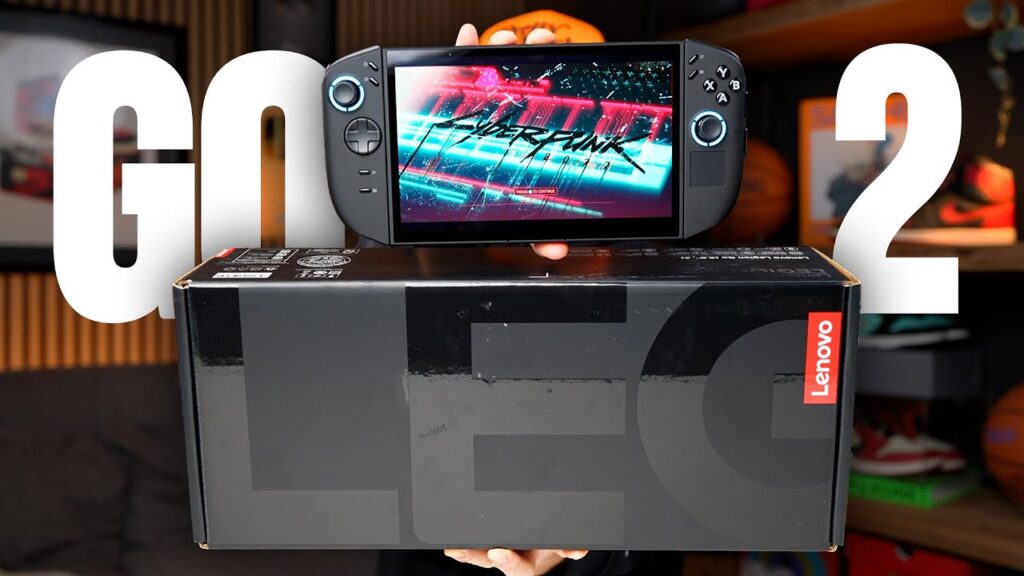
Lenovo Legion Go 2 emerges as a highly anticipated handheld gaming device, aiming to surpass competitors like the Asus ROG Ally X. Targeting gamers who seek a premium portable PC gaming experience, the Legion Go 2 combines powerful hardware, an impressive OLED display, and innovative control options, although it comes with a steeper price tag of around $1,458 (Rp22,275,000) for the premium variant.
The handheld gaming PC market is rapidly evolving, with devices now exceeding the performance of traditional PCs in some areas. Over the past month, Lenovo Legion Go 2 and Asus ROG Ally X have been the main contenders grabbing gamers’ attention. The ROG Ally X, priced more affordably at approximately $1,080 (Rp16,500,000), boasts significant improvements in ergonomics and user comfort. Meanwhile, other devices like MSI Claw 8 AI Plus and Steam Deck OLED remain compelling alternatives in the segment.
Design and Ergonomics
Lenovo’s Legion Go 2 arrives in a sleek black box, including a protective case and a 65-watt charger. Upon unboxing, users will immediately notice the device’s heavier and thicker form factor compared to the original Legion Go. This weight might lead to hand fatigue over long gaming sessions unless supported by a stand or careful hand positioning.
One of the standout features is the detachable side controllers, reminiscent of the Nintendo Switch’s Joy-Cons. This feature enables a tabletop mode for versatile gaming setups. However, unlike the Switch’s smooth detachment, the process on the Legion Go 2 feels stiff, and attached controllers exhibit slight wobbling, potentially affecting gameplay stability.
Interestingly, the right controller doubles as a vertical mouse when paired with the included mouse accessory, offering another input method. While functional, this setup may not provide the most comfortable navigation experience compared to traditional mice. Enhancements have been made to the right-side touchpad, which is larger and more responsive than on previous models.
Physical controls such as clicky buttons, a responsive D-pad, and a quick fingerprint scanner embedded in the power button further elevate user interaction. The device also features dual USB-C ports located on the top and bottom, a Micro SD slot, and an audio input for extensive connectivity. Additional buttons and a scroll wheel on the right controller improve input customization, with trigger travel distances adjustable via a toggle switch—beneficial for precision gaming.
Despite improved grip ergonomics over its predecessor, the Legion Go 2 still falls short of the ROG Ally X’s more comfortable hand feel. Players may decide between devices depending on their preference for extended gaming comfort.
Performance Specifications
At its core, the Lenovo Legion Go 2 is powered by the AMD Ryzen Z2 Extreme chipset—the most robust option currently available for handheld PCs. This chipset is also used by the ROG Ally X, ensuring the two devices deliver similar baseline performance.
The Legion Go 2 features a vivid 8.8-inch OLED screen with a resolution of 1920×1200 and a 16:10 aspect ratio, providing deeper blacks and vibrant colors. Its refresh rate reaches up to 144Hz for smooth gameplay visuals, significantly superior to ROG Ally X’s 7-inch IPS display at 120Hz and 1080p resolution.
Memory configurations include options for 16 GB or an impressive 32 GB of RAM—the latter exceeding ROG Ally X’s maximum of 24 GB. Storage starts at a generous 1 TB internal SSD, with expandability supported via Micro SD. The battery capacity, at 74 Wh, is slightly smaller than the ROG Ally X’s 80 Wh, which might impact playtime and warrants attention to power management.
Initial performance testing reveals smooth operation running Windows and popular titles like Forza Horizon 5 on high settings. However, some challenges persist, such as the risk of system crashing and complex driver updates. Adjusting VRAM allocation in the BIOS from 2 GB to 12 GB is necessary for optimal usage, an extra step not ideal for casual users.
For beginners, alternative devices like the Steam Deck OLED or future Nintendo Switch 2 models may offer more stable and user-friendly experiences, although they might lack the Legion Go 2’s hardware edge.
Feature Comparison: Lenovo Legion Go 2 vs. Asus ROG Ally X
- Processor: Both use AMD Ryzen Z2 Extreme.
- Display: Legion Go 2 sports 8.8” OLED (1920×1200, 144Hz); ROG Ally X has 7” IPS (1920×1080, 120Hz).
- RAM: Legion Go 2 offers up to 32 GB; ROG Ally X provides up to 24 GB.
- Storage: Both provide 1 TB internal with Micro SD expansion.
- Battery: 74 Wh for Legion Go 2 versus 80 Wh for ROG Ally X.
- Price: About $1,458 for Legion Go 2 versus $1,080 for ROG Ally X.
- Controllers: Legion Go 2 features detachable controllers with mouse mode; ROG Ally X uses fixed controllers with superior grip.
The Legion Go 2 impresses with its larger and higher-quality OLED display and innovative controller design, catering to gamers who prioritize screen clarity and versatile input methods. Meanwhile, the ROG Ally X edges ahead in overall ergonomics and longer battery life, making it better suited for extended handheld play.
While Windows-based handhelds like the Legion Go 2 offer broad flexibility and superior hardware, they demand more attention regarding software updates and system tuning. Prospective buyers should weigh these factors alongside personal preferences in comfort and display quality.
The rapidly expanding handheld PC segment is increasingly competitive, giving gamers numerous choices tailored to their needs. Lenovo’s Legion Go 2 pushes forward with premium visuals and unique controls, complementing other players like Asus, MSI, and Valve to shape the future of portable PC gaming.