


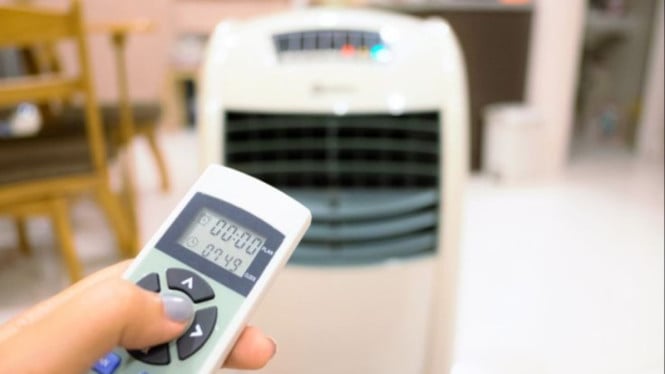
Air coolers have become a popular alternative to air conditioners due to their lower price and energy consumption. Many people wonder whether air coolers can cool rooms as effectively as AC units. Understanding how both devices work is essential to answer this question clearly.
An air cooler operates using evaporative cooling. It draws warm air through a vent, where the air passes over water-soaked pads. This process causes the water to evaporate, cooling the air before it is circulated back into the room. Meanwhile, an air conditioner uses a refrigeration cycle with a compressor to actively extract heat from the indoor air, lowering the room temperature significantly.
Because of this fundamental difference, air coolers cannot cool rooms as cold as air conditioners. Air coolers primarily make the air feel cooler by adding moisture and reducing dryness, which can help in hot and dry climates. However, they do not reduce room temperature drastically like ACs do, which can often cut the temperature by several degrees regardless of outside humidity levels.
The effectiveness of an air cooler depends heavily on the surrounding humidity. In dry areas, evaporative cooling works well and can provide a comfortable environment. Conversely, in humid environments, air coolers lose efficiency because the air already contains moisture, limiting evaporation. In such conditions, air conditioners offer more consistent and effective cooling.
For small spaces, such as bedrooms around 3×4 or 4×4 meters, an air cooler with added ice can provide adequate comfort. Their low electricity consumption, typically between 50 to 100 watts, makes them attractive for households with limited power capacity or those aiming to reduce monthly electricity bills. In contrast, AC units usually consume between 300 and 2000 watts depending on their capacity, which leads to higher operational costs.
When deciding between an air cooler or an air conditioner, consider these points:
1. Room size and layout – Air coolers suit smaller rooms; ACs perform better in larger areas.
2. Local climate – Air coolers excel in dry, hot climates; ACs are preferable in humid conditions.
3. Budget and electricity use – Air coolers cost less initially and run cheaper; ACs have higher upfront and running costs but greater cooling power.
4. Desired cooling level – Air coolers provide gentle cooling and humidity; ACs cool air significantly and reduce humidity.
Maintenance and health factors also matter. Air coolers add moisture to the air, which can benefit skin and respiratory comfort in dry settings. They require simpler upkeep compared to air conditioners, which need regular servicing of compressors and refrigerant checks.
According to VIVATechno’s analysis, air coolers should not be seen as direct replacements for ACs but rather as complementary cooling devices. For people living in areas with limited electricity supply or tight budgets, air coolers offer a practical and economical way to improve comfort. However, if the goal is to achieve a cool temperature quickly and reliably, especially in humid or large indoor spaces, air conditioners remain the superior choice.
Choosing between an air cooler and an air conditioner depends on personal needs, environmental conditions, and financial considerations. Both have their unique advantages, and understanding these will help users make an informed decision suited to their specific situation.