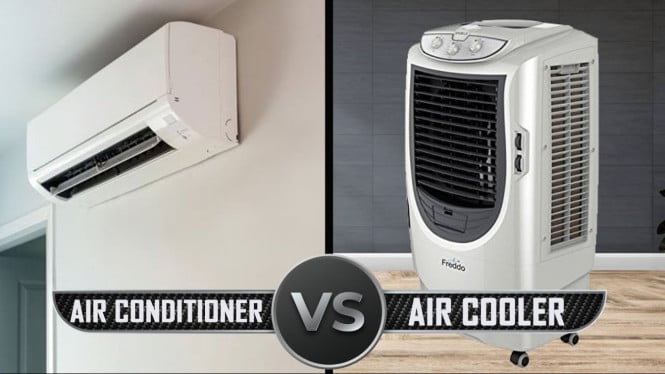
Many people wonder if an air cooler can chill a room as effectively as an air conditioner (AC). The simple answer is no; air coolers do not cool a room like AC units do. Understanding the difference is key to choosing the right cooling solution.
Air coolers work by evaporating water to lower the temperature of the air blown out. This process only cools the air locally and works best in small, dry rooms. In contrast, air conditioners actively remove heat from a room using refrigerant and compressors, producing much cooler air.
How Air Coolers Operate
Air coolers function by drawing warm air through water-saturated pads. As the air passes through, water evaporates, absorbing heat and lowering the air temperature slightly. According to recent reviews, air coolers are ideal for dry climates because high humidity reduces evaporation efficiency significantly.
The amount of cooling depends on airflow and ambient conditions. Unlike ACs, air coolers do not dehumidify or filter air. They also require an external power supply but consume much less electricity, usually around 60–100 watts per hour.
Why Air Coolers Cannot Match AC Cooling
Air conditioners can maintain indoor temperatures several degrees below ambient by cycling refrigerants and removing heat and moisture. This capability enables ACs to create a consistently cooler and more comfortable environment. In contrast, air coolers offer a limited temperature drop, often only a few degrees.
Experts clarify that an air cooler’s cooling effect feels refreshing but is inadequate when facing intense heat. For example, in areas with high humidity, an air cooler’s performance declines sharply, while an AC still lowers both temperature and humidity effectively.
Energy Consumption and Cost Considerations
Many users consider air coolers due to their energy efficiency. A typical air cooler uses roughly 60 to 100 watts, which is significantly lower than a basic AC’s consumption, commonly starting from 325 watts for smaller units. This difference can lead to monthly bill savings.
On the other hand, air conditioners priced around $200 to $250 for half-horsepower models offer advanced features such as inverter technology and smart home integration. These smart ACs can optimize power use, reducing running costs and providing convenience.
Suitability Based on Room and Climate
Choosing between an air cooler and AC depends on room size, climate, and budget. Air coolers are suitable for small rooms in dry climates where humidity is low. They provide adequate cooling with low electricity expenses.
ACs are better for humid or large spaces requiring substantial temperature reduction. Modern ACs come with features such as anti-bacterial filters, fast cooling modes, and smart controls, justifying their higher initial prices with enhanced comfort.
Summary Table: Air Cooler vs. Air Conditioner
Cooling Method
- Air Cooler: Water evaporation for local cooling
- Air Conditioner: Refrigerant cycle removing heat and humidityEffectiveness
- Air Cooler: Limited cooling, best in dry climate
- Air Conditioner: Strong, consistent cooling in all climatesEnergy Consumption
- Air Cooler: 60–100 watts/hour
- Air Conditioner: 325+ watts/hour (with inverter models saving energy)Price Range
- Air Cooler: Generally below $100
- Air Conditioner: Starting around $200 for half-HP units- Additional Features
- Air Cooler: Simple, portable, low cost
- Air Conditioner: Smart controls, filters, programmable modes
While air coolers offer a budget-friendly and energy-saving option for mild cooling needs, they cannot replace the deep, effective cooling offered by air conditioners. Understanding these distinctions helps consumers make informed choices matching their environments and preferences.