


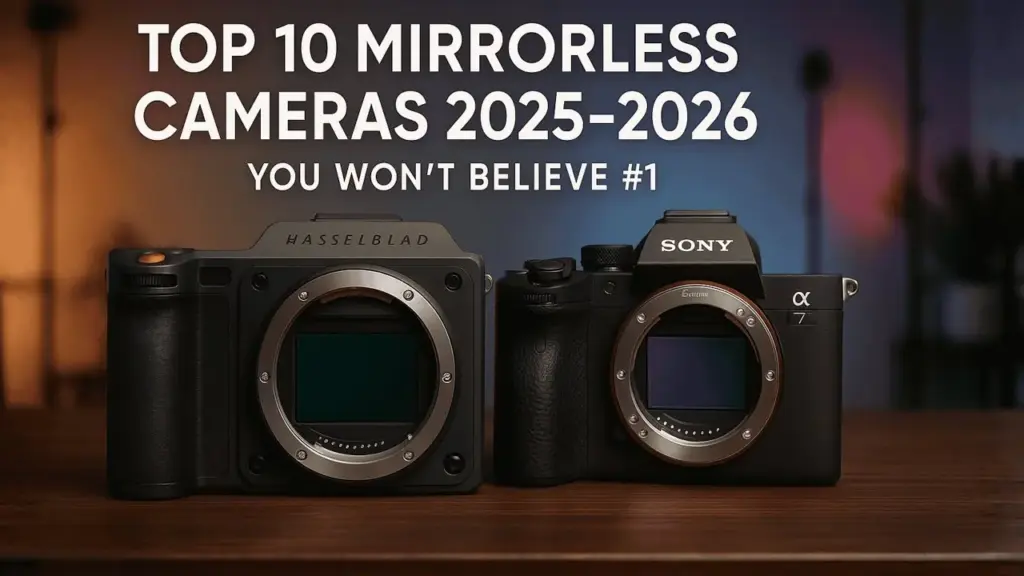
The world of mirrorless cameras in 2025-2026 offers exciting choices for photographers and videographers of all levels. Models range from beginner-friendly options to high-end flagship devices, giving creative professionals plenty of options to consider.
Entry-level cameras bring accessible features without compromising on quality. The Canon EOS R50 V is ideal for vloggers transitioning from smartphones. It offers a compact APS-C design with 4K 60p video recording and Canon Log 3 for easier color grading. Its intuitive face-tracking autofocus supports smooth, stable video capture. Priced affordably, it suits serious beginners well.
Ricoh GR IV is a standout for street photography lovers. Its fixed 28mm f/2.8 lens delivers sharp images ideal for travel. The 25.7MP backside-illuminated sensor captures fine detail, while five-axis stabilization minimizes hand shake. Natural color reproduction enhances pure composition, making it a versatile companion on the go.
Nikon Z5 II introduces a budget-friendly full-frame option. Equipped with a 24MP sensor and EXPEED 7 processor, it excels in subject detection autofocus. Dual SD card slots provide extra security for important files. In-body stabilization aids low-light shooting, allowing users to upgrade without overspending.
Fujifilm X-T30 Mark III blends retro aesthetic with modern tech. Its unique film simulation dials, like Provia, offer emotional color profiles. The X-Trans 26.1MP sensor achieves classic Fuji tones. Video capabilities include 6.2K at 30p, perfect for hybrid creators. Advanced subject tracking autofocus and tactile controls enhance the shooting experience.
For hybrid premium compact models, Panasonic Lumix S1 II prioritizes filmmaking. The durable full-frame 24.1MP sensor supports 6K open-gate recording with natural cinematic colors requiring minimal editing. AI-powered autofocus competes with rivals, and 120 fps slow-motion adds drama. Weather-sealed construction suits outdoor shoots.
Sony RX1R III stands out as a compact full-frame option with no interchangeable lenses. Its 61MP sensor paired with a Zeiss Sonnar 35mm f/2 lens delivers outstanding sharpness and low-light performance. The minimalist design caters well to documentary and travel photographers wanting high resolution in a small body.
Leica Q3 targets professionals who demand precision. Sporting a 60MP sensor and Summilux 28mm f/1.7 lens, it offers digital crop modes up to 90mm for flexible framing. Video capabilities reach 8K at 30p, and robust weather-sealing ensures reliability. Its hybrid autofocus is exceptionally accurate, delivering Leica’s refined shooting experience.
Flagship and medium format cameras push boundaries further. Hasselblad X2D II 100C leads with a massive 100MP medium format sensor and a 15.3-stop dynamic range. A 10-stop in-body stabilization reduces tripod dependency. LIDAR autofocus improves tracking of moving subjects. With 16-bit color depth, it is ideal for fashion and landscape professionals requiring studio-grade results.
Sony’s highly anticipated A7 Mark V, expected in early 2026, will feature a stacked 33-44MP sensor and a second-generation BIONZ XR processor. Video recording supports 4K 120p without crop and 6.2K RAW oversampling. Its AI autofocus predicts over 20 subject movements, complemented by an 8.5-stop in-body image stabilization and CFexpress Type A card slot. It fits well for wedding and travel filmmakers.
Rumored Nikon Z9 II aims to dominate high-end markets with a stacked 45-48MP sensor and possible global shutter technology. Its burst shooting reaches 40 fps in RAW and 120 fps in JPEG, facilitating ultra-fast capture. Video goes up to 8K 120p RAW internal recording and ProRes support. Neural network autofocus anticipates subject intent, paired with a 9.44 million dot EVF for crystal-clear previews. This camera is perfect for sports and wildlife professionals.
The 10 best mirrorless cameras from 2025-2026 illustrate rapid industry evolution. Whether starting with the accessible Canon EOS R50 V or opting for the advanced Nikon Z9 II flagship, users can find cameras suited to various shooting styles. Innovations in AI and sensor technologies continue to transform content creation workflows. Keeping up with these developments ensures photographers and videographers stay ahead in their craft.