


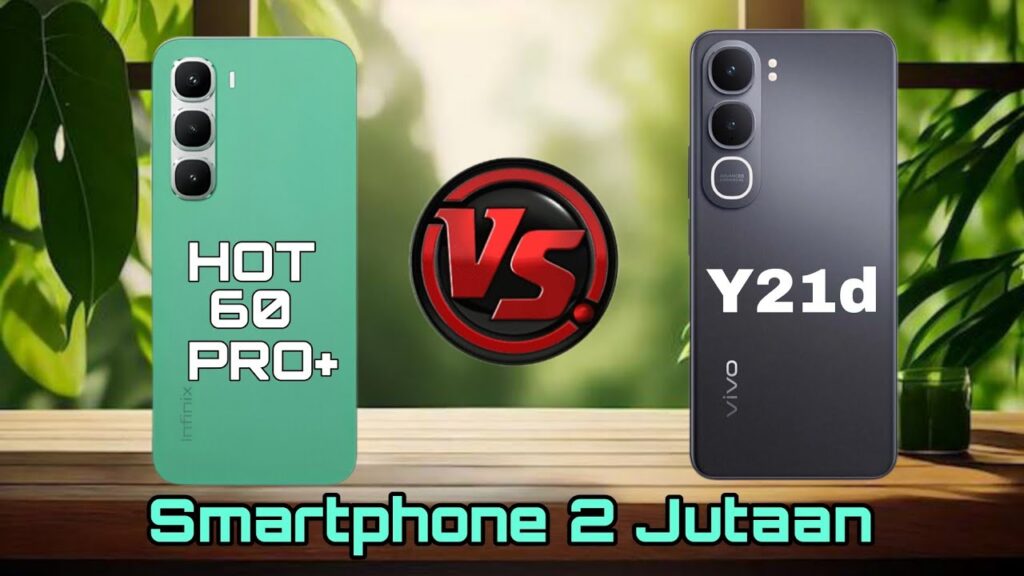
The battle between Infinix Hot 60 Pro Plus and Vivo Y21d heats up the affordable smartphone segment. Consumers often hesitate to choose when budget constraints come into play. This comparison reveals each phone’s strengths to help you make an informed decision.
Infinix Hot 60 Pro Plus impresses with a sleek design and a lightweight body of just 155 grams. It features a 6.78-inch AMOLED display with 144Hz refresh rate, delivering sharp and vibrant visuals.
Meanwhile, Vivo Y21d offers durable build quality with IP69 and IP68 certifications. Its 6.68-inch IPS LCD screen supports a smooth 90Hz refresh rate, suitable for regular scrolling and casual use.
Design and Durability
Infinix Hot 60 Pro Plus sports a premium look, optionally incorporating synthetic leather for a stylish touch. The phone is ultra-thin at 5.95 mm, providing a comfortable grip without feeling bulky. It meets MIL-STD-810H standards for resistance against shocks, vibrations, dust, and extreme temperatures.
On the other hand, Vivo Y21d focuses heavily on ruggedness. Its IP69 certification guarantees protection against high-pressure water jets, making it ideal for outdoor activities. The sturdy polycarbonate body withstands daily scratches and drops well.
To summarize, Infinix emphasizes modern aesthetics and portability. Vivo prioritizes robustness and outdoor reliability. Choice depends largely on your lifestyle preferences.
Everyday Performance
Powered by the Helio G200 chipset built on a 6nm process, Infinix Hot 60 Pro Plus handles multitasking with ease. Coupled with 8GB RAM and 256GB storage, the device supports casual gaming smoothly, such as Mobile Legends, while maintaining responsiveness. The XOS 15 operating system based on Android 15 adds intelligent AI features that enhance user experience and app loading times.
Vivo Y21d runs on the Unisoc T7225 octa-core processor, which manages basic tasks like web browsing and social media without excess heat. It also comes with 8GB RAM and 256GB storage, expandable up to 2TB via microSD slot. Vivi’s Funtouch OS 15 is known for its lightness and stability, with frequent software updates.
Benchmark scores show Helio G200 outperforms the Unisoc T7225, suggesting Infinix Hot 60 Pro Plus leads in speed and mid-range power. Vivo’s chipset offers better energy efficiency for everyday tasks.
Camera and Battery
Infinix features a 50MP Sony main camera capable of capturing detailed images, including night shots with good low-light performance. The front camera offers 13MP quality for sharp selfies and video calls. Video recording supports 1080p resolution with electronic image stabilization for steady footage.
Vivo Y21d also has a 50MP rear camera with a unique underwater mode, allowing clear photos even beneath water surfaces—a plus for beach lovers and adventurous users. Its 5MP front camera suffices for basic portrait shots.
Battery capacity differs notably. Vivo Y21d packs a 6500mAh battery that can last up to two days under normal use and supports 44W fast charging. Infinix carries a 5160mAh battery with 45W charging speed. Both deliver long endurance but Vivo offers extra runtime.
Feature Comparison Table
Features Infinix Hot 60 Pro Plus Vivo Y21d
Display 6.78″ AMOLED 144Hz 6.68″ IPS LCD 90Hz
Processor Helio G200 6nm Unisoc T7225
RAM/Storage 8GB/256GB 8GB/256GB + expandable
Rear Camera 50MP Sony 50MP + Underwater Mode
Battery 5160mAh, 45W Charge 6500mAh, 44W Charge
Certification MIL-STD-810H, IP68 IP69, IP68
Price (approx.) $130 USD $130 USD
The table highlights Infinix’s advantages in display technology and processing power. Vivo counters with superior battery size and extreme water resistance. Both are priced competitively around $130.
If you prefer a premium screen and gaming capability, Infinix Hot 60 Pro Plus fits well. For durability and longer battery life, Vivo Y21d stands out. Each device offers excellent value for its category.
Ultimately, the choice hinges on user priorities. The slim form factor of Infinix suits those valuing portability. Vivo brings peace of mind outdoors with tougher protections. Testing both devices at local retailers can provide firsthand impressions before purchasing.
Ongoing software updates promise new features and improved performance for both models. These smartphones aim to satisfy budget-conscious buyers seeking reliable, modern devices with distinct appeals.