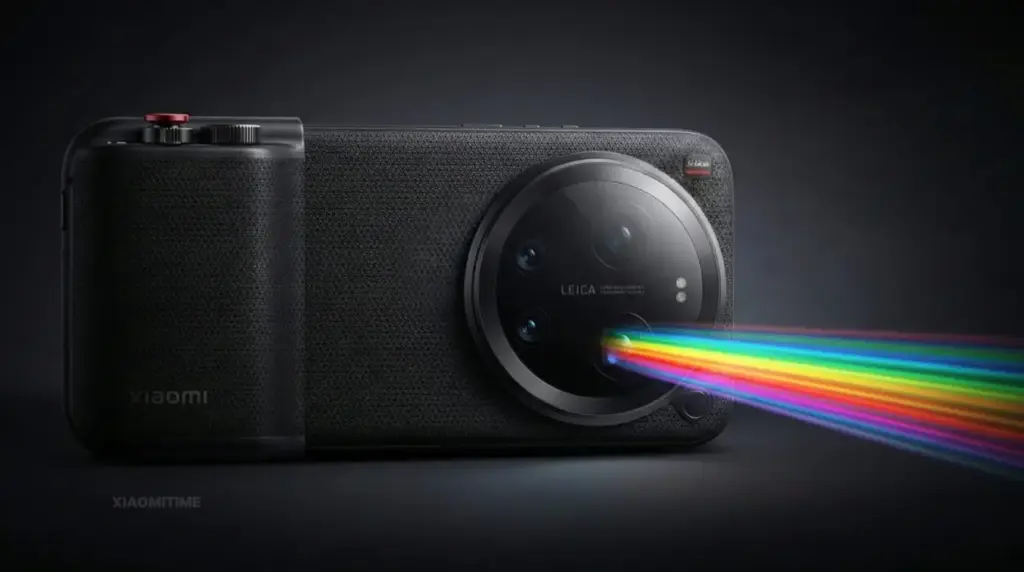
Xiaomi 17 Ultra represents a significant shift in smartphone camera development by emphasizing optical quality over heavy software processing. It introduces the Leica APO telephoto lens paired with a 200MP sensor, aiming to capture image accuracy at the hardware level rather than relying on post-processing enhancements.
Leica’s APO technology refers to an apochromatic lens design, a very high optical standard typically not seen in smartphones. This design corrects color dispersion physically within the lens before light reaches the sensor, unlike conventional lenses.
Standard telephoto lenses usually feature an achromatic design that corrects two color wavelengths, typically red and blue. In contrast, Leica APO lenses align three primary wavelengths—red, green, and blue—onto a single focal plane. This alignment reduces chromatic aberration, preventing the color fringing often seen at image edges on standard lenses.
The result is cleaner image edges with significantly less purple or green fringing, higher micro-contrast, and truer color reproduction without depending heavily on software corrections. Users benefit from sharper images displaying remarkable clarity even at 100% zoom levels.
Xiaomi 17 Ultra’s telephoto lens uses a “floating APO telephoto structure” optimized for its larger sensor. This engineering reduces light loss, increases focusing precision across distances, and maintains consistent image quality in both bright and low-light conditions. The design achieves high optical efficiency without sacrificing the compact form factor required for smartphone integration.
A key comparative table highlights major differences between normal achromatic lenses and Leica APO lenses:
| Feature | Normal Lens (Achromatic) | Leica APO Lens (Apochromatic) |
|———————|——————————————–|————————————————-|
| Color Focus | Combines 2 colors (Red/Blue) to one focus | Combines 3 colors (Red/Green/Blue) to one focus |
| Edge Quality | Possible purple/green chromatic fringing | Clean edges, no color fringing |
| Sharpness | Good but can soften at 100% zoom | Extremely sharp with high clarity and contrast |
| Cost & Build | Cheaper and simpler to manufacture | Expensive, heavier, uses complex glass elements |
The Leica APO lens is integrated with the Samsung ISOCELL HP9 200MP sensor, which demands exceptionally tight optical tolerances due to its ultra-high resolution. The sensor applies pixel binning in normal shots to boost light sensitivity for better low-light capture.
Instead of purely digital zoom, the phone uses sensor-level cropping to maintain details when zooming. This approach yields cleaner photos with reduced color fringing, more consistent sharpness across zoom levels, and natural color profiles aligned with Leica’s imaging philosophy.
Leica APO’s significance for mobile photography lies in its ability to produce optically cleaner images rather than digitally enhanced ones. Lower reliance on software corrections preserves texture and color balance, fostering uniform quality between the main and telephoto cameras—a common shortcoming in many smartphones.
Xiaomi 17 Ultra’s combination of Leica APO optics, advanced lens structure, and a 200MP sensor sets a new benchmark. By prioritizing hardware precision over megapixels alone or aggressive algorithms, Xiaomi delivers sharper, truer colors and more reliable zoom performance. This evolution underscores the brand’s strong commitment to elevating smartphone photography through innovative optical engineering.