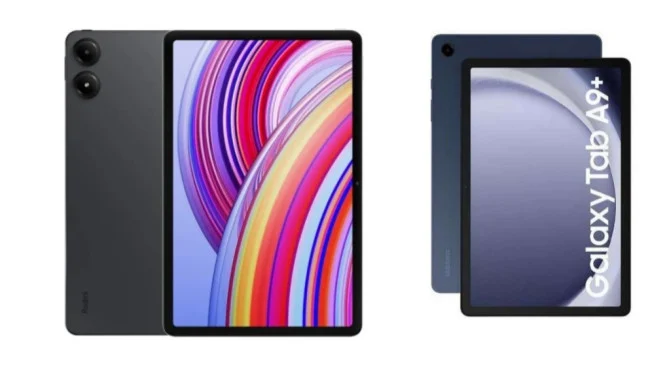
Android tablet market in 2025 features two prominent contenders: Xiaomi Redmi Pad Pro and Samsung Galaxy Tab A9 Plus. Both tablets are slim and portable but target different user needs and preferences.
The Redmi Pad Pro offers an 11-inch IPS LCD display with a resolution of 2560 x 1600 pixels. This large, sharp screen enhances video streaming, document reading, and casual gaming with clear detail and comfortable viewing over extended use. Meanwhile, the Galaxy Tab A9 Plus sports a slightly smaller 10.5-inch screen but boasts a more compact body, making it convenient for on-the-go use.
Performance and Storage
Redmi Pad Pro is powered by the MediaTek Dimensity 1300T processor, paired with either 6GB or 8GB of RAM. Storage options go up to 256GB, ample for apps, games, and multimedia files. This setup delivers smooth multitasking and responsive performance suited for entertainment and productivity. On the other hand, Galaxy Tab A9 Plus comes with 4GB RAM and 64GB or 128GB storage, which suits lighter activities such as web browsing, video streaming, and basic work tasks.
Battery Life and Productivity Features
A major advantage of the Redmi Pad Pro lies in its 10,000 mAh battery that supports approximately 12 hours of regular use. It also supports 33W fast charging, reducing downtime significantly. The tablet includes a quad stereo speaker system, providing immersive audio experience, and supports a stylus for digital note-taking or drawing. In comparison, the Galaxy Tab A9 Plus uses a 7,040 mAh battery sufficient for all-day use. It stands out with Samsung DeX, a productivity feature that converts the interface into a desktop-like environment, enhancing multitasking with external keyboards and mice.
Connectivity and Ecosystem Integration
Galaxy Tab A9 Plus excels with 5G connectivity, offering faster and more stable internet access. It also integrates seamlessly into the Samsung ecosystem, making data synchronization across Samsung smartphones and laptops effortless. Redmi Pad Pro, meanwhile, focuses on standard connectivity options that cater well to home and entertainment scenarios.
Side-by-Side Comparison
| Feature | Redmi Pad Pro | Galaxy Tab A9 Plus |
|---|---|---|
| Display | 11" IPS LCD, 2560×1600 | 10.5" display, more compact |
| Processor | MediaTek Dimensity 1300T | Mid-range configuration |
| RAM | 6GB / 8GB | 4GB |
| Storage Options | Up to 256GB | 64GB / 128GB |
| Battery | 10,000 mAh, 33W fast charging | 7,040 mAh, all-day endurance |
| Audio | Quad stereo speakers | Standard stereo speakers |
| Stylus Support | Yes | No |
| Connectivity | Standard | 5G support |
| Productivity Features | Focus on media and entertainment | Samsung DeX desktop mode |
For users seeking a tablet optimized for media consumption, light gaming, and prolonged use without frequent charging, the Redmi Pad Pro stands out. Conversely, those prioritizing mobility, fast internet, and enhanced productivity will find the Galaxy Tab A9 Plus more suitable.
Both tablets are competitive options in the 2025 market. Choosing the right device depends on individual usage patterns and budget considerations.