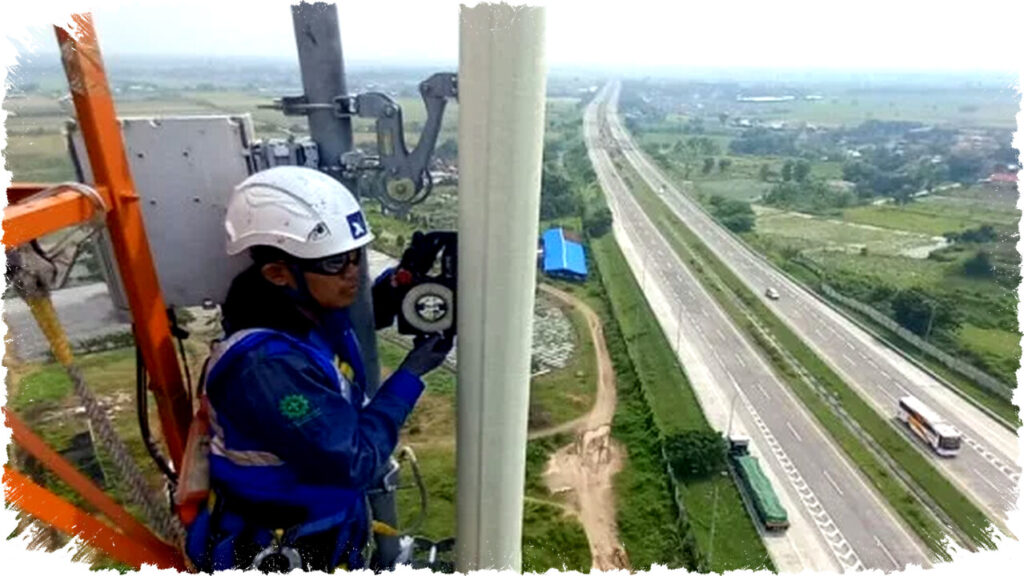
The 4G network coverage by PT XLSMART Telecom Sejahtera Tbk. (EXCL) has now reached over 95% of Indonesia’s population. This achievement marks a significant step toward supporting the Ministry of Communication and Digital (Komdigi)’s ambitious goal of expanding mobile broadband coverage to 97.5% of residential areas by 2026. XLSMART’s commitment to nationwide connectivity reflects ongoing efforts to enhance digital infrastructure in line with population needs and technological progress.
Reza Mirza, Group Head Corporate Communications & Sustainability at XLSMART, highlighted the company’s strategic acceleration in building telecommunications infrastructure. XLSMART is actively collaborating with the government to provide affordable broadband services while contributing to the country’s digital transformation agenda. This synergy between the private sector and policymakers is critical to ensuring inclusive access across Indonesia’s diverse regions.
Expanding 4G Coverage and the Emergence of 5G
The current 95% population coverage of XLSMART’s 4G network sets a solid foundation to achieve the national target of 97.5% coverage by 2026. Expanding mobile broadband infrastructure remains a priority as demand for data and connectivity grows. XLSMART is simultaneously rolling out its 5G services, which now reach 13 cities and regencies across Indonesia. This phased deployment of 5G reflects the operator’s forward-looking strategy to adapt to evolving technology and increasing user needs.
The company’s ongoing network expansion involves optimizing 4G service delivery while progressively extending 5G infrastructure. This dual focus ensures customers benefit from stable, high-speed connectivity during and after the transition to the newer generation of wireless technology.
Government Policy Alignment and Support
XLSMART values Komdigi’s policy direction, which aligns with its core mission to connect Indonesians and improve quality of life through digital access. The government’s strategic plan ensures that operators have a clear framework to guide infrastructure development and service expansion. Cooperation between the government and telecommunication providers amplifies national efforts toward comprehensive digital inclusion.
Komdigi’s strategic plan for 2025–2029 emphasizes incremental broadband growth. It sets coverage targets as follows:
- 97.5% coverage by 2026
- 97.75% by 2027
- 97.9% by 2028
- 98% by 2029
These benchmarks illustrate a steady progression, aiming for near-universal broadband availability within four years.
Challenges in Developing 3T Areas
Achieving these ambitious targets involves overcoming significant hurdles, especially in Indonesia’s remote regions classified as 3T (frontier, outermost, and underdeveloped). Expanding network infrastructure in these zones requires substantial investment and targeted policy incentives. Ian Joseph Matheus Edward, a telecommunications expert from the Bandung Institute of Technology (ITB), stresses the necessity of augmented capital expenditure (Capex) by operators. He also highlights the importance of special fiscal incentives to support infrastructure rollout in 3T regions.
The financing and sustainability of networks in less profitable areas pose a critical challenge. Expert recommendations include instituting clear return on investment models, possibly through non-cash Universal Service Obligation (USO) mechanisms. Furthermore, government-funded network development warrants proper compensation, potentially via state equity participation, to maintain a balanced regulatory environment.
Strategic Investment and Infrastructure Development
Addressing connectivity disparities requires a comprehensive investment strategy integrating public and private resources. XLSMART’s pivotal role in this ecosystem is evident through ongoing expansion of its 4G network. Coordinated policies and investment schemes will enable these infrastructure projects to reach broader segments of the population.
Future infrastructure financing must consider the economic realities of 3T areas while ensuring that the regulatory burden on operators remains manageable. These efforts will facilitate equitable digital access, enabling Indonesia’s citizens to fully participate in the digital economy.
XLSMART’s progress toward 95% 4G population coverage demonstrates significant momentum towards the Komdigi target of 97.5% by 2026. Combined with continued 5G deployment and strong policy support, Indonesia is on track to realize a more connected and digitally inclusive society in the near future.