


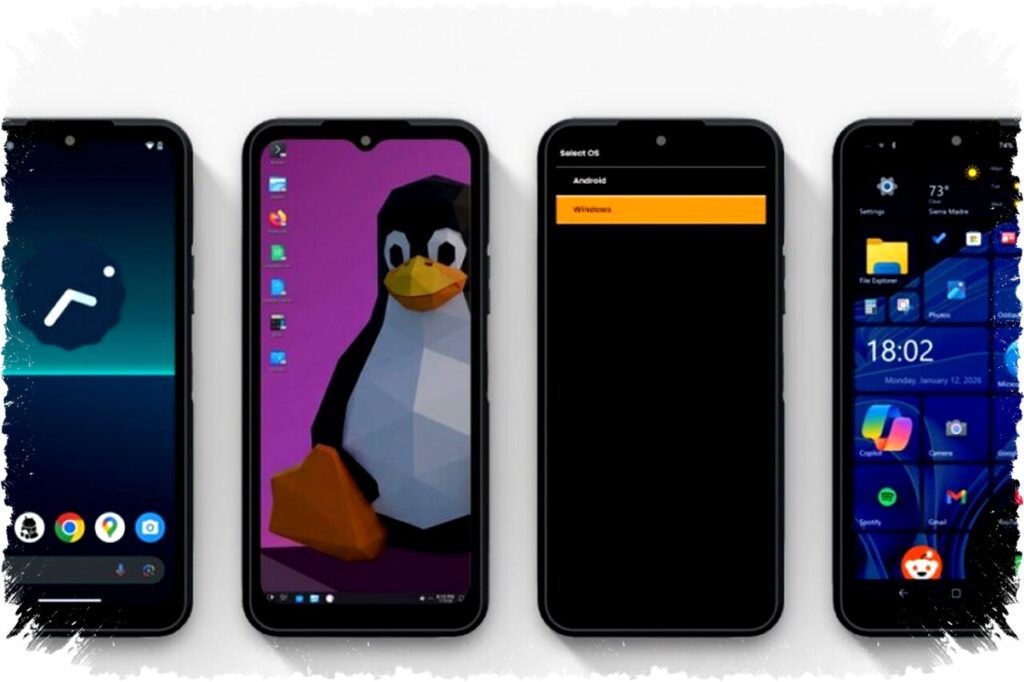
A groundbreaking smartphone called NexPhone has been introduced as a versatile device that can run three different operating systems: Android, Linux, and Windows 11. Launched in January 2026, NexPhone targets professionals and tech enthusiasts who demand a PC-level computing experience in a portable form factor.
Unlike traditional smartphones, NexPhone supports native multiboot, allowing users to switch between operating systems based on their needs. Android remains the primary system for daily mobile use, while Linux and Windows 11 cater to development and productivity tasks.
A True Desktop Replacement in a Smartphone
NexPhone redefines the concept of a smartphone by functioning as a desktop replacement. Rather than simply offering a desktop-like interface, it runs full-fledged Linux and Windows 11 systems natively. When connected to external monitors and peripherals, the device operates like a standard PC. This approach surpasses prior attempts at smartphone-PC convergence that relied on virtualization or remote desktop solutions.
The ability to run Windows 11 natively indicates that NexPhone uses x86-based hardware, aligning it more closely with laptops than typical ARM smartphones. This crucial design choice enables compatibility with mainstream desktop applications across business and engineering domains.
Key Features of NexPhone Multiboot Architecture
- Native multiboot system supporting Android, Linux, and Windows 11.
- x86-class processor essential for running desktop-class OSes.
- Large RAM and fast internal storage to support smooth OS transitions and heavy application loads.
- Output capabilities for external display, enabling a full desktop setup with keyboard and mouse.
- Thermal management system designed to handle high power consumption and heat dissipation.
Target Users and Usage Scenarios
NexPhone targets a niche market including:
- Developers requiring versatile Linux and Windows environments on the go.
- IT professionals needing a portable but powerful workstation.
- Tech enthusiasts interested in multi-OS experiments on a single device.
- Enterprise users who prioritize mobility and centralized data security.
In practice, users can rely on NexPhone as their sole computing device by using Android for communication and entertainment while traveling, then switching to Linux or Windows 11 at work or home for full desktop productivity.
Positioning Within the Device Convergence Trend
The smartphone industry is trending toward device convergence, blurring the line between mobile and desktop experiences. NexPhone exemplifies this transformation by going beyond the desktop modes offered by brands like Samsung and Huawei. Instead, it provides genuine desktop OS functionality integrated within a mobile device.
This approach caters to the increasing demand for flexible remote work solutions and simplified device ecosystems. However, adoption may hinge on addressing challenges such as device pricing, software compatibility, and battery life.
Implications for the Future of Mobile Computing
NexPhone’s ambitious design introduces a new category in the market: a true all-in-one device merging mobile and desktop computing. If successful, it could inspire major manufacturers to further innovate multi-OS support and native desktop capabilities on smartphones.
As the personal computing landscape evolves, NexPhone demonstrates that smartphones can become more than communication tools; they can serve as primary computing platforms. This innovation highlights ongoing opportunities for hardware and software convergence, potentially reshaping how users interact with technology in the years ahead.