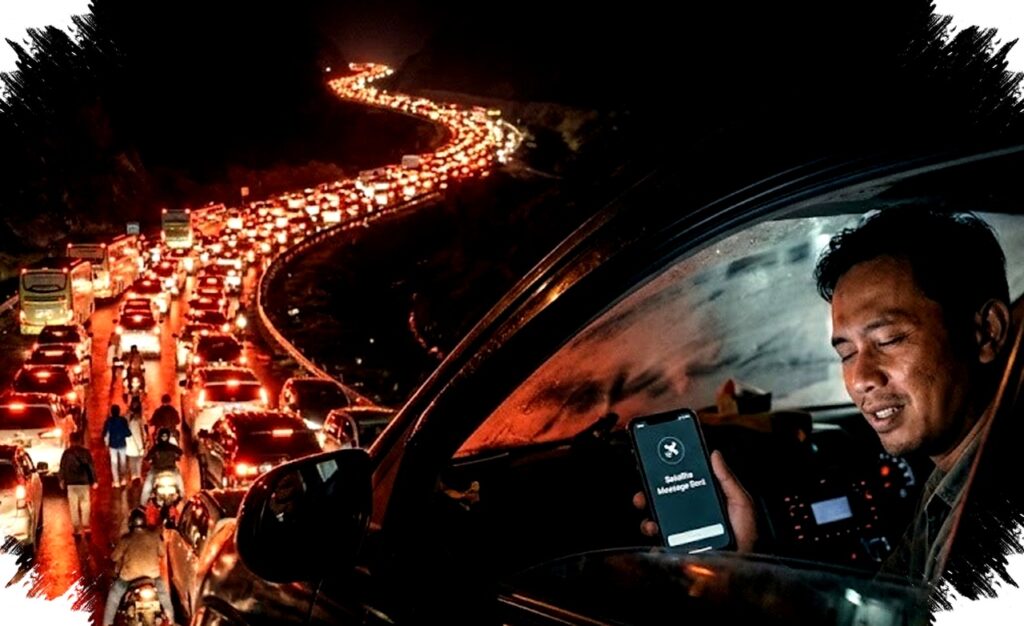
Traffic jams during long-distance travel can be frustrating, especially in remote areas with no cellular signal. This problem frequently occurs during the annual mudik, the mass exodus when millions travel home for holidays in Indonesia. Satellite Messaging technology introduced in 2026 Android smartphones offers a practical solution for communicating in these "blank spot" zones.
With this feature, users can send emergency text messages via low-earth orbit satellites, bypassing the need for traditional cellular networks. The ability to maintain contact during signal loss improves safety and reduces anxiety when stuck in traffic jams in remote mountainous or forested regions.
Challenges of Signal Loss During Mudik
Many intercity routes in Indonesia traverse terrains with limited telecommunication infrastructure. According to the Indonesian Ministry of Communication and Information Technology, large stretches of highways, especially in mountainous or border areas, lack stable cellular coverage.
This gap in connectivity poses serious risks during emergencies like accidents or vehicle breakdowns. Without a reliable way to notify emergency services or family, stranded travelers face heightened vulnerability. Satellite Messaging aims to fill this critical communication void.
How Satellite Messaging Works
When a smartphone detects network unavailability, it prompts users to switch to Satellite Messaging mode. The device’s internal antenna aligns with low-earth orbit satellites to establish a direct connection.
Once linked, users can send preset emergency texts to designated contacts or rescue centers. Unlike traditional cellular texting, this method does not depend on nearby cell towers or Wi-Fi networks.
Qualcomm’s 2026 industry report highlights that the integration of satellite communication in new smartphone chipsets is optimized for low power consumption. This efficiency ensures messaging functionality remains available even when battery levels are low—common during extended travel delays.
Key Benefits of Satellite Messaging
- Broad Coverage: Reaches remote and geographically challenging areas where cellular infrastructure is sparse or nonexistent.
- Emergency Preparedness: Provides a vital communication option in case of accidents, medical emergencies, or vehicle issues.
- User-Friendly Interface: Visual guidance helps users position their phones correctly to ensure stable satellite connectivity.
- Battery Efficiency: Designed to operate with minimal power usage, crucial during emergencies when charging options are limited.
Future Potential and Industry Trends
Global telecom analyses foresee satellite communication complementing existing networks, especially for countries with complex terrains like Indonesia. Beyond emergency texting, future enhancements may enable broader voice and data communication via satellites.
The GSMA reports that satellite-enabled smartphones will become mainstream in the coming years. This shift will elevate connectivity standards for remote communities, travelers, and outdoor enthusiasts worldwide.
Implications for Indonesia
Given Indonesia’s archipelagic nature and vast mountainous regions, Satellite Messaging has particular relevance. It mitigates communication blackouts that have long been a challenge in rural and transit areas.
During peak mudik seasons, when traffic congestion can extend over kilometers of highway in under-served zones, this technology empowers motorists with a reliable emergency lifeline.
Limitations to Consider
While Satellite Messaging marks significant progress, it currently supports only limited text-based communication to conserve bandwidth and power. Transmission speed is slower compared to cellular networks, sometimes causing delays in message delivery.
Users should also be aware that this feature requires smartphones equipped with compatible hardware and software, primarily found in 2026 models onwards.
Practical Tips for Users
- Familiarize yourself with the Satellite Messaging menu on your phone before traveling.
- Pre-set emergency contact numbers to facilitate quick messaging.
- Follow on-screen guidance to orient the phone’s antenna for optimal satellite signal.
- Keep your device charged to ensure continuous availability during travel.
The introduction of Satellite Messaging technology in Android devices represents a major leap forward in traveler safety and connectivity. It transforms how people communicate during critical situations in areas previously considered dead zones.
As long-distance journeys remain an integral part of Indonesian cultural and economic life, such innovations help address longstanding challenges presented by geography and infrastructure. Drivers and passengers now have access to an additional safety net to rely on when faced with unexpected travel disruptions in no-signal zones.
Ultimately, the fusion of automotive endurance and cutting-edge communication technology paves the way for a safer, more connected mudik experience in the years ahead.