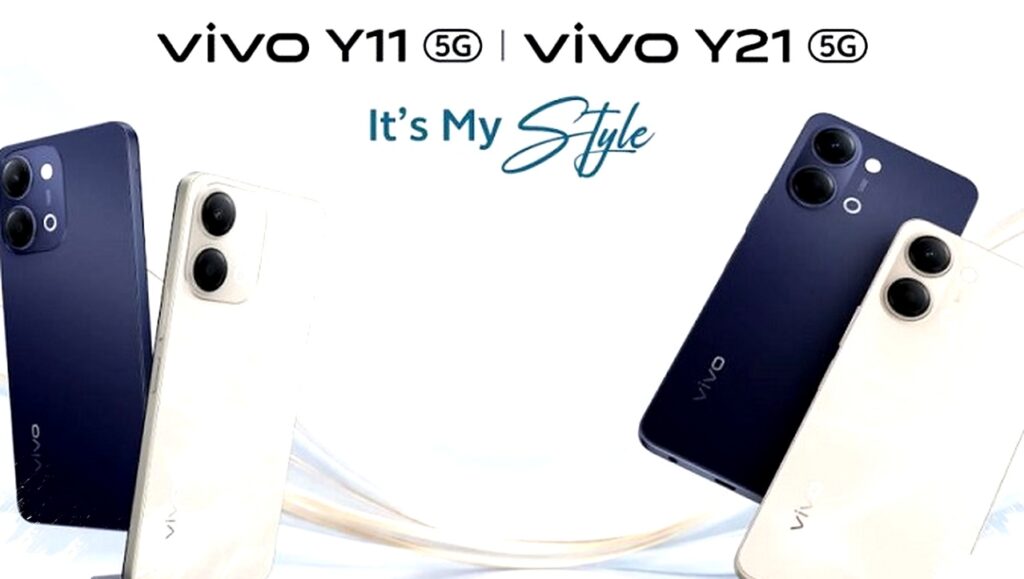
Vivo has officially launched the Y21 5G and Y11 5G in India, marking another push by the company to strengthen its position in the affordable 5G smartphone market. The launch took place on March 26, 2026, and both models are aimed at users who want modern connectivity without paying premium prices.
The new devices arrive as 5G adoption continues to expand across India, supported by wider network rollouts from local telecom operators. Vivo says the Y series remains one of its key business pillars, and these two models are designed to keep that momentum going in entry-level and lower mid-range segments.
Vivo’s 5G expansion strategy
Vivo is using the Y21 5G and Y11 5G to reach a broad group of buyers, from first-time smartphone users to consumers looking for a secondary device. The company appears focused on balancing daily performance, battery life, and price, which are still the main purchase factors in this segment.
The strategy also reflects a broader shift in the smartphone industry. 5G is no longer limited to flagship phones, and vendors are pushing the technology into more affordable categories as network availability improves and consumers begin to expect faster connectivity as standard.
What Vivo Y21 5G offers
The Vivo Y21 5G comes with a 6.5-inch HD+ display, which should make it suitable for everyday tasks such as browsing, watching videos, and reading on social media. Vivo is also offering a refresh rate tuned for daily use, which helps keep the interface smoother during scrolling and app navigation.
Inside, the phone uses an entry-level 5G chipset built to prioritize power efficiency and steady performance. That choice suggests Vivo wants the Y21 5G to handle common tasks reliably rather than chase benchmark numbers.
The phone also supports virtual RAM expansion, a feature that uses part of the internal storage as extra memory. This can help when switching between several apps at once, especially on a device positioned for budget-conscious users.
Camera setup and everyday usability
On the back, the Vivo Y21 5G uses a dual-camera system led by a main sensor built to capture usable detail in different lighting conditions. The company has not positioned this model as a camera-first device, but the setup should cover routine photos, scans, and quick social media uploads.
The front camera sits inside a notch design, which is still common in this price range. It supports selfies and video calls, both of which remain important for users who spend much of their time on messaging apps, remote meetings, and short-form content platforms.
Vivo Y11 5G as the more affordable option
The Vivo Y11 5G sits below the Y21 5G and is aimed at buyers who want 5G at a lower entry point. Even though it is the more affordable model, Vivo still highlights long battery life as one of its main selling points.
That focus matters because battery endurance often influences buying decisions in the budget category. Users in this segment typically want a phone that can last through a full day of calls, streaming, messaging, and browsing without frequent charging stops.
The Y11 5G is powered by a chipset optimized for energy efficiency and light to moderate use. That means it should be well suited for essential tasks such as communication, social media, and entertainment consumption.
Software and security features
Both phones run on an Android-based operating system with Vivo’s custom interface. The software includes personalization tools and power management features that help users adjust the phone to their habits.
Vivo also includes basic security features such as fingerprint scanning and face recognition. Those additions are now standard expectations even in affordable phones, but they still matter for users who want faster access and better protection of personal data.
Key differences between the two models
Here is a simple look at how the two phones are positioned:
| Model | Market position | Main strengths |
|---|---|---|
| Vivo Y21 5G | Slightly higher | Larger feature set, 6.5-inch HD+ display, virtual RAM |
| Vivo Y11 5G | More affordable | Lower price, 5G support, strong battery focus |
The main difference is not just pricing. Vivo is clearly separating the models by feature depth, with the Y21 5G offering a bit more flexibility and the Y11 5G targeting users who mainly want reliable 5G access at the lowest possible cost.
Why this launch matters in India
India remains one of the world’s most competitive smartphone markets, and the budget 5G segment is especially crowded. Brands are fighting aggressively for share, offering phones that promise modern connectivity, decent battery life, and practical features at relatively low prices.
That makes the launch of the Y21 5G and Y11 5G strategically important for Vivo. By adding two new models to the Y series, the company tries to protect its position in a segment where value matters more than premium design or advanced camera hardware.
The timing also aligns with a larger industry reality. As network coverage expands, many users who once bought 4G phones are now moving toward 5G-ready devices. That shift gives manufacturers room to refresh their entry-level lineups more frequently and keep buyers inside their brand ecosystem.
What buyers are likely to expect
- A smoother move into 5G without a steep price increase.
- Everyday performance that fits basic and moderate usage patterns.
- Battery life that can handle daily commuting and long screen time.
- Simple software features that improve convenience and security.
- A value-focused design rather than premium hardware upgrades.
Vivo’s new Y21 5G and Y11 5G show how fast the affordable 5G category is maturing in India. With one model aimed at broader everyday usability and the other built for entry-level buyers, the company is making a clear bet that demand for low-cost 5G phones will keep growing as more consumers move beyond 4G.