


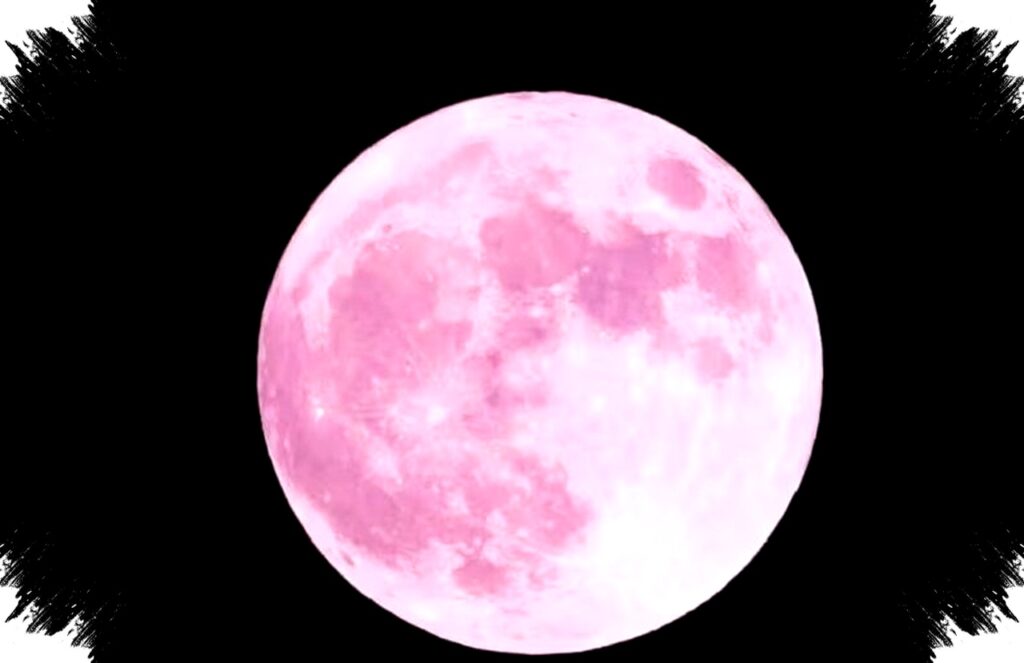
The April 1, 2026 full moon is called the Pink Moon, but the name does not mean the Moon will actually turn pink. The term comes from a seasonal tradition used by Native American communities, and it refers to the blooming of pink phlox flowers in early spring in North America.
For skywatchers in Indonesia, the best viewing time will come after sunset on April 1, 2026, when the Moon rises in the eastern sky. Astronomical calculations show the full moon will reach its peak on April 2, 2026, at around 09:13 WIB, but the Moon already appears full to the naked eye the night before.
Why is it called the Pink Moon?
The answer is simple: the name is cultural, not visual. BRIN explains that “Pink Moon” does not describe the Moon’s color, but a traditional name linked to the seasonal cycle of flowering plants in North America.
The pink phlox flower usually blooms in spring, and that timing helped inspire the full moon’s nickname. In other words, the Moon itself stays the same, while the name reflects what is happening on Earth below it.
What the Moon actually looks like
BMKG notes that the full moon still reflects sunlight, so it normally appears white or pale yellow. When the Moon sits low near the horizon, it can look orange or reddish because Earth’s atmosphere scatters sunlight.
That effect is similar to the color change people see during sunrise and sunset. Dust, pollution, and tiny particles in the atmosphere filter the light, making the Moon seem warmer in color even though its surface is unchanged.
Facts about the Pink Moon on April 1, 2026
- It is a regular full moon event and happens every year.
- The peak full moon occurs on April 2, 2026, at about 09:13 WIB.
- The best viewing window in Indonesia is the evening of April 1 after sunset.
- The Moon may look yellow, orange, or reddish near the horizon.
- The name Pink Moon comes from spring flowers, not from the Moon’s actual color.
The event has no special physical impact on Earth. It does not trigger unusual weather, disasters, or changes in human behavior.
Myths that often appear around the Pink Moon
Many people still connect full moons with superstition, but most of those claims have no scientific basis. Some myths say a full moon causes strange behavior, affects health, or changes daily events in a dramatic way.
Astronomy does not support those claims for the Pink Moon. The phenomenon is simply part of the lunar cycle, and its main value is visual and cultural rather than mystical.
Why people still pay attention to it
The Pink Moon remains popular because it gives people an easy reason to look up and observe the night sky. A full moon is bright, accessible, and visible without special equipment, which makes it a strong topic for public interest.
In Indonesia, the best experience usually comes from places with low light pollution. Open beaches, hilltops, rural areas, or other dark-sky locations can make the moonrise look more dramatic and easier to photograph.
How to observe the Pink Moon well
| Tip | Why it matters |
|---|---|
| Choose a dark location | Reduces glare from city lights |
| Watch after sunset | Moonrise often gives the best view |
| Face the eastern horizon | The Moon rises from the east |
| Use a camera or binoculars | Helps capture details and texture |
| Check local weather | Clear skies improve visibility |
The Moon’s brightness may make it hard to notice surface detail with the naked eye, but the overall glow can still look striking. If the sky is clear, viewers may also notice how the Moon slowly changes position during the evening.
Science and culture in one name
The Pink Moon shows how astronomy and tradition can meet in one event. Scientists describe the timing, orbit, and appearance of the full moon, while cultural history explains why it carries a particular seasonal name.
That is why the Pink Moon stays relevant every year. It is not a rare cosmic event, but it remains a meaningful reminder of how human societies have long used the sky to mark the changing seasons.
On April 1, 2026, the full moon will offer that familiar mix of science, culture, and visual beauty, and for observers in Indonesia the clearest moment will come just after sunset when the Moon first rises above the eastern horizon.