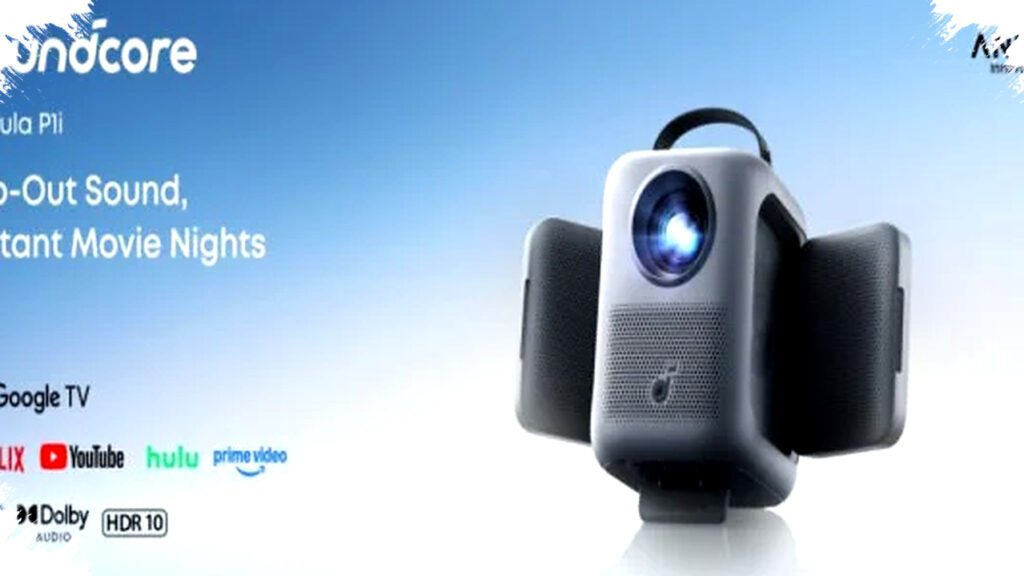
Anker has officially launched the Nebula P1i in the UK, adding a compact but feature-rich option to the growing mini projector market. The new model builds on the Nebula lineup and brings a mix of Full HD projection, smart software, and automatic setup tools aimed at users who want a big-screen experience without moving to a large TV.
The launch also sets the stage for a wider European rollout expected in early April 2026. Since the projector first appeared in early 2026 and reached the US in February, the UK release gives Anker a stronger foothold in markets where portable home entertainment devices continue to gain attention.
A compact projector with a cinema-sized image
The Nebula P1i uses native Full HD 1080p resolution, which remains one of the most important details for buyers looking at a home projector. Sharpness matters more than ever on larger screens, and Anker says the P1i can project an image up to 150 inches, giving users a viewing size that would normally require a much larger and more expensive television.
That image size is supported by a 1.25:1 throw ratio, which helps the projector produce a wide picture even when placed relatively close to the wall or screen. For apartment users, bedroom setups, or small living rooms, that kind of flexibility can matter more than raw brightness figures.
The projector uses an LED light source rated at 380 ANSI lumens. That is not a record-setting brightness level, but it should still work well in controlled indoor environments where ambient light is limited. In practical terms, the P1i is aimed more at evening movie sessions, streaming, and casual viewing than bright-room daytime use.
Image processing and automatic setup
Anker has also focused on ease of use, and that is where the Nebula P1i becomes more interesting. The projector comes with autofocus, so users do not need to spend time manually adjusting sharpness every time they move the device.
It also includes automatic keystone correction, which helps keep the projected image properly shaped even if the unit is not placed perfectly straight. Another useful feature is obstacle avoidance, which adjusts the display when an object blocks part of the projection area.
These features matter because many portable projectors still require repeated manual tuning. By adding these automation tools, Anker makes the P1i easier to use in different rooms and for different setups, whether it sits on a table, shelf, or floor.
Google TV turns it into a smart entertainment hub
The Nebula P1i runs Android TV with the Google TV interface, giving it a familiar streaming-first experience. That means users can access leading apps such as Netflix, YouTube, and Prime Video directly from the projector without plugging in another device.
This is a major advantage for buyers who want a cleaner setup. Instead of relying on a streaming stick or media box, the projector can act like a standalone smart display with app access, voice-friendly navigation, and a content-focused home screen.
For many users, that simplicity will be one of the key selling points. It turns the projector from a simple display device into a more complete home entertainment product.
Connectivity is broad enough for everyday use
The P1i supports Wi-Fi 5 and Bluetooth 5.1, both of which help with stable wireless streaming and accessory pairing. Users can connect headphones, speakers, or other Bluetooth devices without much hassle.
Anker also includes several physical ports for more traditional setups. According to the launch details, the projector offers HDMI with ARC support, a USB-A port, and a 3.5mm AUX input. That combination makes the device flexible enough for gaming consoles, laptops, USB media playback, and external audio equipment.
Here is a simple breakdown of the main connectivity options:
- Wi-Fi 5 for wireless internet access and streaming.
- Bluetooth 5.1 for audio accessories and other wireless devices.
- HDMI with ARC for video input and compatible audio setups.
- USB-A for media playback or peripherals.
- AUX input for wired audio connections.
Built-in audio adds another layer of convenience
Audio is often a weak point on compact projectors, but Anker has tried to address that with a built-in 10W speaker system that supports Dolby Audio. The speaker can also open up to a 90-degree angle, helping direct sound more effectively toward the viewer.
That design makes the P1i more practical for casual viewing without immediate need for external speakers. While dedicated audio gear will still deliver a richer soundstage, the built-in setup should be enough for everyday streaming, especially in smaller rooms.
The combination of Dolby Audio and the flexible speaker angle suggests that Anker is aiming for an all-in-one projector experience rather than a device that depends heavily on add-ons.
Flexible body design improves placement options
Another notable detail is the projector body itself, which can rotate up to 200 degrees. That gives users more freedom when aiming the image, including the option to project onto a wall, screen, or even a ceiling in some room setups.
This level of adjustability adds value for people who want to use the projector in different spaces. It also fits the overall idea behind the Nebula P1i, which is portability paired with convenience rather than a fixed installation device.
For users who may want a movie night in the living room one day and a ceiling projection in the bedroom the next, the design makes the projector easier to adapt.
Price positions it in a competitive segment
In the UK, the Nebula P1i launched with a discounted price of £314.50, down from its regular price of £369.99. At the current exchange rates, that places the launch deal at roughly $400, while the standard price is about $472.
For Europe, Anker is expected to set the normal price at €369.99, which makes the product competitive in the mid-range smart projector segment. That pricing is important because buyers in this category often compare not only image quality, but also operating system, automatic setup, and audio features.
The current price structure suggests that Anker wants the P1i to appeal to users looking for a balance of portability and functionality rather than the lowest possible cost.
Why the Nebula P1i stands out
The mini projector market now includes many compact models, but the P1i tries to separate itself through completeness rather than one single headline spec. It combines native 1080p resolution, a 150-inch projection size, Google TV, automatic image correction, and built-in Dolby Audio in one package.
That makes it suitable for users who want an easier upgrade path into home projection. Instead of assembling a full setup from multiple devices, the P1i offers a streamlined approach that covers image, software, sound, and connectivity in one compact body.
For Anker, the launch also reinforces Nebula as an established name in smart projection. With the UK release now live and Europe expansion close behind, the P1i is positioned as one of the more complete portable projectors entering the market in 2026, especially for buyers who want a small device that still behaves like a smart TV when needed.